

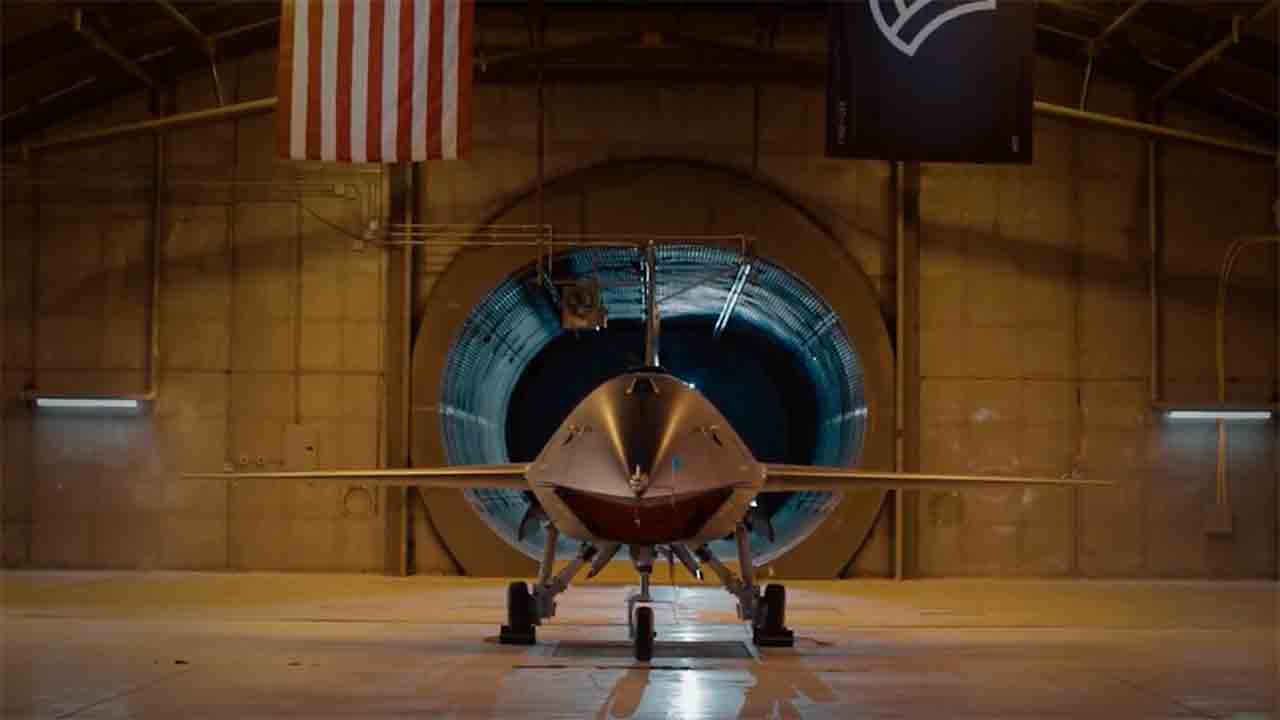
The United States Air Force has begun ground testing for its Collaborative Combat Aircraft (CCA) program, marking a major step in integrating autonomous systems into its future combat structure.
+ Stunning video reveals the new YFQ-44A combat drone
The tests involve the demonstration vehicles YFQ-42A and YFQ-44A, developed by General Atomics and Anduril, respectively. Initial evaluations focus on propulsion systems, avionics, ground control interfaces, and autonomy integration, with the goal of validating performance and preparing the prototypes for their first flights scheduled later this year.
+ British nuclear submarines with French DNA? Understand the controversy behind imported steel
“The start of ground testing is a major milestone for the CCA Increment 1 program,” said Air Force Chief of Staff Gen. David W. Allvin. “This phase reduces integration risks and lays the groundwork for a successful first flight and eventual fielding to the warfighter.”
The CCA program is part of a broader strategic shift by the Air Force toward developing human-machine teaming and scalable force packages. These new aircraft are designed to operate alongside manned fighters, providing extended range, increased lethality, and survivability in highly contested combat environments — at a significantly lower cost than traditional systems.
In a further step toward operational readiness, Beale Air Force Base in California has been selected as the preferred location to host the first CCA Aircraft Readiness Unit (ARU). The ARU’s mission will be to maintain combat-ready aircraft for global deployment at any time, with fewer daily sorties required thanks to the semi-autonomous nature of the systems.
+ J-10C: The Chinese Fighter Rivaling the F-16 Gains Prominence in International Drills
With an emphasis on speed, flexibility, and cost-effectiveness, the program is based on commercial technologies and open architectures to enable rapid upgrades, scalable production, and continuous integration of new capabilities. A production decision for Increment 1 is expected in fiscal year 2026, with development of Increment 2 beginning the same year to expand mission applications and integrate emerging technologies.
“We’re moving fast because our warfighters need this capability,” Allvin stated. “The CCA program is about delivering a decisive advantage in highly contested environments. Innovation must outpace the threat — and this is how we’ll do it.”
Source and images: Anduril Industries / X @anduriltech. This content was created with AI assistance and reviewed by the editorial team.
