
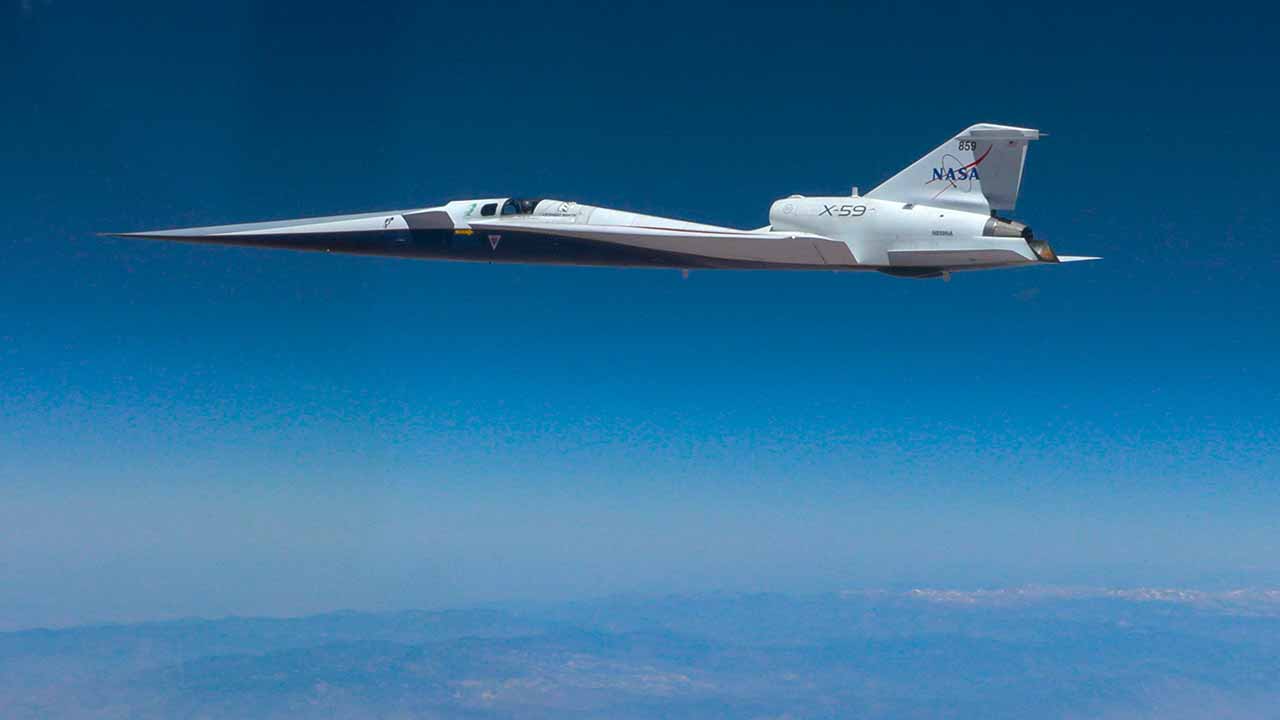
NASA’s experimental X-59 aircraft reached a major milestone by flying faster than the speed of sound for the first time, supporting the Quesst mission, which aims to demonstrate quieter supersonic flight.
The flight took place on Friday, June 5, 2026, and lasted 81 minutes. During the test, the X-59 reached Mach 1.1, equivalent to approximately 1,147 km/h, at an altitude of 43,400 feet, about 13,228 meters.
According to NASA, the aircraft performed as expected. For test pilot Jim “Clue” Less, the aircraft’s instruments were the only indication that the X-59 had exceeded the speed of sound, exactly as the team had hoped.
“You know you are supersonic when the gauges say you are supersonic. I didn’t feel anything,” Less said. “It went smoothly, and we easily got to Mach 1.1.”
The X-59 was designed to fly at supersonic speeds while producing only a quieter sound, described as a soft “thump,” instead of the powerful sonic boom normally associated with this type of flight. During the test, a NASA F-15 fighter jet accompanied the aircraft to monitor the mission. The sonic booms produced by the F-15 prevented any sound generated by the X-59 from being clearly identified at this stage.
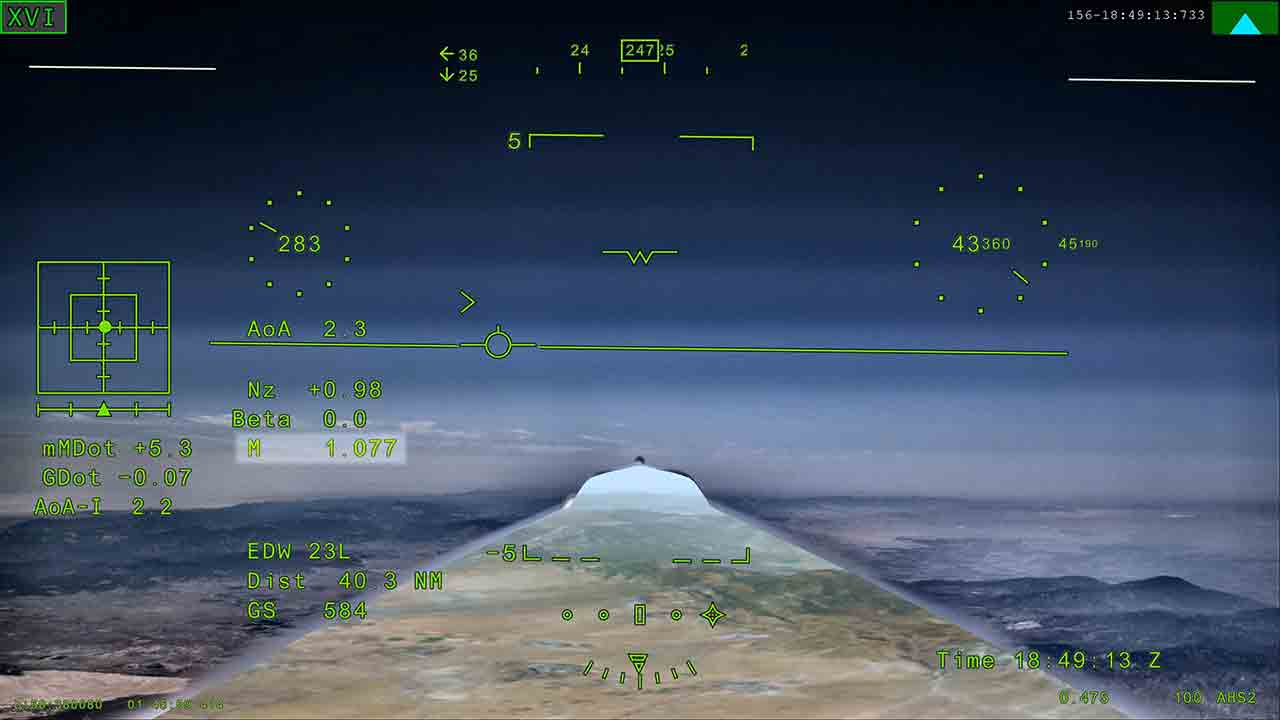
A specific assessment of the X-59’s sound profile will be carried out in a later phase of testing. Now that the aircraft has officially begun supersonic flights, the next major step will be its first mission under planned operating conditions.
In that future test, the X-59 is expected to fly at Mach 1.4, around 1,489 km/h, at an altitude of 55,000 feet, approximately 16,764 meters. These are the conditions planned for the flights in which the aircraft will pass over communities in the United States, allowing NASA to collect data from people on the ground about perceived noise levels.
“The airplane wants to go faster, and we are looking forward to that,” Less said.
The X-59 is the centerpiece of NASA’s Quesst mission, which aims to demonstrate the feasibility of quieter supersonic flights and contribute to the possible return of commercial supersonic operations over land areas.
The flight also marked the X-59’s first appearance on NASA’s flight tracker.
Source and images: NASA. This content was created with the help of AI and reviewed by the editorial team.
