
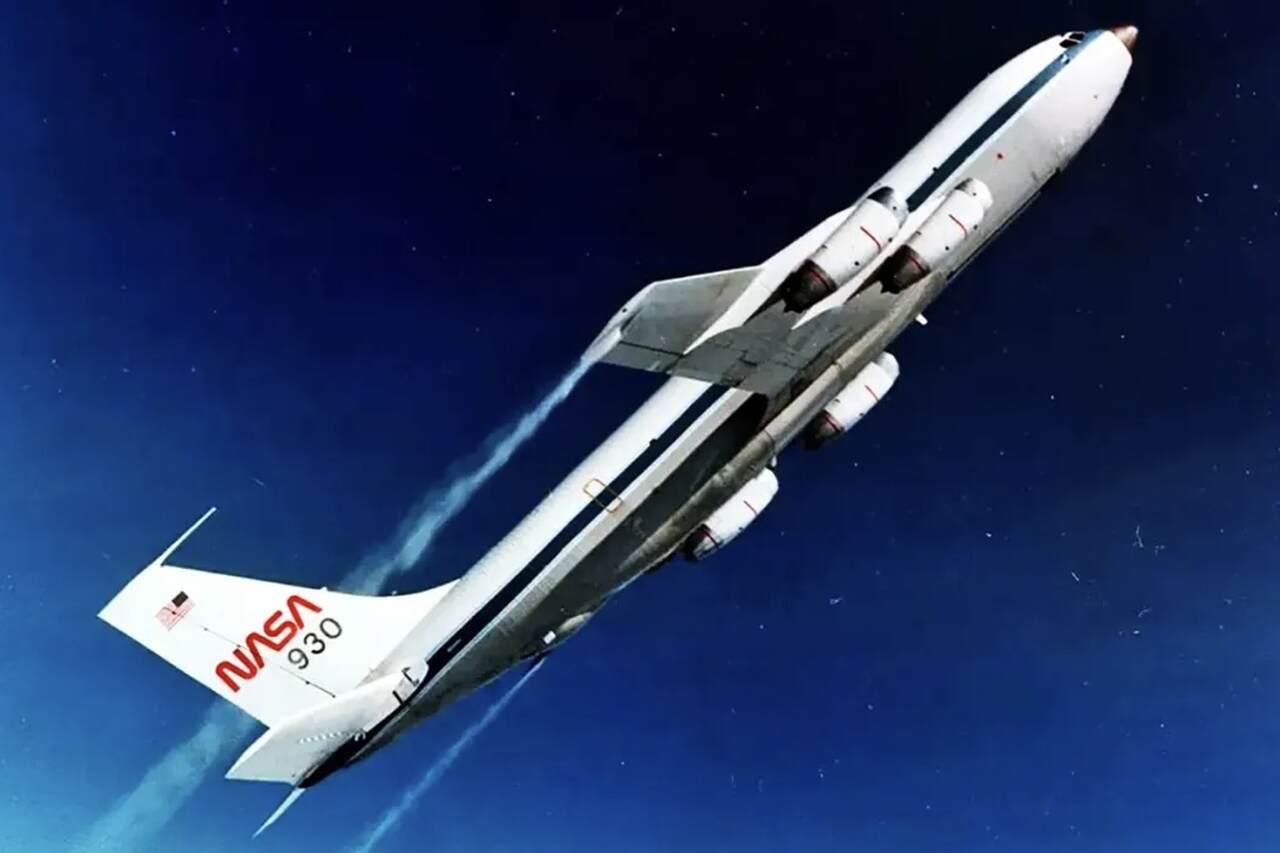
The NASA appears to be interested in acquiring a new Vomit Comet, the official name given to the zero-gravity aircraft used by the agency for scientific purposes.
The Vomit Comet, a specialized fixed-wing aircraft that flies in parabolic arcs, was named this way due to the physical side effect it tends to induce in crew members, according to a report from the website The War Zone.
This ability to provide a microgravity environment here on Earth is important for a variety of reasons, ranging from scientific research to spaceflight applications.
For NASA astronauts, for example, experiencing zero-gravity conditions before mission launch is a necessary part of training and familiarization.
Although Zero-G, a private Florida company, has been the sole supplier of this type of aircraft for NASA for years, a new contract request shows that the agency is now inviting competitors to bid for the work, with the possibility of offering new solutions for the requirement.
The request, published by the NASA Armstrong Flight Research Center in support of the Flight Opportunities Program, seeks industry information on a variety of resources to provide reduced gravity and microgravity environments, specifically to test new technologies and conduct research.
The document emphasizes that the method of achieving the weightless effect could be explored in ways different from the past. “Respondents are encouraged to submit capability statements with innovative approaches to provide Parabolic Flight Services,” the request says.
“This may include the use of aircraft platforms not traditionally used for parabolic flight services (e.g., executive jets, experimental aircraft, supersonics, autonomous systems).”
“NASA is interested in flexible, scalable, and new operational concepts with the potential to help NASA expand access to reduced gravity environments and accelerate space technology readiness,” the request further states.
By 2025, Zero-G had already provided over 2,300 parabolic research flights for NASA. It is still unclear which competitors exist for Zero-G’s offer in the U.S., but the NASA market research request will remain open until March 2.
The company, however, emphasized that it remains the only FAA-approved provider of parabolic flights in the United States.
In Europe, however, Zero-G faces several competitors. In France, Novespace, a research subsidiary of the French Space Agency, operates parabolic flights using the Airbus A310 for researchers and private clients.
In the United Kingdom, startup Blue Abyss offers zero-gravity flights with a modified Boeing 757. Meanwhile, British company Gravitilab began exploring drone-based microgravity in 2023.
They used a quadcopter to simulate weightlessness conditions for their payload during a 610-meter drop, a feat that “will open the world of microgravity research to a new market,” the company announced at the time.
Photo: NASA. This content was created with the help of AI and reviewed by the editorial team.
