
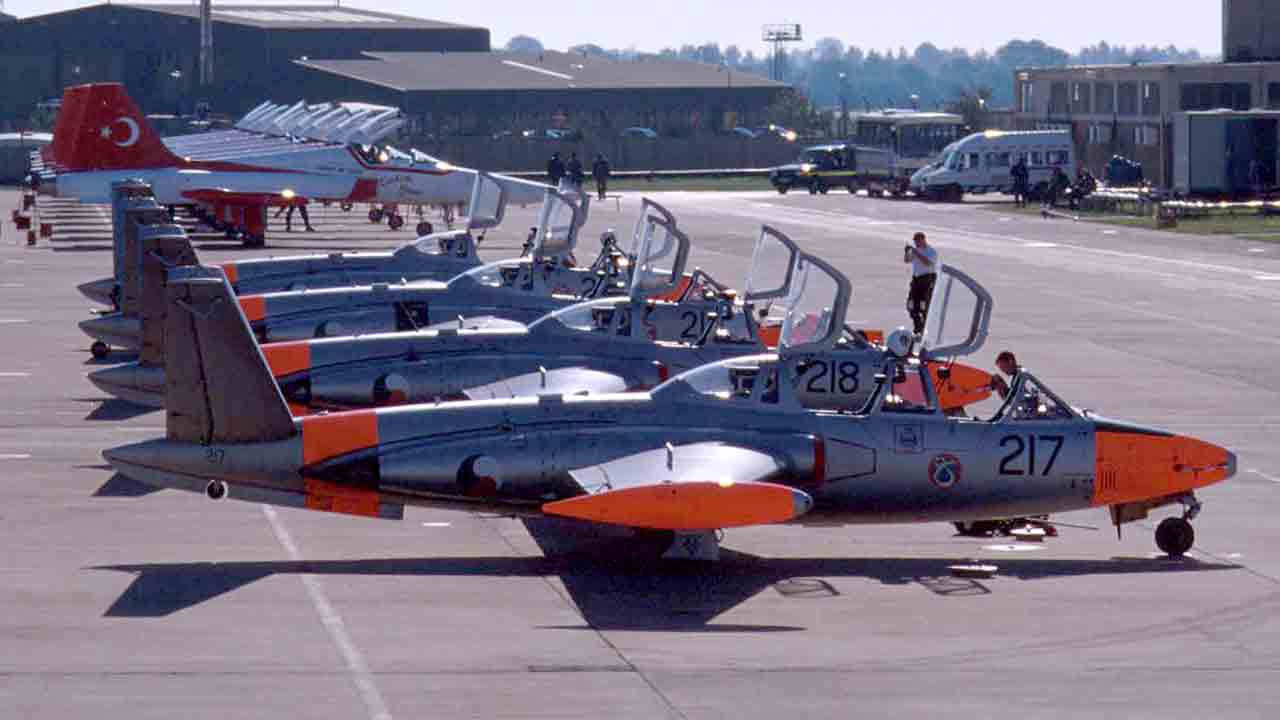
The Irish government has announced plans to invest €2.5 billion in the acquisition of combat aircraft and the creation of the country’s first national radar network, ending decades of reliance on the United Kingdom for airspace protection.
+ AT-802U Skyraider II: The New Attack Aircraft of the U.S. Air Force
Ireland has not had its own fighter jets since 1998, when the last Fouga CM170 Magisters were retired and placed in museums. Since then, the country has relied on a secret bilateral agreement that allows the Royal Air Force (RAF) to intercept and respond to aerial threats over Irish territory.
According to former Irish Air Corps chief General Ralph James, this dependence and lack of radar coverage make Ireland “probably the most vulnerable country in Europe.” During the Slándáil security summit in 2020, he stressed that neutrality is not an effective defense strategy and that Ireland must be able to control its airspace in any conflict scenario.
Plans to Strengthen Air Defense
According to the proposals, the new air force will operate at least eight combat aircraft, the minimum number required to provide 24/7 air policing capabilities. Ideally, the fleet will consist of between 12 and 14 aircraft.
The aircraft will be based at Shannon Airport, where they will share the runway with civilian aircraft. The runway at the Air Corps headquarters in Baldonnell, County Dublin, is considered too short to accommodate fighter jets.
The investment is expected to have an annual cost of between €60 million and €100 million over 20 to 25 years, totaling approximately €2.5 billion. Initial pilot training will take place abroad, while aircraft maintenance is expected to be carried out by private companies.
This initiative complements Ireland’s decision, made in 2022, to establish a national primary radar surveillance system, something unprecedented in the country. The project, valued at €300 million, will create a radar network covering a minimum range of 370 km, with at least three strategically positioned sites. The system is expected to be fully operational by 2028, ensuring effective monitoring of Irish airspace.
With these measures, Ireland will establish its own air policing system for the first time in 25 years. Previously, it had been suggested that this responsibility could be transferred to international partners, following a model similar to the Baltic Air Policing mission, where NATO patrols the airspace of Estonia, Latvia, and Lithuania. However, as Ireland is not a member of the alliance, this option remains unlikely.
Sources: irishtimes / Photo: Flickr. This content was created with the help of AI and reviewed by the editorial team.
