
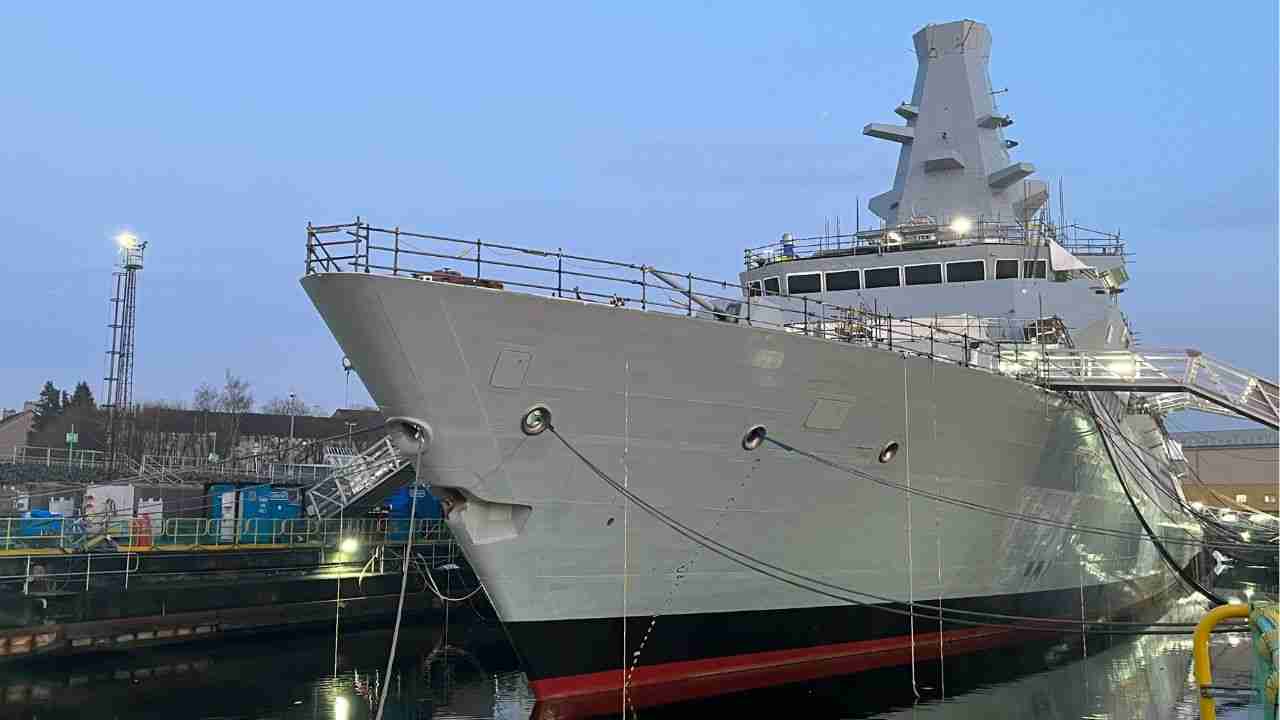
BAE Systems completed the first power-up of the HMS Glasgow, marking a significant milestone in the Royal Navy’s Type 26 frigate program.
With the diesel generators activated, the class-leading ship began producing its own electricity, a key step for the integration of onboard systems.
The generators are part of the Type 26’s hybrid propulsion and power architecture, designed to provide efficiency, flexibility, and low noise levels. This feature is critical for anti-submarine warfare, as it reduces the ship’s acoustic signature and enhances the effectiveness of sensors and combat systems.
The first of 13 ships being built on the Clyde for the UK and Norway, HMS Glasgow will replace the Type 23 frigates and is expected to form the core of the future British surface fleet. This milestone also brings the program closer to the next phases, including full integration and sea trials.
Source: UK Defence Journal | Photo: X @RoyalNavy | This content was created with AI assistance and reviewed by the editorial team
New images from today show HMS Glasgow taking shape. Her gun, comms masts, and a raft of final topside fittings are now in place as the Type 26 lead ship moves toward sea trials in 2026. Integration is clearly the main effort now, with major construction all but complete. pic.twitter.com/81BZzDlNGJ
— UK Defence Journal (@UKDefJournal) November 20, 2025
⚡I’ve got the power ⚡
Engineers at @BAES_Maritime fired up the mighty diesel generator of Type 26 frigate @HMS_GlasgowRN for the first time – as work on the sub hunter begins to shift from construction to testing and commissioning her systems.https://t.co/lb7sAmWCrB pic.twitter.com/IrKrXdrqpo
— Royal Navy (@RoyalNavy) December 18, 2025
