
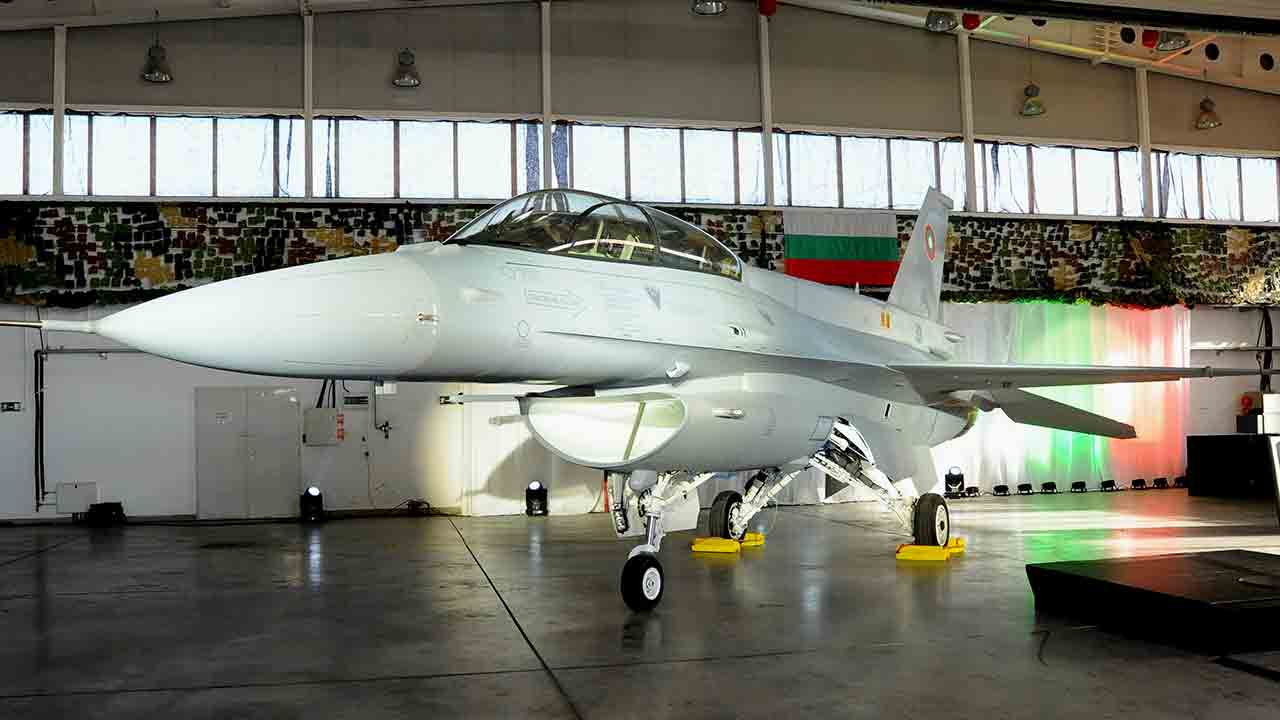
 F-16 Block 70. Photo: Lockheed Martin
Bulgaria has officially received its first F-16 Block 70 fighter, marking the beginning of a new operational phase for the country’s Air Force with the most modern variant of the renowned aircraft.
The delivery was celebrated on April 14, 2025, during a ceremony at Graf Ignatievo Air Base, with representatives from the Bulgarian Ministry of Defense and executives from Lockheed Martin in attendance. This is the first of a total of 16 F-16 Block 70 fighters ordered by Bulgaria. According to Lockheed Martin, the first eight aircraft are expected to be delivered by the end of 2025.
+ Video: Egypt and China Simulate Combat Scenarios in Unprecedented Joint Training
Mike Shoemaker, Vice President and General Manager of Lockheed Martin’s Integrated Fighter Group, stated that the delivery represents more than just the arrival of a new aircraft: “It’s a new era of enhanced security, advanced capabilities, and strengthened partnerships in the region.”
The F-16 Block 70 incorporates cutting-edge technologies, including Northrop Grumman’s AESA APG-83 radar, upgraded avionics, and the Automatic Ground Collision Avoidance System (Auto GCAS). The latter is credited with saving 13 pilots in 12 incidents since it was adopted by the U.S. Air Force in 2014. The aircraft’s structure has also been enhanced, with an estimated service life of 12,000 flight hours.
Lockheed Martin highlighted that the new Bulgarian fighters will join a network of over 700 F-16s currently in operation in Europe and more than 3,100 worldwide. The manufacturer has already delivered 26 units of the Block 70/72 models to international customers and has an order backlog of 114 aircraft. Production takes place at the Greenville facility in South Carolina, USA.
The delivery of the F-16 to Bulgaria is part of ongoing efforts to strengthen air defense cooperation in Europe and deepen ties between the United States and its NATO allies.
Source and images: Lockheed Martin
