
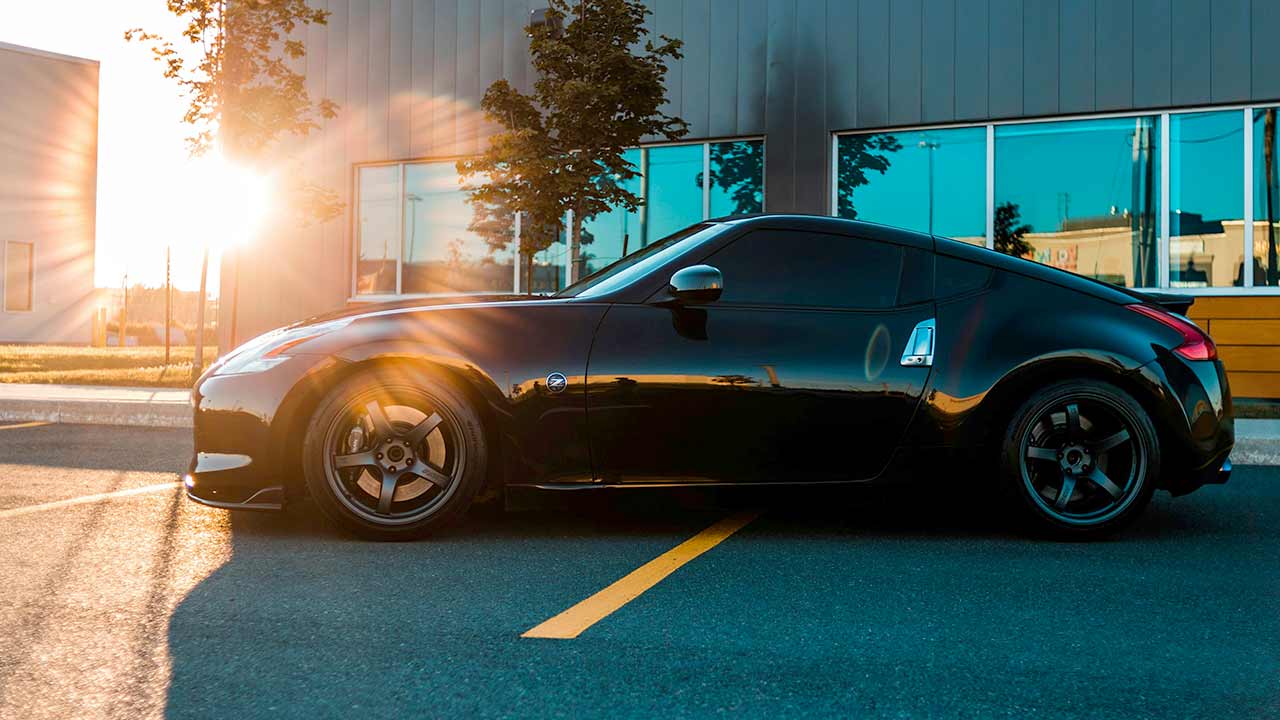
If you’ve ever owned a black car and been completely shocked by how hot it got inside after leaving it in the sun for a while, you’ve probably wondered whether the color of the vehicle plays a role.
+ Video: Hyundai Tucson Engine Suddenly “Explodes” and Leaves Owner with a $20,000 Bill
Is it true that black cars heat up faster than cars of other colors? The answer is yes. If you leave a white car and a black car parked in the sun for the same amount of time, you’ll find that the interior of the white car stays significantly cooler than the black one.
This curious phenomenon was tested in a 2011 study conducted by researchers from the Environmental Energy Technologies Division at Berkeley Lab. They found that light-colored vehicles reflect nearly 60% of sunlight compared to dark-colored ones.
For the tests, researchers left two Honda Civics — one silver and one black — parked on a hot day in Sacramento, California (USA). After an hour, they discovered that the interior of the black car was 5 to 6 degrees Celsius warmer than the silver one.
Beyond the heat inside the vehicle, researchers also found that lighter paint colors improved vehicle efficiency, since they required less air conditioning to keep the interior comfortable — boosting fuel economy by 2% and reducing carbon emissions by nearly 2%.
Why does this happen? One reason is that black surfaces absorb more sunlight and convert it into heat, which can make the car interior feel significantly warmer.
Secondly, black cars radiate heat more efficiently than lighter-colored vehicles, meaning the heat absorbed by the car’s surface is more likely to be released into the surrounding air instead of being reflected back.
While other factors such as the angle of the sun or materials used in the car’s construction can also have an impact, in general, darker colors tend to absorb more heat than lighter ones.
Photo: Pexels. This content was created with the help of AI and reviewed by the editorial team.
