
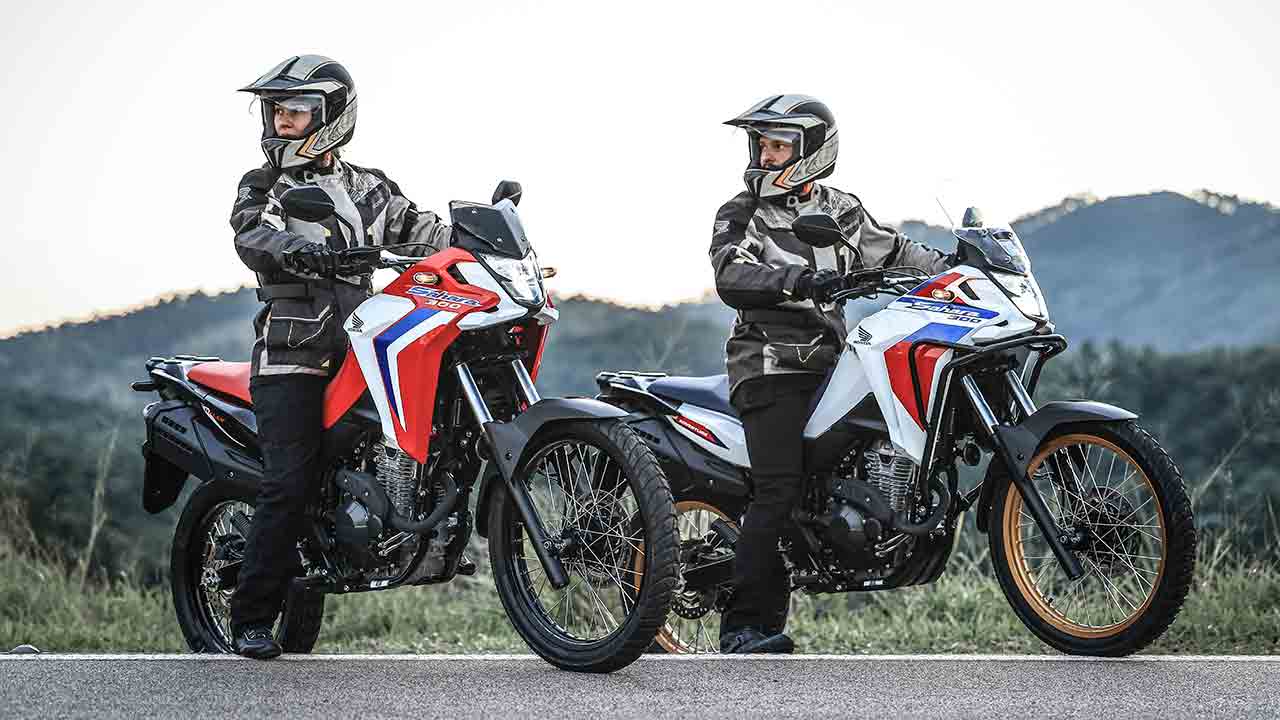
The dual-purpose motorcycle retains its 293.5 cm³ flex-fuel engine and gains electronic traction control, a coded key, and an instrument panel with improved visibility in sunlight
Honda has updated the XRE 300 Sahara for the 2027 model year in Brazil. The dual-purpose motorcycle maintains its focus on urban commuting, touring, and unpaved roads, but now features new electronic systems and lighter components.
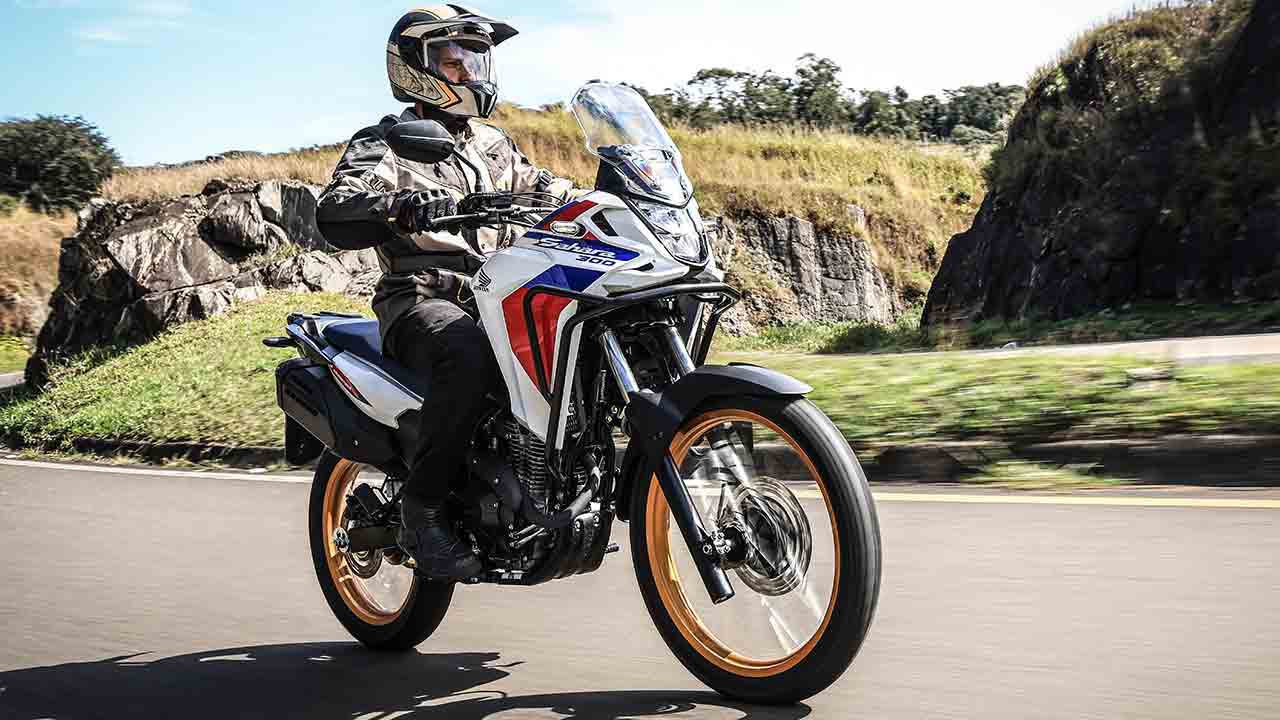
The main new feature is the introduction of HSTC traction control across all versions. The lineup also receives an ignition system with a coded key, improvements to the digital instrument panel, and minor changes to the suspension.
The XRE 300 Sahara 2027 will be offered in Standard, Rally, and Adventure configurations. Deliveries in the Brazilian market are expected to begin in mid-August 2026.
Based on a direct conversion of the prices announced in Brazil, values range from approximately €5,508 to €5,821. The amounts in euros are provided only as an exchange-rate reference and do not represent official prices for other countries.
Traction control expands the safety package
Honda Selectable Torque Control, known by the acronym HSTC, monitors the behavior of the rear wheel during acceleration. When the system detects a possible loss of grip, torque delivery is electronically limited.
The feature can be especially useful on wet surfaces, dirt roads, or sections with low traction. Previously more common on larger-displacement motorcycles, the technology now comes as standard on every version of the Sahara 2027.
The motorcycle also adopts the Honda Ignition Security System. HISS recognizes an electronic chip installed in the original key and only allows the engine to start when the correct code is identified by the ignition module.
Another retained feature is the Emergency Stop Signal, which activates the turn signals during hard braking to warn vehicles traveling behind. On the 2027 model, the front turn signals also remain illuminated as position lights.
The flex-fuel engine is one of the model’s distinctive features
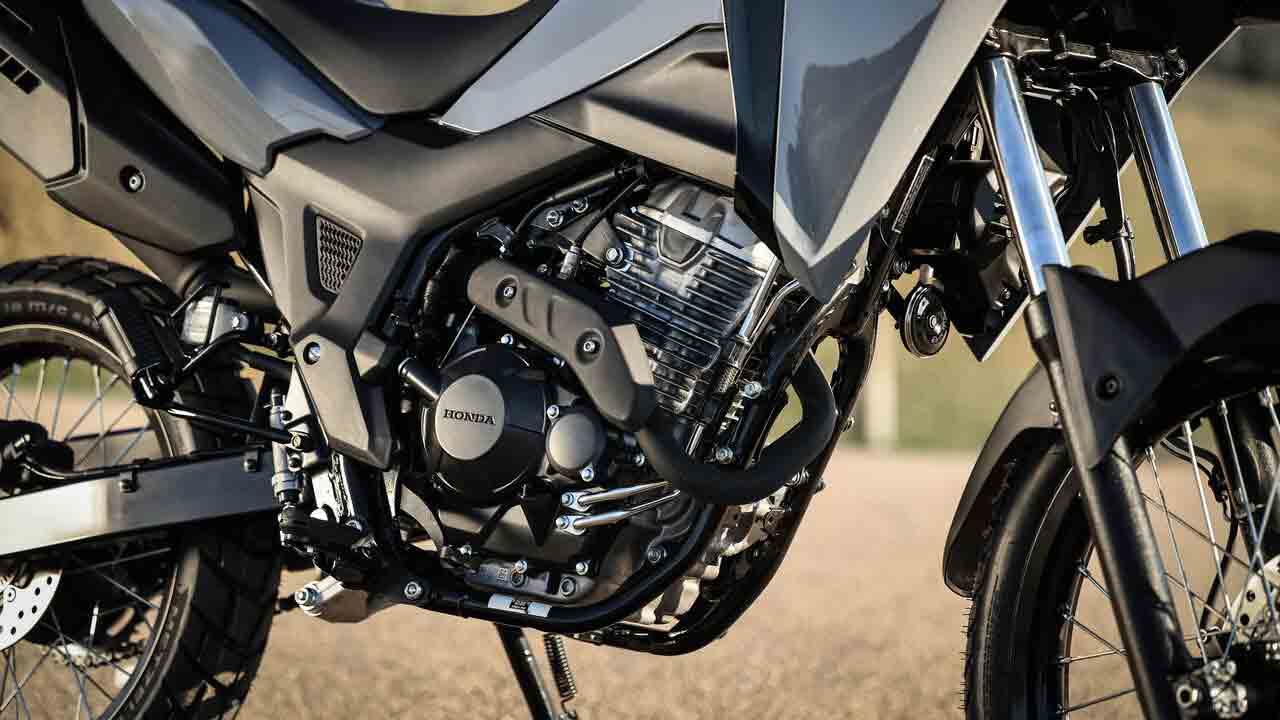
The XRE 300 Sahara continues to use a 293.5 cm³ single-cylinder engine with a single overhead camshaft, four valves, and air cooling.
One feature that is uncommon outside the Brazilian market is the FlexOne system. The engine can run on gasoline, ethanol, or any mixture of the two fuels.
With ethanol, the stated maximum output is 25.2 hp at 7,500 rpm, while torque reaches 2.74 kgfm at 5,750 rpm. With gasoline, the figures are 24.8 hp and 2.70 kgfm.
The six-speed transmission works with an assist and slipper clutch. The system reduces the effort required to operate the lever and helps control the rear wheel during faster downshifts.
Instrument panel gains anti-reflective technology
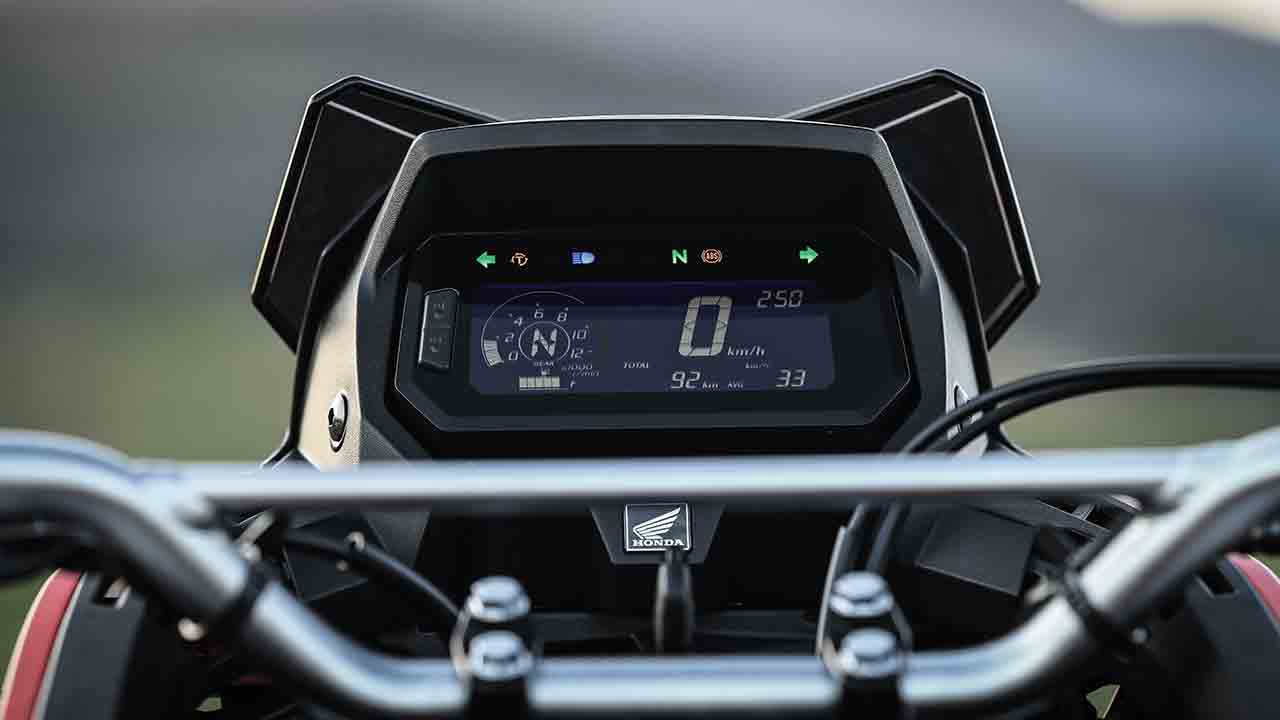
The blackout LCD digital instrument panel has gained Optical Bonding technology. A special resin is applied between the display and the protective glass, eliminating the air gap between the components.
According to the model’s technical information, the solution reduces reflections and improves the visibility of information in direct sunlight. The panel displays the speedometer, tachometer, gear indicator, fuel level, clock, odometers, fuel consumption, and estimated range.
A USB-C connection allows smartphones to be charged or navigation equipment to be powered during the journey.
Suspension receives aluminum components
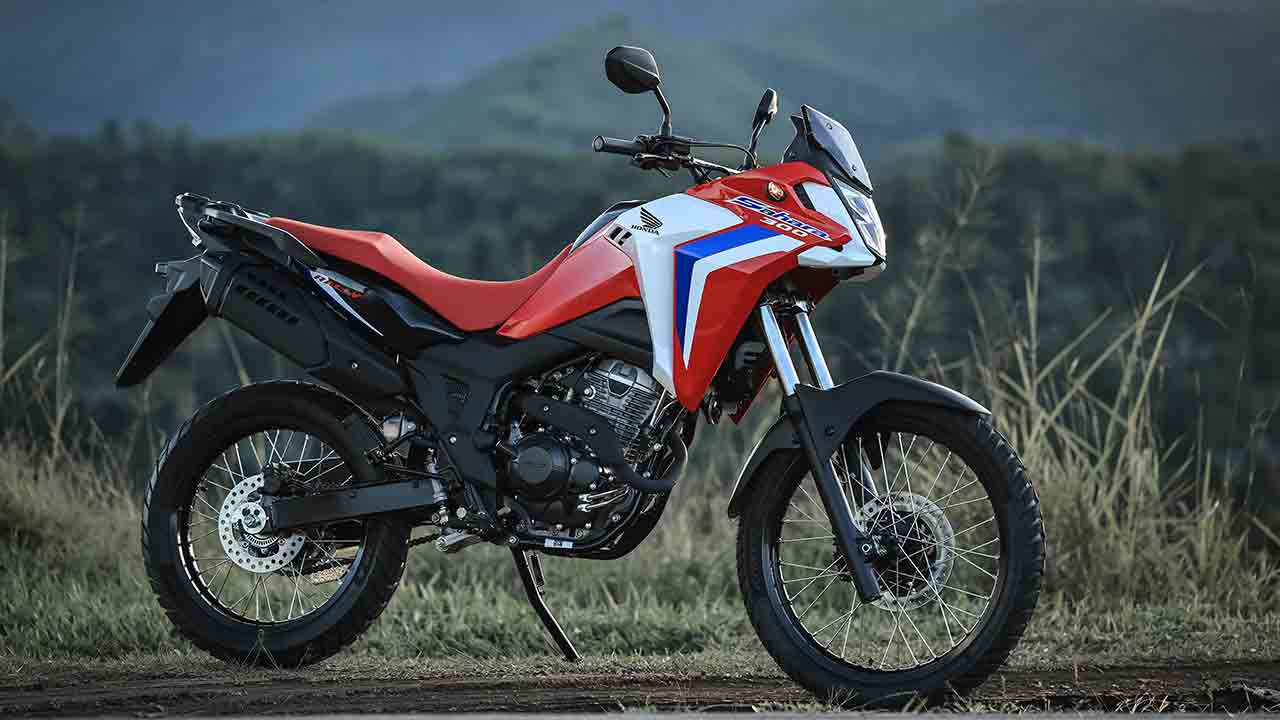
The semi-double-cradle steel-tube frame has been retained. The structure is derived from the architecture used on the CRF 250F, a model developed for off-road use.
At the front, the telescopic suspension has 41 mm tubes and 245 mm of travel. The triple clamps supporting the assembly are now made from forged aluminum, helping to reduce weight.
At the rear, the monoshock offers 225 mm of travel and seven-position spring preload adjustment. The links connecting the shock absorber to the swingarm are also now made from forged aluminum.
The spoked wheels measure 21 inches at the front and 18 inches at the rear. The tires are Metzeler Karoo Street units, developed to balance use on paved roads and dirt roads.
Braking is handled by discs on both wheels and a two-channel ABS system. The Standard version has a dry weight of 146 kg, the same as the Rally, while the Adventure reaches 149 kg.
Versions and prices
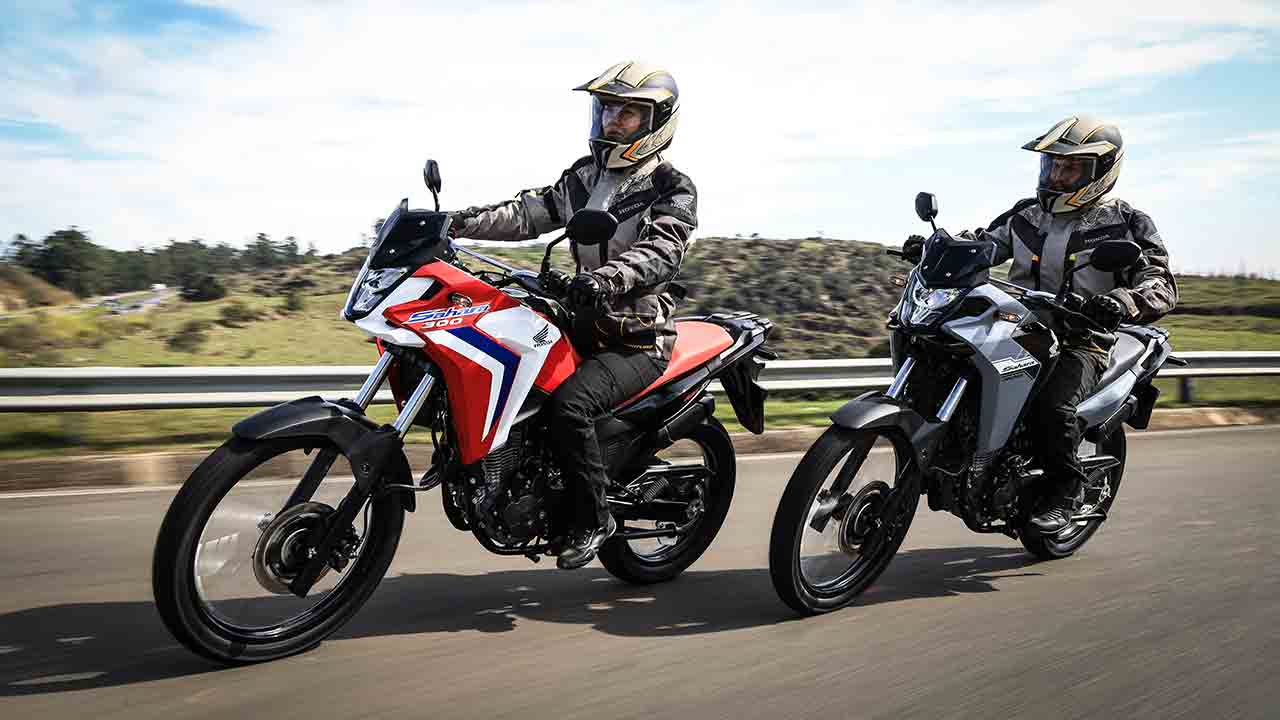
The XRE 300 Sahara Standard will be offered in Brazil in a pearl gray color. Its suggested price is equivalent to approximately €5,508.
The Rally version, featuring red paint and sport-inspired graphics, costs around €5,629 based on a direct conversion.
At the top of the lineup is the XRE 300 Sahara Adventure, valued at approximately €5,821. This configuration includes a taller windshield, tubular protective structures around the fairing, and an engine skid plate.
The amounts were converted from Brazilian prices and may vary depending on the euro exchange rate. They do not include transportation costs, import taxes, insurance, or any fees applied in other markets.
+ Rolls-Royce advances development of engine for the United Kingdom’s sixth-generation fighter jet
Source and images: Honda Brasil. This content was created with the help of AI and reviewed by the editorial team.
