
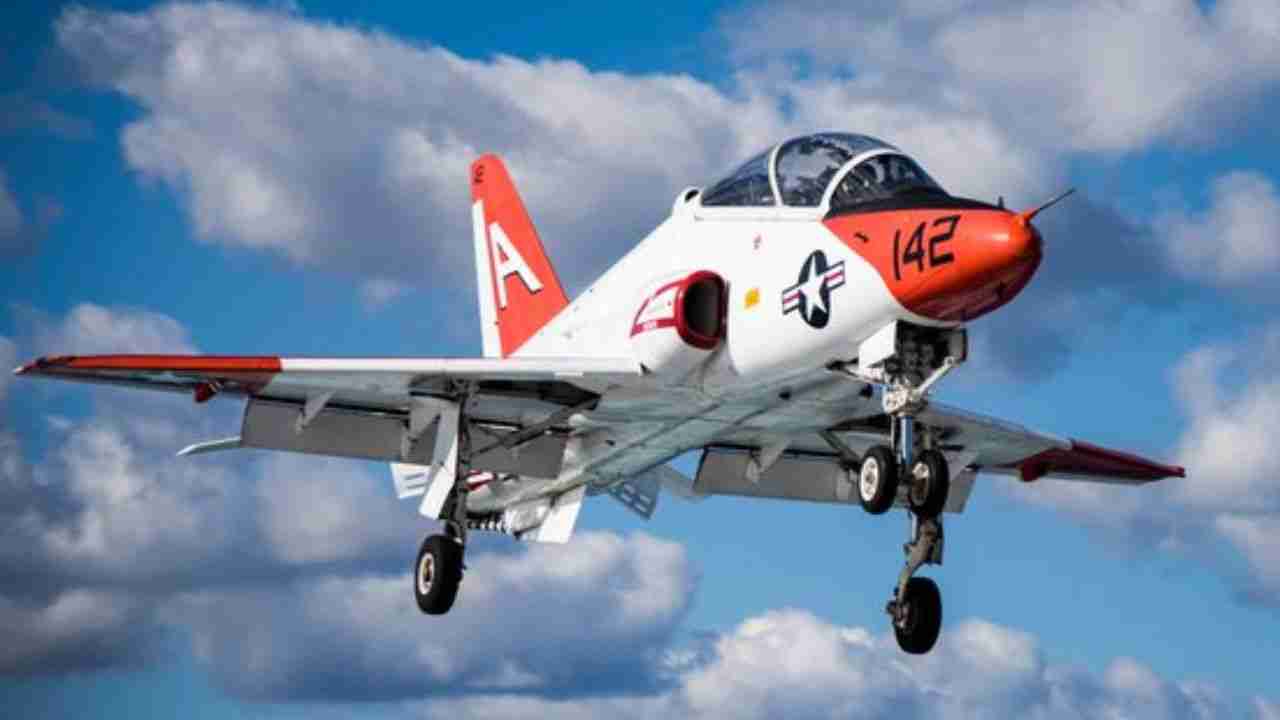
The United States Navy is implementing a major shift in training new naval aviators by redesigning the requirements for the replacement of the T-45 Goshawk training jet.
The new program, called the Undergraduate Jet Training System (UJTS), plans to procure 216 aircraft but starts with a controversial guideline: future students will no longer perform touch-and-go training that simulates carrier landings, a practice historically considered essential in naval aviation.
Under the new plan, students will only conduct the so-called FCLP “to the wave-off,” a profile where the pilot simulates the approach and is ordered to abort the landing before touching the runway. The traditional FCLP “to touchdown” will be replaced by other methods within a “system of systems” that includes virtual training resources and automated carrier landing technologies such as the Magic Carpet. The Navy argues that these technological advances have changed the training ecosystem and allow for reduced in-person stages.
This decision is also linked to another recent change: the removal of carrier qualification from the curriculum for pilots proceeding to F/A-18E/F, F-35C, and EA-18G aircraft. In practice, aviators will only experience actual carrier landings after graduation, when they join Fleet Replacement Squadrons (FRS) flying frontline aircraft. The measure reduces training time and costs, and lowers structural requirements for the new trainer jet, which will not need to be designed to withstand the typical stresses of carrier operations.
However, the change has drawn criticism within the naval aviation community, which views carrier training as more than just landing technique, involving stress management, communications, and adaptation to the shipboard environment. While companies like Sierra Nevada emphasize the importance of retaining this capability in their UJTS proposals, signals indicate that the Navy is determined to proceed with a shorter, more digital training model, less dependent on practical experience on carrier-simulating runways.
Source: The War Zone | Photo: X @USNavy | This content was created with the help of AI and reviewed by the editorial team
