
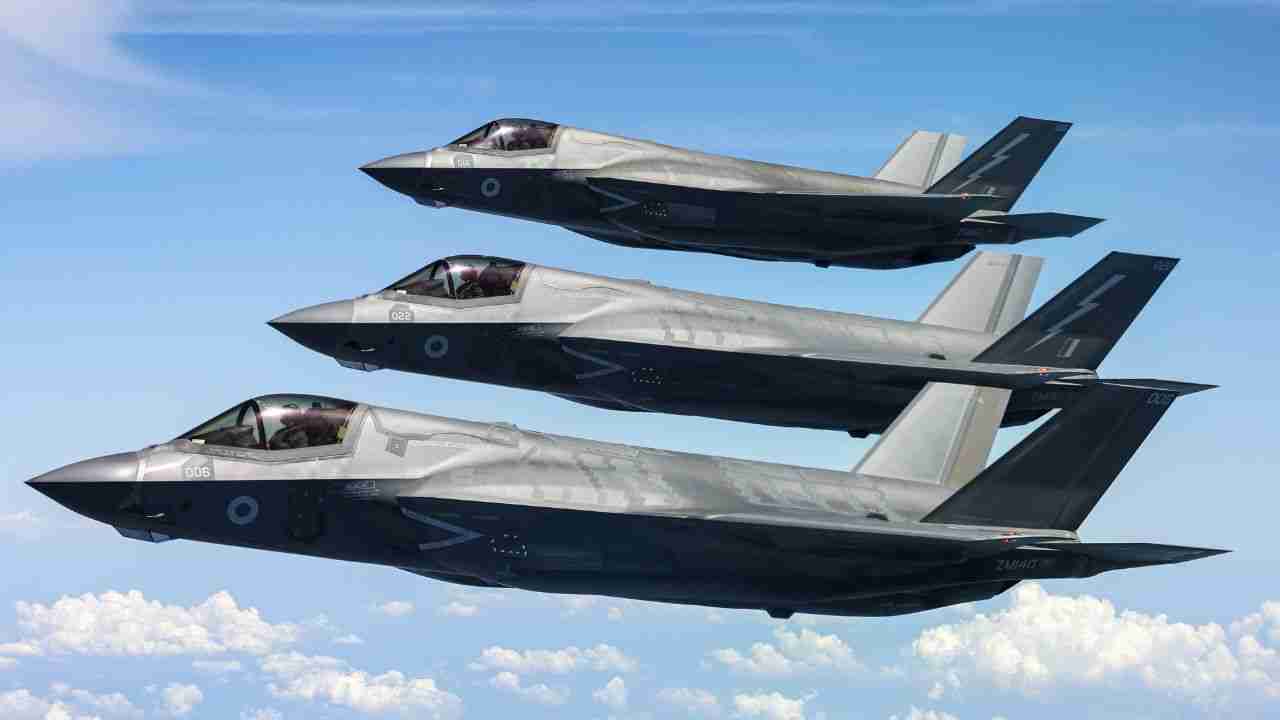
The UK government has officially denied that the Royal Air Force’s F-35 fighter jets have any kind of “kill switch” that would allow the United States or the manufacturer to remotely disable the aircraft.
The statement was made following questions in the British Parliament, where the Ministry of Defence emphasized that London maintains full operational sovereignty over when and where its fighter jets are employed.
According to Defence Minister Lord Coaker, the equipment acquired by the British Armed Forces does not depend on authorization from third parties to be used. He also highlighted that the country has detailed knowledge of the F-35’s systems, which allows it to assess operational and legal risks before any combat deployment.
Despite the denial of the existence of a remote shutdown mechanism, the very operating model of the F-35 program reveals a more complex structural dependence. The aircraft relies on constant software updates, mission data, and logistics networks managed by the United States, in addition to digital systems such as ODIN, which are responsible for diagnostics, maintenance, and fleet management.
In practice, this means that British F-35s cannot simply be “shut down” by an external command. However, potential restrictions on access to technical support, updates, and data could, over time, reduce the fleet’s readiness and operational effectiveness. Thus, while immediate sovereignty is preserved, long-term freedom of action remains tied to the support structure led by the United States.
Source: UK Defence Journal | Photo: X @RoyalAirForce | This content was created with the help of AI and reviewed by the editorial team
