
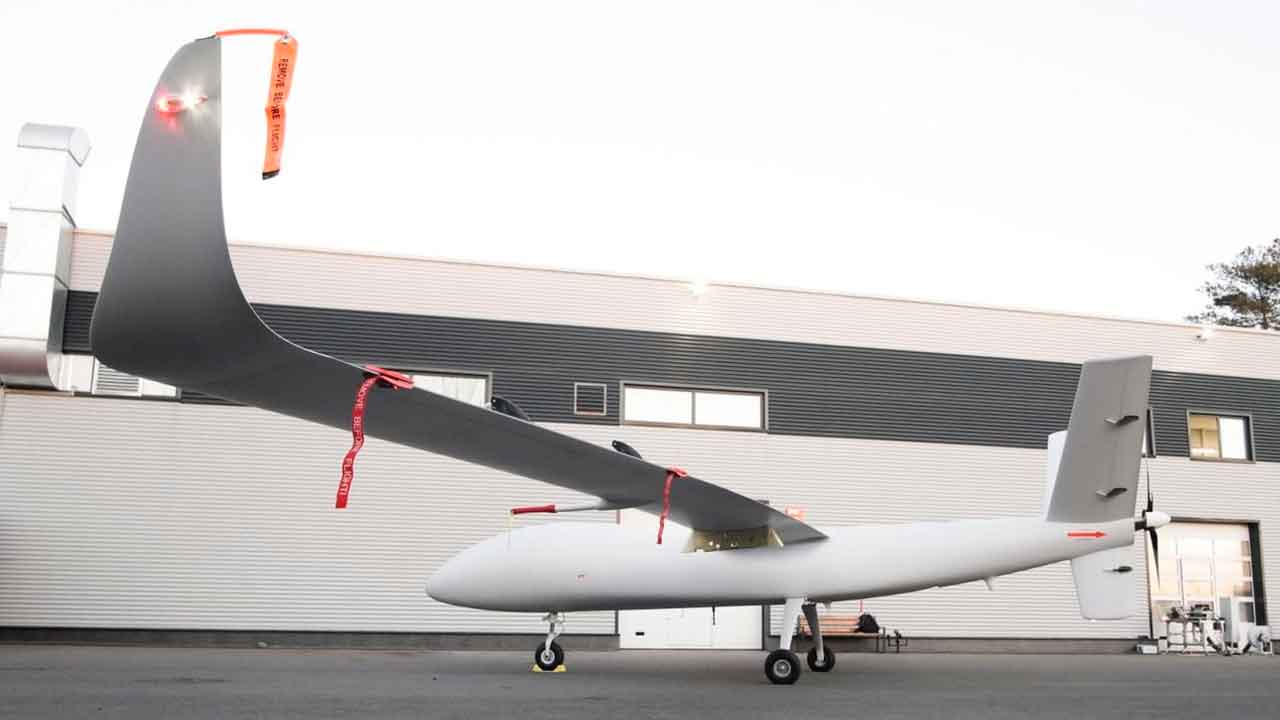
The 1,000 kg prototype remained airborne for 16 hours, covering 2,400 km and demonstrating high performance in fuel efficiency and aerodynamics.
The American company with Belarusian roots UAVOS has recently announced the positive results of the tests of its new medium-altitude, long-endurance unmanned aerial vehicle (UAV), the S1V300.
+ Watch the presentation video of UAVOS S1V300
During a recent test flight, the 1,000 kg UAV remained in the air for about 16 hours, covering approximately 2,400 km — a significant milestone demonstrating the platform’s potential for long-endurance operations.
+ New Archer 8×8 Fires for the First Time in Boden, Northern Sweden
Efficiency and advanced design
According to UAVOS founder and CEO Alexey Stratsilatov, the success of the tests resulted from a series of technical enhancements that directly improved flight efficiency and endurance. These include a large wingspan with aerodynamic tips, improved wing mechanization, a lightweight composite landing gear, retractable air intakes, and a Y-shaped tail.
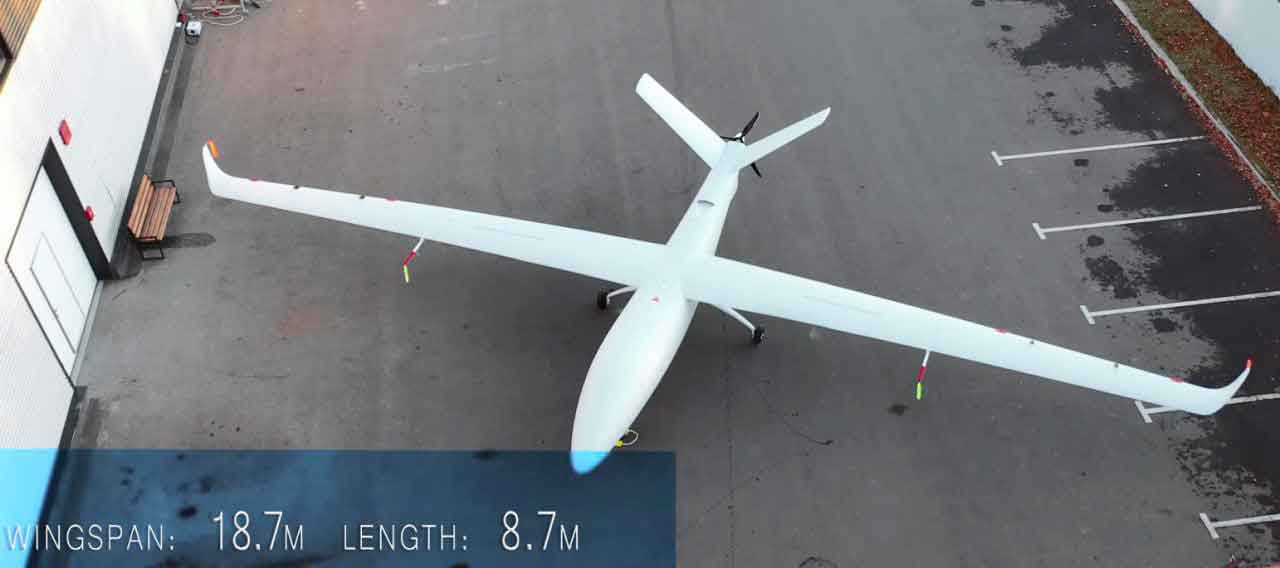
Cruising at a speed of 130 km/h, the S1V300 consumes only 10 liters of fuel per hour. According to UAVOS, the system is capable of performing flights lasting over 40 hours while carrying a payload of 30 to 40 kg.
Multiple applications
The platform is offered for both civilian and military applications. In the commercial field, it can be used for environmental monitoring, border security, infrastructure inspection, and precision agriculture. In defense operations, the S1V300 is suitable for reconnaissance, surveillance, and intelligence (ISR) missions.
The new system strengthens UAVOS’s MALE (Medium Altitude Long Endurance) portfolio, establishing the company as one of the leading independent developers of unmanned aviation technologies in the global market.
Source and images: UAVOS. This content was created with the help of AI and reviewed by the editorial team.
