
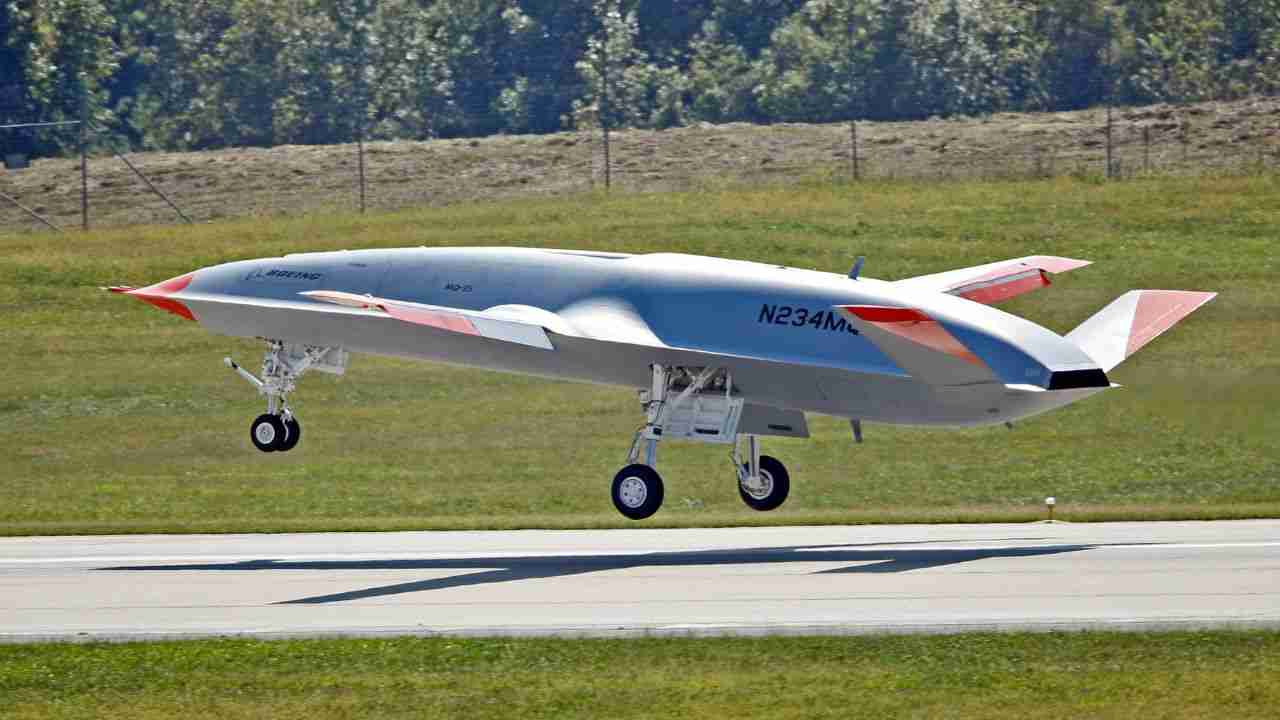
The United States Navy has postponed the first flight of the MQ-25 Stingray, an aerial refueling drone developed by Boeing, to early 2026.
The original plan called for testing in 2025, but the aircraft is still undergoing an expanded series of ground evaluations and system certifications before being cleared to fly. Boeing and the Navy state they are dedicating extra time to structural testing, software checks, and integration with the Unmanned Carrier Aviation Mission Control System (UMCS), considered essential to ensure program safety and maturity.
The flight will be the first with a production-representative aircraft, different from the prototype that has already conducted refueling demonstrations with F/A-18F, F-35C, and E-2D aircraft. The MQ-25 is considered a key element for the future of carrier aviation, as it is expected to take over the refueling mission currently performed by F/A-18E/F jets, freeing the fighters for combat missions.
The Navy anticipates the drone will transfer between 6.3 and 7.2 tons of fuel over approximately 926 km, extending the operational range of the air wings on Nimitz- and Ford-class aircraft carriers.
Despite progress in testing and infrastructure, including building a new facility dedicated to the program and installing the UMCS on ships and bases, the MQ-25 faces schedule challenges, with key milestones already delayed by up to two years. Initial operational capability is now expected in 2027.
Nevertheless, the Navy considers the project essential to expanding the use of unmanned aircraft in carrier operations and advancing toward a cooperative model between manned and autonomous platforms in naval aviation.
Source: The Aviationist | Photo: X @BoeingDefense | This content was created with AI assistance and reviewed by the editorial team
The U.S. Navy has confirmed that Boeing’s MQ-25 Stingray will not fly in 2025 as planned.
The first flight of the aircraft is now expected in early 2026, as teams finish systems testing, certification, engine runs, and software checks.
The delay follows months of optimistic… pic.twitter.com/2gXTAGsWCT
— Clash Report (@clashreport) December 11, 2025
