
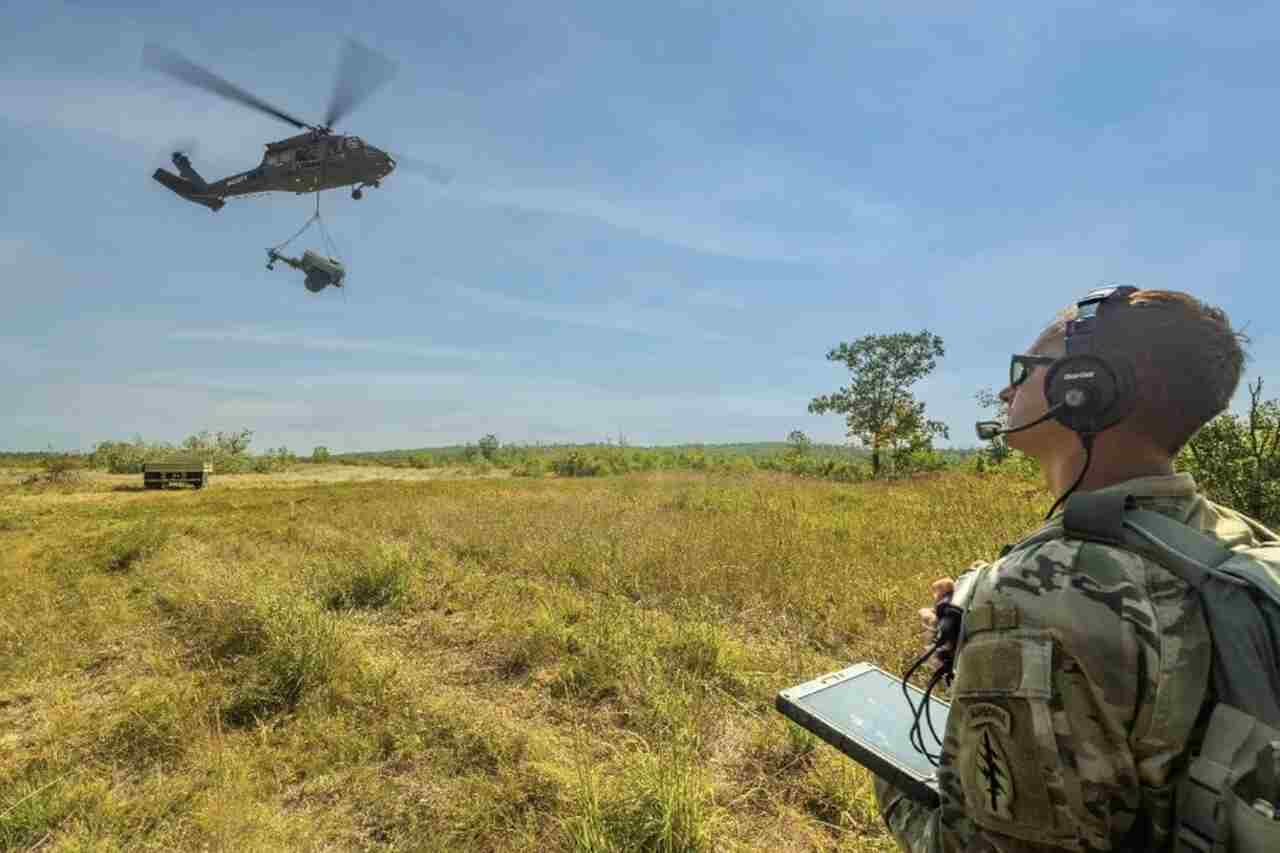
The UH-60 Black Hawk helicopter was put to the test during a US military exercise, as reported by The War Zone.
The aircraft from Sikorsky, a subsidiary of Lockheed Martin, is an Optionally Piloted Vehicle (OPV), meaning it is a semi-autonomous vehicle that can be operated either autonomously or by a crew member.
During the exercises, military personnel performed parachute drops, hovered autonomously while suspended loads were attached, and flew on a simulated medical evacuation mission under the direction of an untrained individual on board.
has been steadily expanding the flight envelope and capabilities of the OPV for years, a project that is now also contributing to its development plan for the U-Hawk, a fully unmanned drone.
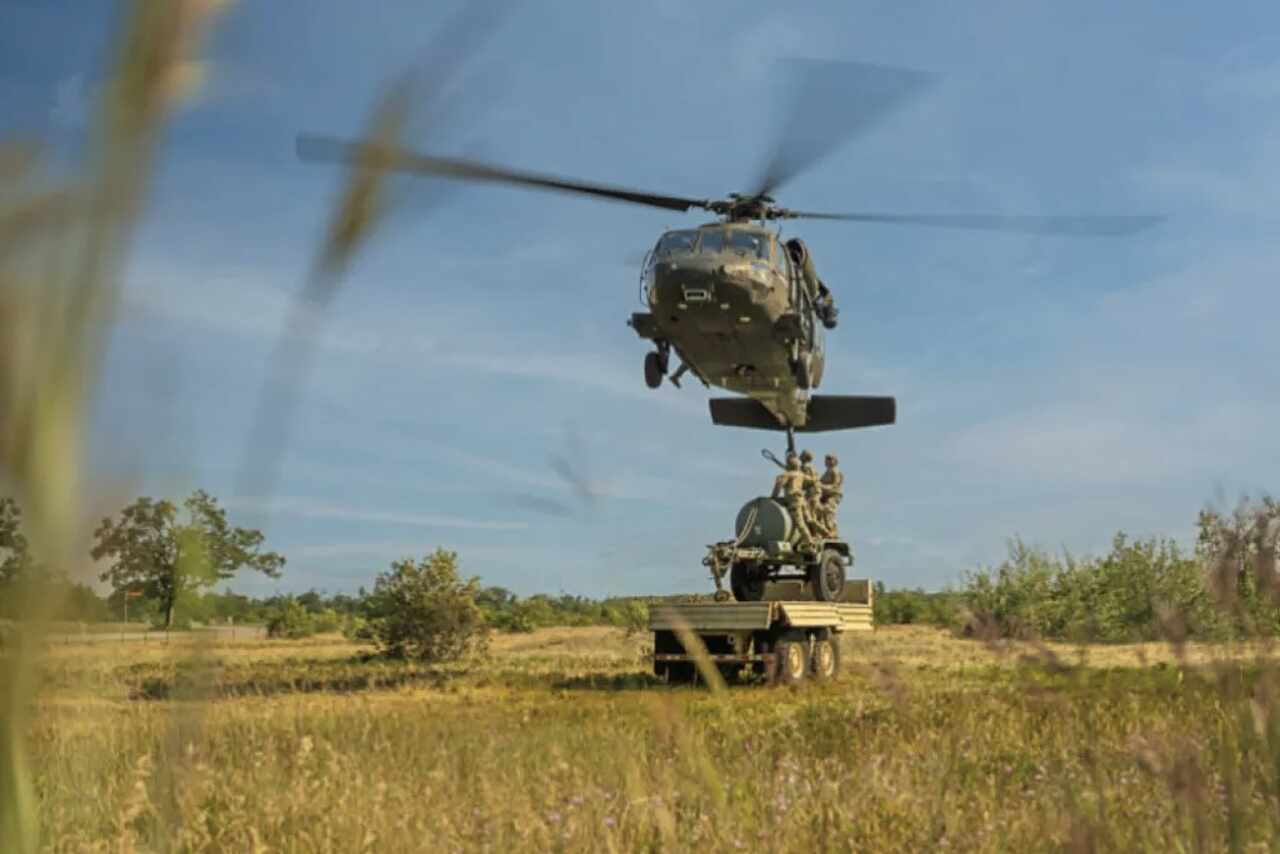 (Photo: Sikorsky)
The first OPV tests began in 2019, and the first unmanned flight took place three years later. Currently, the Black Hawk is capable of flying along pre-defined routes, which can be planned in advance or in real-time on location, all through a touchscreen interface on a tablet-like device.
The helicopter has some level of automated obstacle avoidance capability, and the routes can also be manually altered by an operator during flight.
The Black Hawk, which does not require a pilot, does not need constant contact with a human operator to complete a mission and can follow instructions from multiple people at different points during the operation.
Additionally, the control system allows the completion of specific tasks, such as commanding the helicopter to go to a point and hover at a pre-set altitude. Turning the OPV on and off is also done with the simple touch of a button.
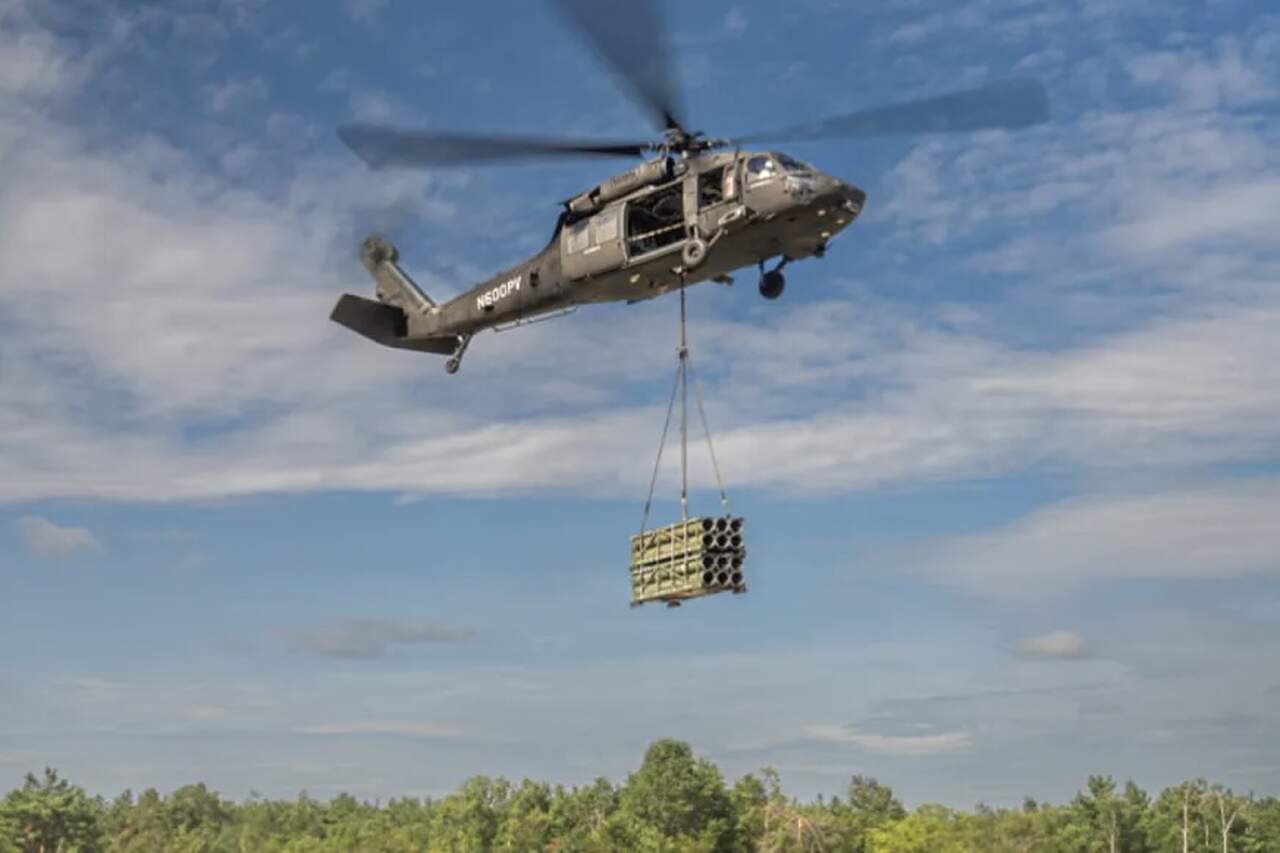 (Photo: Sikorsky)
In autonomous mode, the OPV operates through the MATRIX autonomous flight control software. The development of MATRIX has been ongoing for over a decade, and DARPA has supported it from the beginning through the ALIAS program (Aircrew Labor In-Cockpit Automation System).
“Events like the Northern Strike give us the opportunity to collect feedback from users and incorporate it into software improvements [MATRIX] as part of a continuous process of software enhancement,” said Mike Baran, chief engineer at Sikorsky Innovations, to TWZ.
“Thus, over the past year, continuous work on the OPV has focused primarily on software, enabling many of the missions we successfully performed during the Northern Strike operation.”
It is worth noting that the OPV conducted all of its missions during the Northern Strike 25-2 exercise with a safety pilot on board. This was determined by the parameters of the exercise, which took place within the US domestic airspace, managed by the Federal Aviation Administration (FAA).
“The level of autonomy that the team has with the MATRIX technology and how it is integrated into the aircraft [OPV] actually requires an operator, not a pilot,” added Ramsey Bentley, Director of Advanced Programs Business Development at Sikorsky, to TWZ.
This isn’t theory or simulation.
It’s real missions, real soldiers and real autonomy.
At Northern Strike 25-2, OPV Black Hawk showed how MATRIX™ tech enables contested logistics and personnel recovery without putting pilots at risk. pic.twitter.com/aDqwCFh5TJ
— Sikorsky (@Sikorsky) October 30, 2025
Photos and video: Sikorsky / X @Sikorsky. This content was created with the help of AI and reviewed by the editorial team.
