
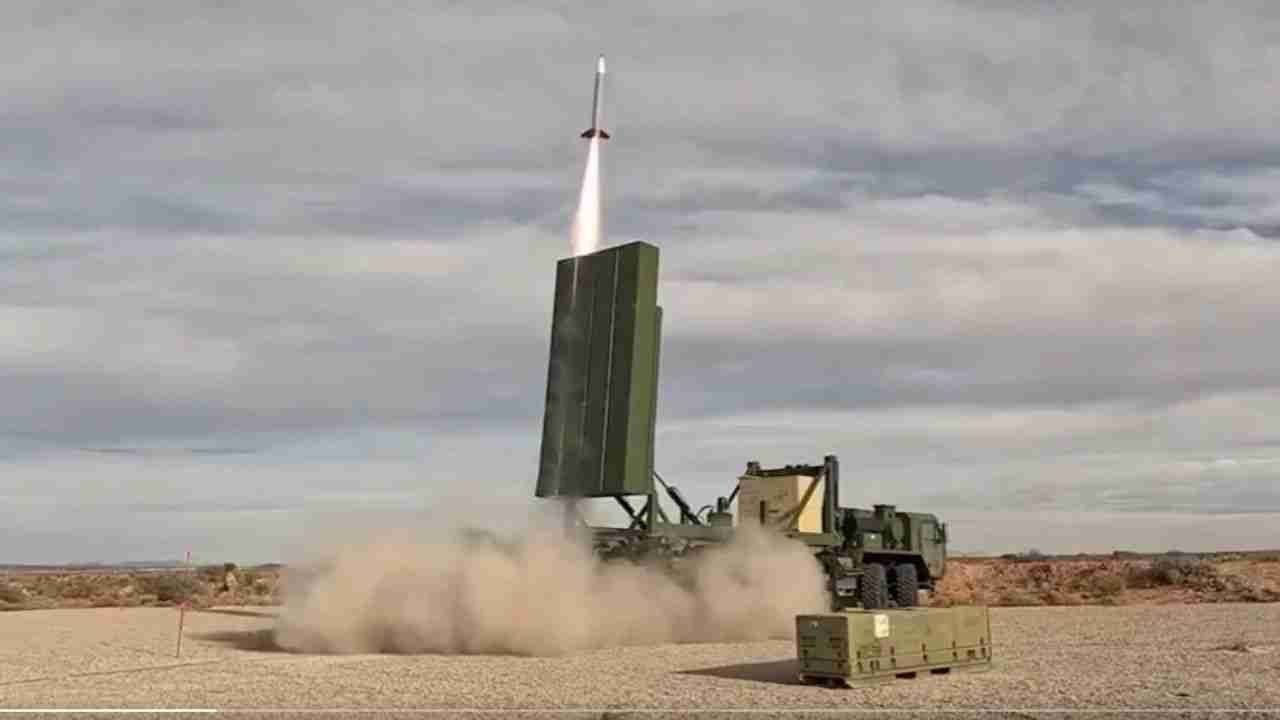
The United States Navy has signed an approximately $105 million contract with Castelion to advance the development of the Blackbeard hypersonic weapon, including live-fire testing in the Indo-Pacific.
The agreement, formalized in April 2026, calls for the project to reach initial operational capability by January 2028, marking an important step in the modernization of the American military arsenal.
The program is part of an initiative focused on creating long-range weapons with reduced costs and large-scale production. The proposal seeks to overcome one of the main challenges of hypersonic weapons: the high price per unit, which has historically limited their use. As a result, the expectation is to expand the operational availability of this type of strategic technology.
In addition to defining the system’s final requirements, Castelion will also be responsible for integrating the weapon with launch platforms and conducting tests under real-world combat conditions. The choice of the Indo-Pacific as the testing area reinforces both technical validation in an operational environment and the sending of a clear geopolitical signal about U.S. military capabilities in the region.
Capable of reaching speeds above Mach 5 and offering high maneuverability, hypersonic weapons represent a significant challenge for current defense systems. In this context, the decision to bet on a smaller company reflects a shift in Pentagon strategy, as it seeks more agile and cost-effective solutions outside the traditional circle of major defense contractors.
🚨🇺🇸 The United States has unveiled a new hypersonic missile, signaling a major shift in the global balance of advanced weapons. California based defense startup Castelion has introduced Blackbeard, a next generation hypersonic system designed to significantly narrow the gap… pic.twitter.com/G24boCXgcq
— Defense Intelligence (@DI313_) January 14, 2026
+ Ukrainian drones destroy a second Tornado-S system near Melitopol
Source: Defence Blog | Photo: X @DI313_ | This content was created with the help of AI and reviewed by the editorial team
