
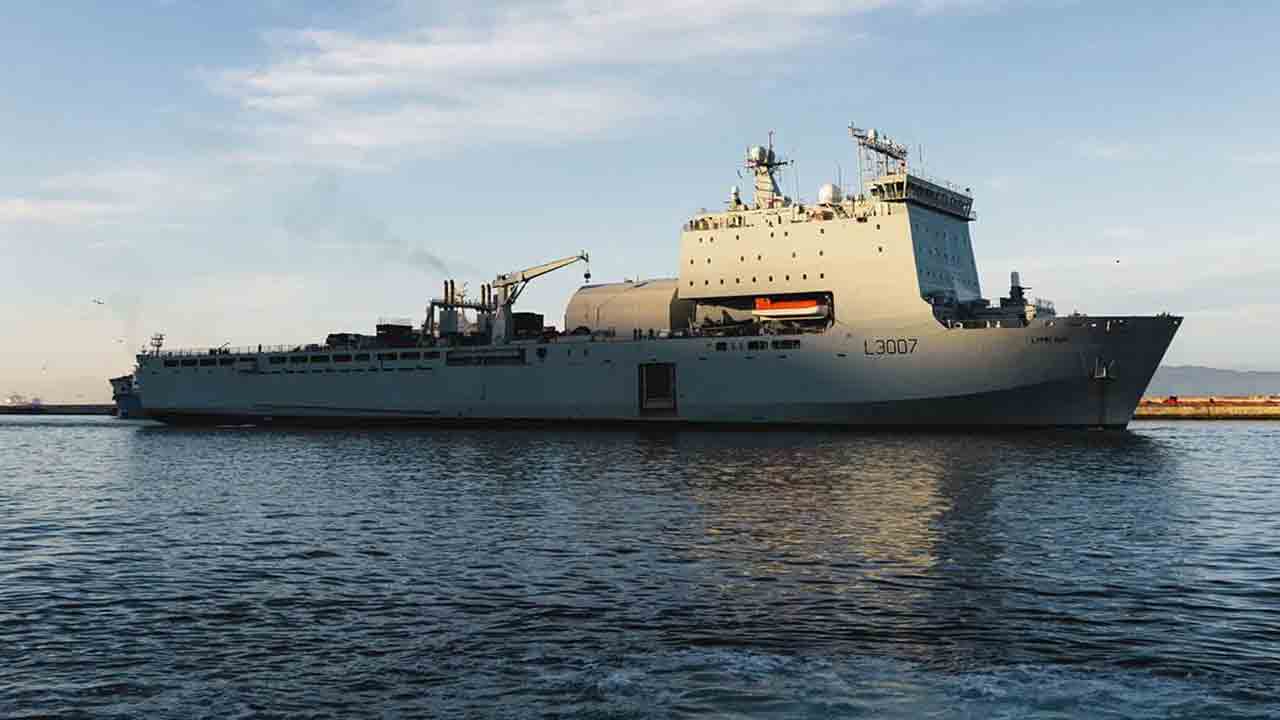
A Royal Fleet Auxiliary support ship has been loaded with unmanned vessels, underwater sensors, and autonomous sonar equipment to serve as a mothership platform in mine-hunting operations.
The support ship RFA Lyme Bay, of the Royal Fleet Auxiliary, departed Gibraltar carrying advanced mine-hunting equipment in preparation for a possible mission in the Strait of Hormuz.
The vessel may serve as a mothership platform for unmanned systems in a potential multinational operation aimed at securing one of the world’s most important maritime routes.
On board are unmanned vessels, underwater sensors, and autonomous sonar equipment, along with more than 100 specialists from the Royal Navy assigned to the Diving and Threat Exploitation Group (DTXG) and the Mine and Threat Exploitation Group (MTXG).
These groups will be responsible for operating the systems and coordinating the detection and neutralization of underwater threats.
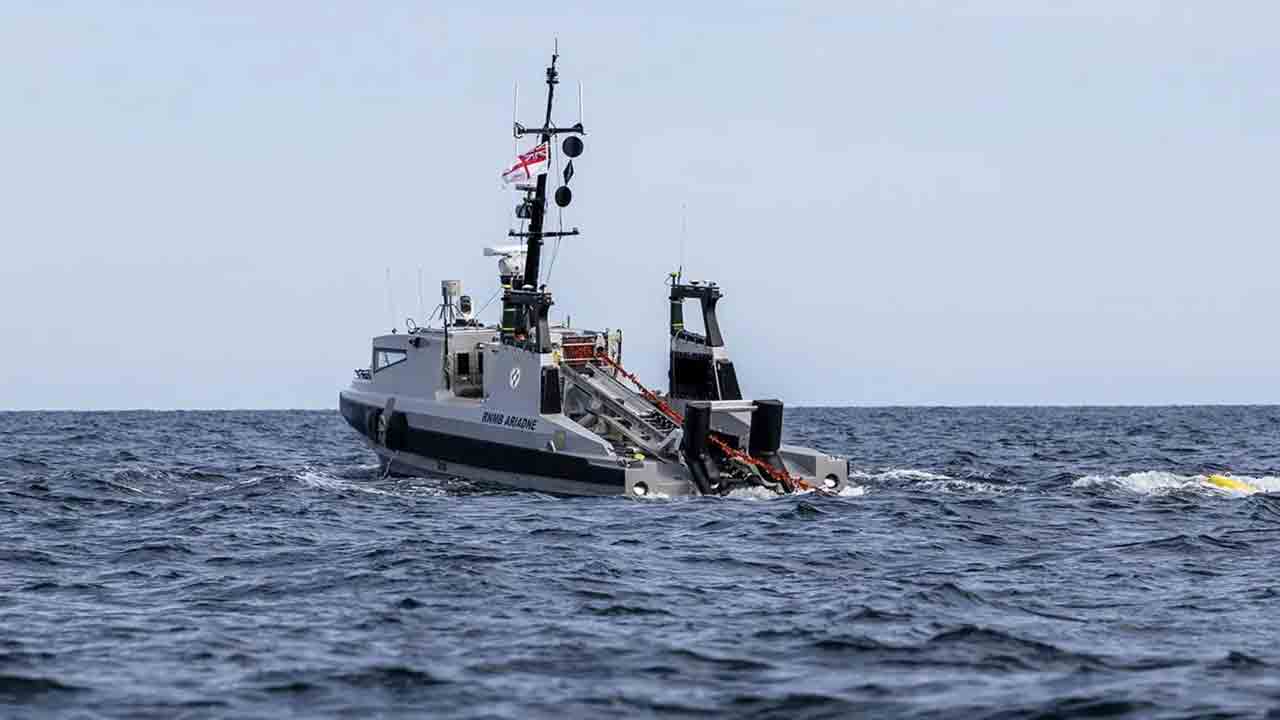
Among the embarked equipment is the RNMB Ariadne, a 12-meter unmanned surface vessel designed to locate and deal with naval mines without exposing crews to dangerous areas.
The ship also carries a multifunction unmanned vessel capable of deploying the Seacat, an autonomous underwater vehicle that creates 2D and 3D sonar images of the seabed.
Another system included in the mission is the Remus, an unmanned underwater vehicle used to map the seafloor. According to the Royal Navy, the equipment has been tested in the United Kingdom, and some of it has already been used in exercises in different regions, demonstrating its ability to operate in multiple maritime environments.
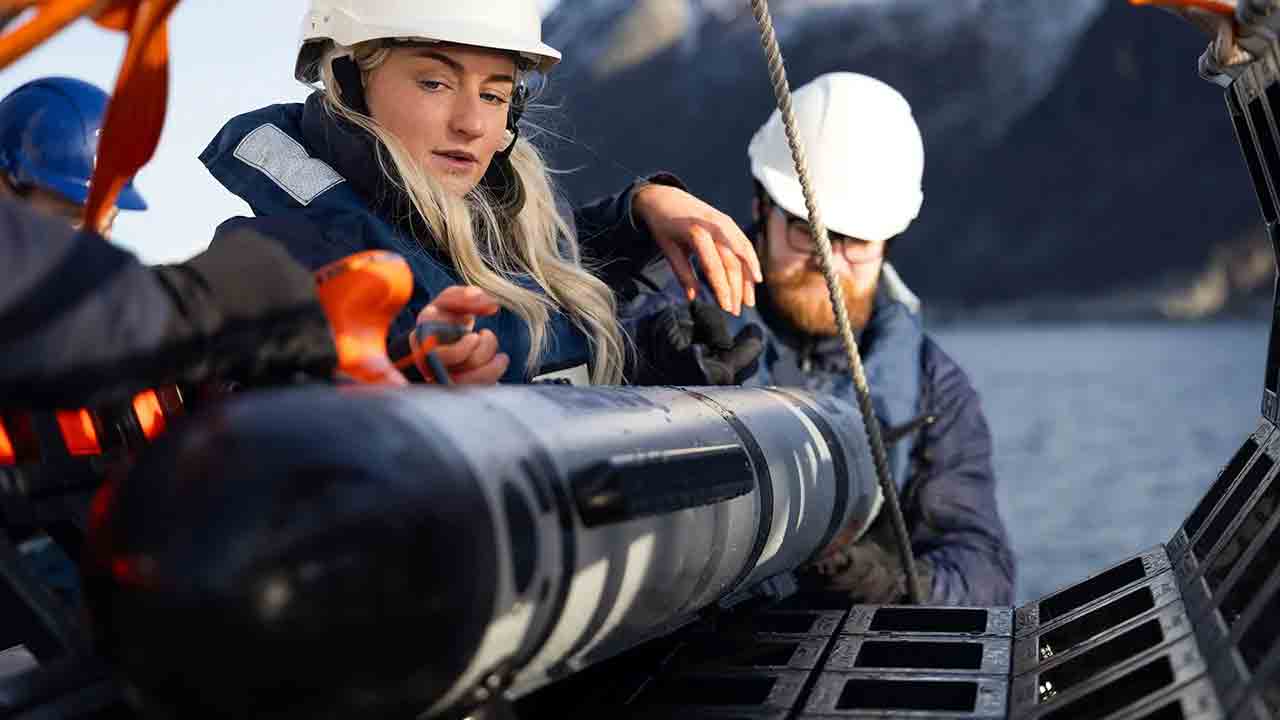
According to Commander Dan Herridge, head of the MTXG, the mission aims to provide a modern mine countermeasure capability using advanced sensors, autonomy, and artificial intelligence. He highlighted that the operation rapidly brings together specialized personnel, platforms, and technology to respond to evolving maritime threats.
The possible presence of the RFA Lyme Bay in the Gulf region represents a shift in how the Royal Navy intends to conduct mine-hunting operations, with greater use of autonomous systems and solutions developed in partnership with British industry. The goal is to strengthen the protection of strategic trade routes and support freedom of navigation.
Before departure, the ship also underwent a cybersecurity assessment conducted by specialists from Royal Navy Digital. The inspection included IT systems and personal electronic devices such as mobile phones, tablets, and smartwatches in order to reduce digital risks before the mission.
+ Autonomous SA200 helicopter cleared for production after advanced tests
Source and images: Royal Navy. This content was created with the help of AI and reviewed by the editorial team.
