
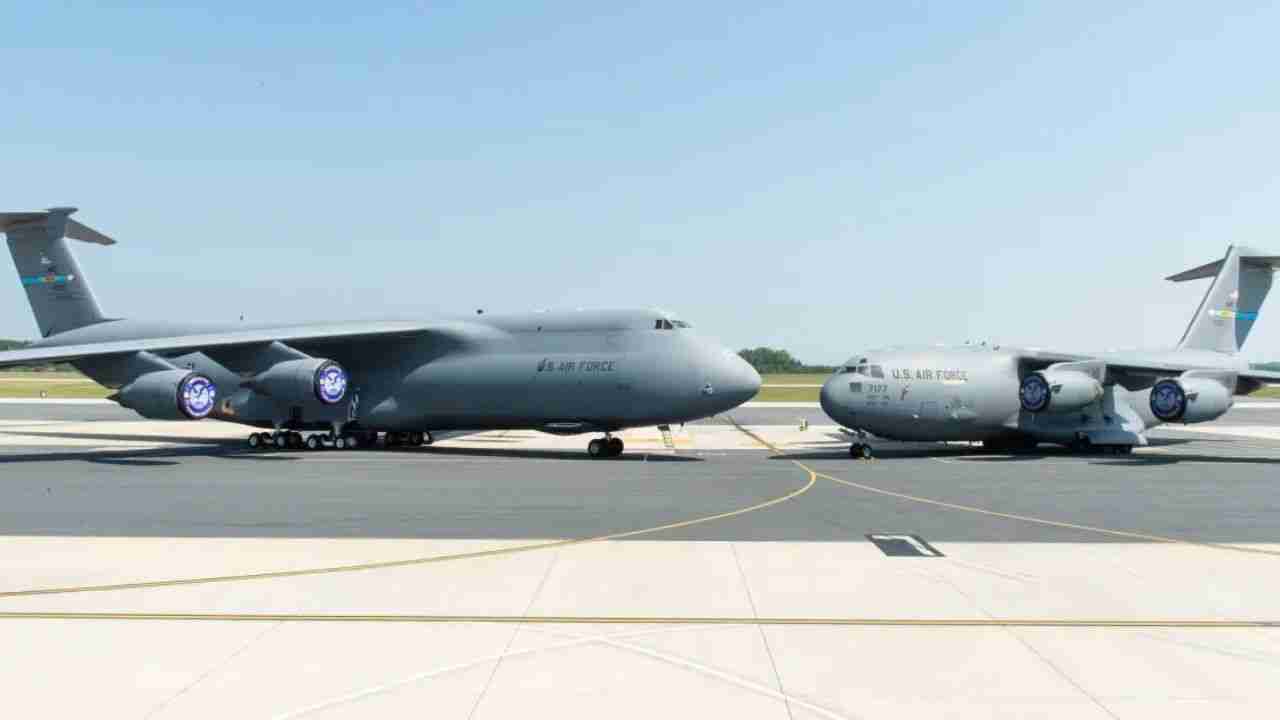
The United States Air Force (USAF) plans to replace its two main cargo aircraft, the C-17 Globemaster III and the colossal C-5 Super Galaxy, with a single next-generation platform. Named NGAL (Next Generation Airlift), the new aircraft is expected to enter service in the mid-2040s.
The goal is to unify capabilities: instead of developing two distinct models, the USAF is seeking a versatile aircraft that can perform both long-range strategic transport missions and operations that require tactical agility.
The requirements for the NGAL prioritize survival in high-risk environments. The future aircraft will need to be faster and more agile, incorporating advanced defensive systems to neutralize aerial and ground threats, such as drones and long-range missiles. The ability to operate on unprepared airstrips, a specialty of the C-17, and to carry outsized cargo, such as satellites (a function of the C-5), are design challenges that engineers will need to overcome in a single project. The possibility of the NGAL being a “system of systems,” involving multiple types of aircraft, has not been ruled out either.
As the NGAL project begins to take shape, the current fleets of C-17 and C-5, already aging and out of production, will continue to serve as the backbone of U.S. strategic airlift. The USAF is considering upgrades to extend the life of the C-17 but has ruled out reopening its production line for now.
The pressure for a new generation of cargo aircraft is clear: the ability to project power quickly and securely through logistics is considered vital for national defense in the coming decades.
Source: The War Zone | Photo: X @Defence_IDA | This content was created with the help of AI and reviewed by the editorial team
USAF Plans Single Aircraft to Replace Both C-17 and C-5 Cargo Planes. https://t.co/IFnh1Ga0eH pic.twitter.com/oXcnCGRt6n
— International Defence Analysis (@Defence_IDA) September 24, 2025
