
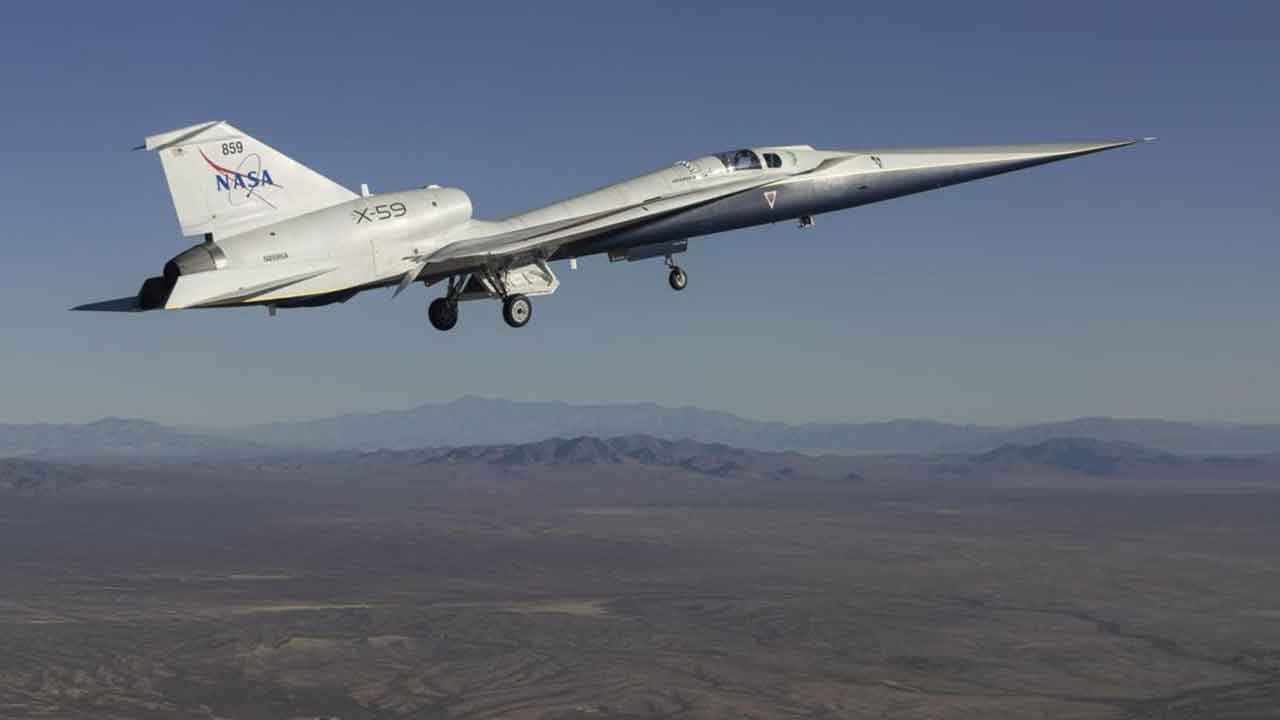
NASA has officially revealed new details, photos and videos of the first flight of the X-59 QueSST, the quiet experimental supersonic aircraft developed in partnership with Lockheed Martin.
The historic flight took place at the end of October, but the information was only released now due to the U.S. federal government shutdown that was in effect at the time.
Designed to demonstrate that supersonic flights over populated areas can be much quieter than current aircraft, the X-59 is the centerpiece of the Quiet SuperSonic Technology (QueSST) program, which aims to enable the return of civilian supersonic aviation — suspended since the days of the Concorde due to its sonic boom.
+ Click here to watch the video

NASA’s first major crewed experimental aircraft in more than 20 years
According to Bob Pearce, Associate Administrator for NASA’s Aeronautics Research Mission Directorate, the X-59 represents a significant milestone:
“It is a unique aircraft designed for a specific task. This airplane affirms NASA’s mission to shape the future of flight and apply innovative solutions for the benefit of U.S. aviation and society.”

Built over nine years, the X-59 had its maiden flight postponed several times until it finally took off on October 28, piloted by NASA test pilot Nils Larson.
How the inaugural flight went
Departing from Palmdale, California, the single-engine jet equipped with a GE Aerospace F414-GE-10 accelerated to approximately 200 knots (370 km/h) and climbed to 12,000 feet (3,600 meters).
As is standard for inaugural flights, the landing gear remained extended. A NASA Boeing F/A-18 fighter jet escorted the aircraft for the entire test mission.
The flight lasted 67 minutes and ended with a successful landing at Edwards Air Force Base, home to the Armstrong Flight Research Center — the X-59’s new base of operations.
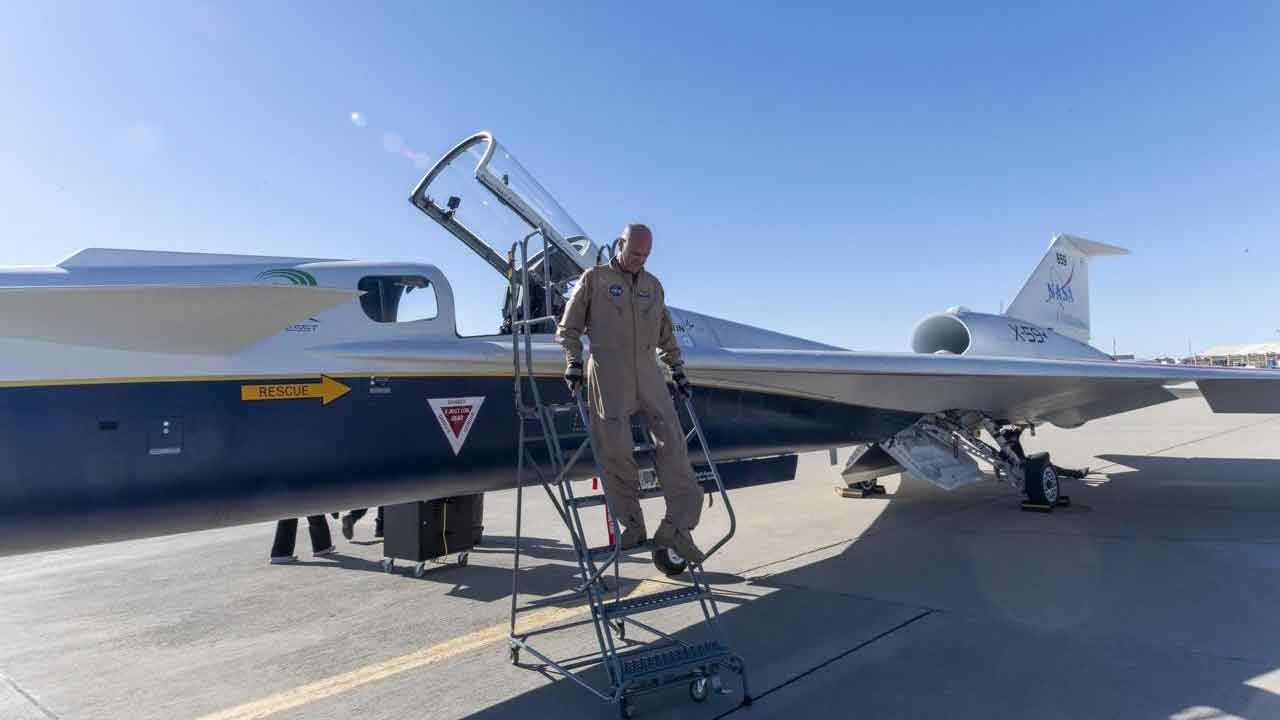
Next steps: testing up to Mach 1.4
With the first flight completed, NASA and Lockheed Martin now begin the next testing phase, which will include assessments of control, stability and gradual acceleration up to the cruising speed of Mach 1.4 (approx. 1,700 km/h) at 55,000 feet (16.7 km).
Why is the X-59 so quiet?
The main objective of the project is to reduce the intensity of the sonic boom. To achieve this:
The fuselage was designed to be long and extremely slender, preventing the merging of shockwaves.
External components were positioned on top of the aircraft, directing shockwaves upward.
The aircraft has no traditional front windshield; instead, it uses the eXternal Vision System, with cameras and monitors providing forward visibility to the pilot.
NASA estimates the X-59 will produce booms of only 75 dB, comparable to a “distant thunder” or “a neighbor closing a car door.” For comparison, the Concorde reached 105 dB.
Flights over cities and the potential future of civilian supersonic travel
After validating the aircraft’s main capabilities, NASA will conduct flights over various regions of the U.S. to measure ground-level acoustic impact and gather public response — an essential step toward proposing a future revision of the current ban on supersonic flight over land.
If testing confirms the predictions, the X-59 may pave the way for a new generation of quiet civilian supersonic jets, opening a new chapter in global aviation.
Source and images: NASA. This content was created with the help of AI and reviewed by the editorial team.
