
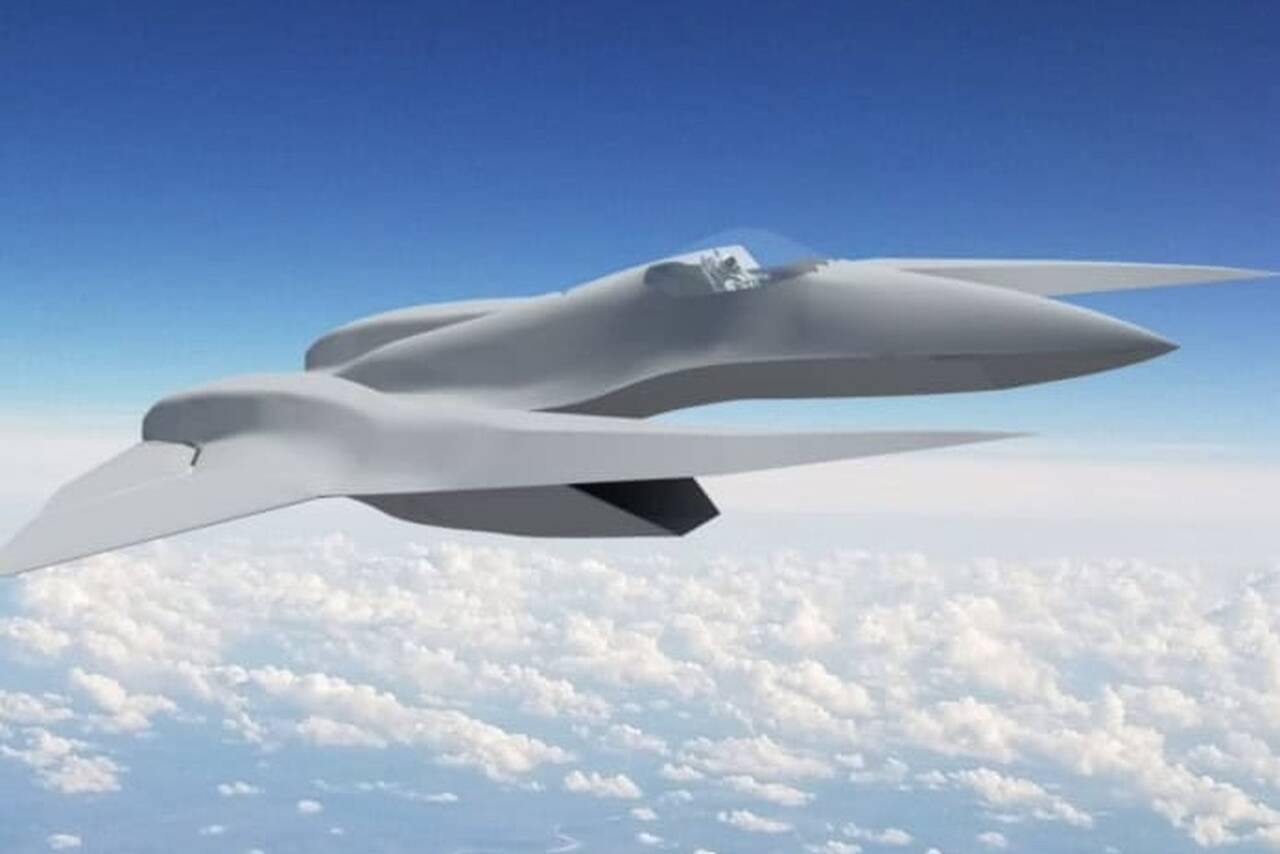
Stavatti Aerospace has unveiled the SM-39 Razor, an ultra-futuristic-looking fighter jet that appears to have come straight out of the Star Wars film franchise.
The Stavatti fighter is one of the candidates for the U.S. Navy’s F/A-XX Next Generation Air Dominance (NGAD) program, which is intended to replace fighter fleets such as the F/A-18E/F Super Hornet and the F-22 Raptor.
According to a report by New Atlas, the NGAD initiative aims to produce a family of systems to create and support sixth-generation combat aircraft. This includes the F/A-XX, which is the Navy’s alternative to the U.S. Air Force’s F-47 fighter.
While the Air Force is seeking an aircraft focused on air superiority, the Navy wants one capable of surface attack, air-to-air combat, and electronic warfare missions.
The fighter would also need the ability to act as a command hub to control a swarm of unmanned Collaborative Combat Aircraft (CCA), carrying additional weapons and sensors.
Until now, the competition to build the F/A-XX had been between Boeing and Northrop Grumman, but Stavatti Aerospace has positioned itself as a potential contender with the unveiling of its SM-39 Razor supersonic fighter.
Digital renderings of the aircraft released by the company show that the SM-39 Razor features a highly futuristic design, with three fuselages attached to a cantilevered, variable-curvature morphing wing integrated into a blended wing body.
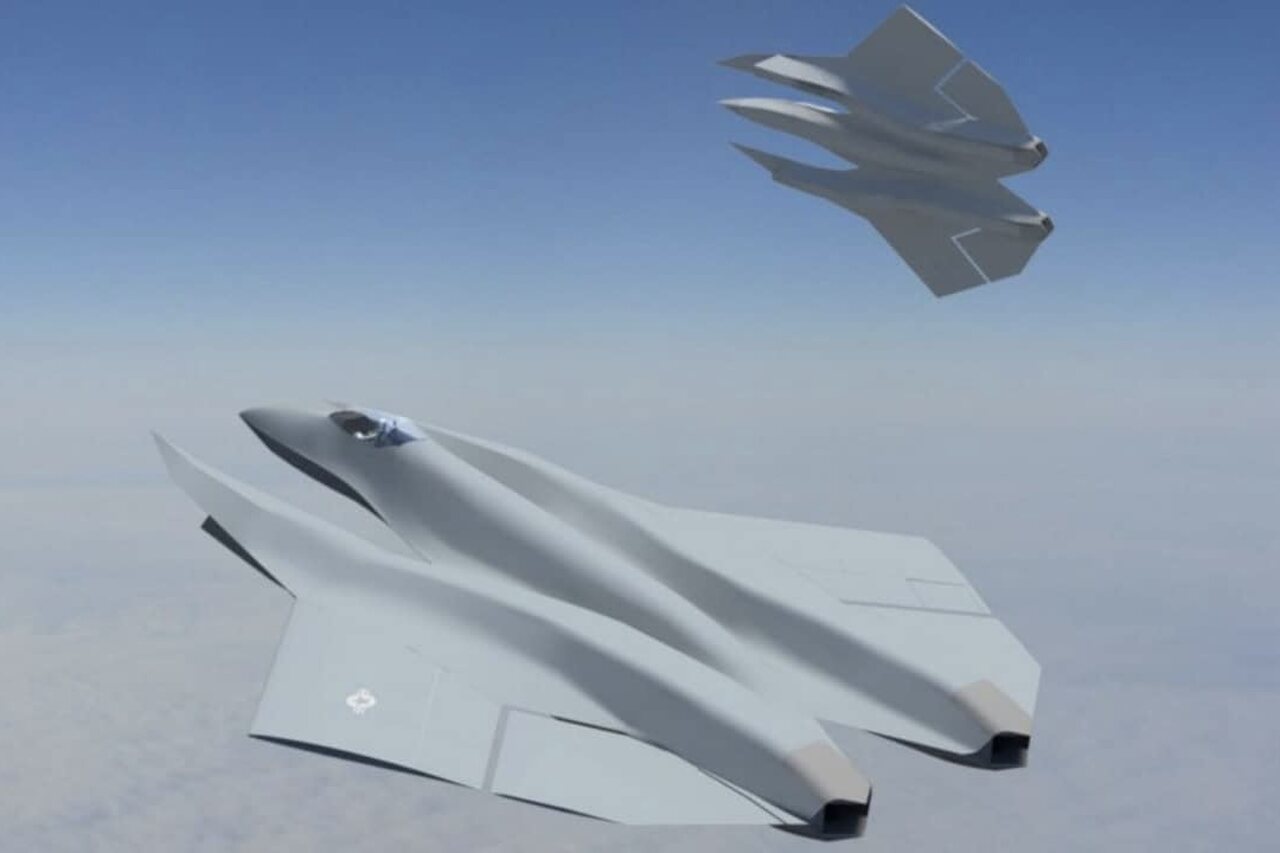
Above all, however, Stavatti has jumped ahead in the race due to its claimed maximum speed of up to Mach 4—twice that of the aircraft proposed by Boeing and Northrop Grumman—while its supercruise speed is said to be Mach 2.5.
Unfortunately, what may hinder Stavatti at this point is skepticism. The company’s ambitious platform has raised several questions, particularly regarding its speed. Following the announcement, many began to question whether a turbofan engine would even be capable of reaching Mach 4.
At the same time, doubts have also been raised as to whether the unconventional design could handle near-hypersonic speeds without generating shock waves that could choke the air intakes or lead to catastrophic stresses where shock cones collide.
In addition, the SM-39 Razor fighter would not be very stealthy, as the aircraft’s skin could reach temperatures of up to 400 °C during flight, turning it into what has been described as a “flying torch.”
Secondly, it is worth emphasizing that Stavatti has not built a single aircraft since it entered the market in 1994. The Niagara Falls, New York-based company frequently unveils concepts for new aircraft, but has yet to produce a prototype, let alone bring a model into production.
It should also be emphasized that the U.S. Navy has not confirmed any submission from the company to the competition, but Stavatti’s reputation may work against it. In any case, the SM-39 has potential—provided the company can turn it into reality.
Photos: Stavatti Aerospace. This content was created with the help of AI and reviewed by the editorial team.
