
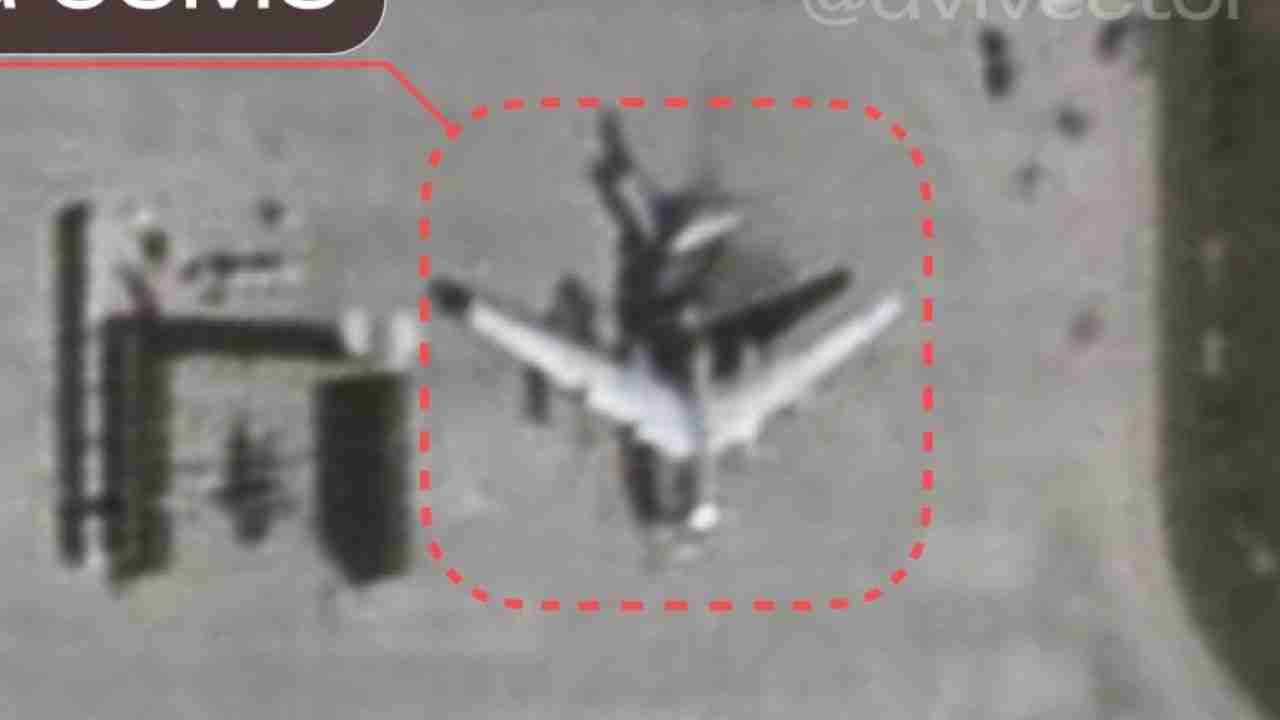
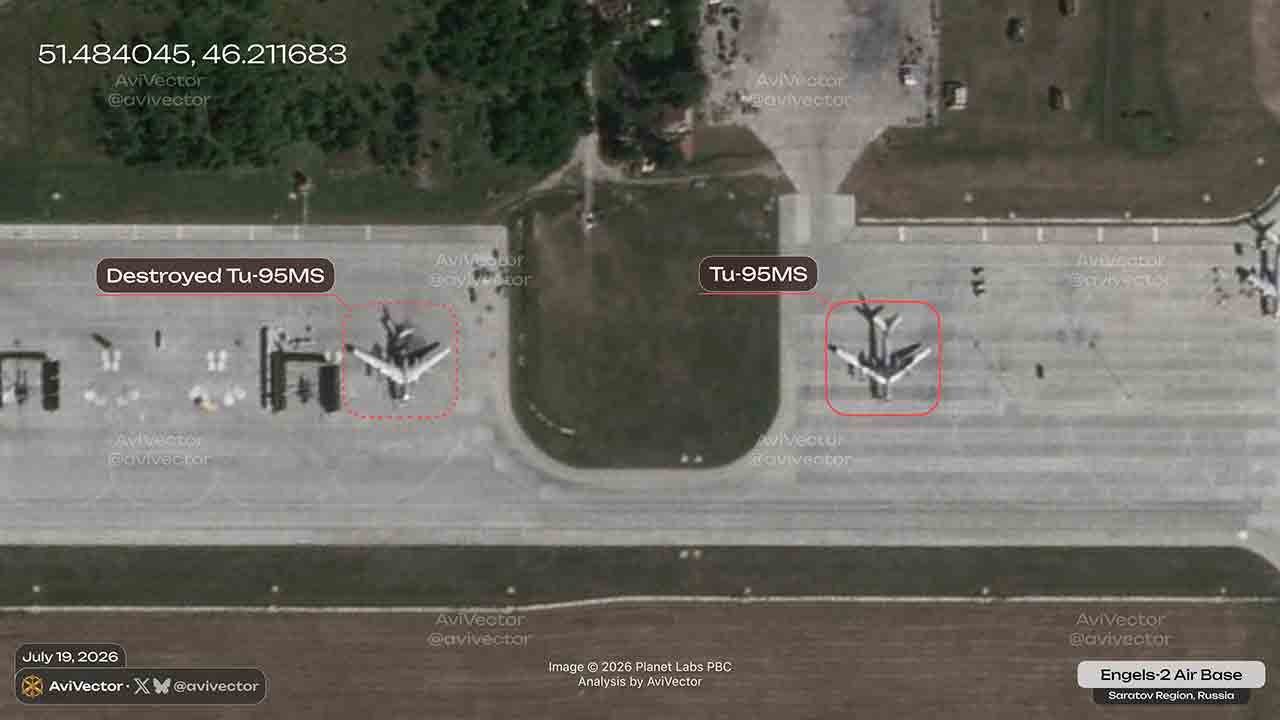
Satellite images released by analysts from the AviVector group confirm the destruction of a Russian Tu-95MS strategic bomber at Engels-2 Air Base in the Saratov region.
According to the analysis, the aircraft had been stationed at the site for a long period for maintenance, operational rotations, and training. The attack, attributed to the Security Service of Ukraine (SSU), took place on the night of July 16 using Shahed-type drones and completely destroyed the rear section of the aircraft, making any repair impossible.
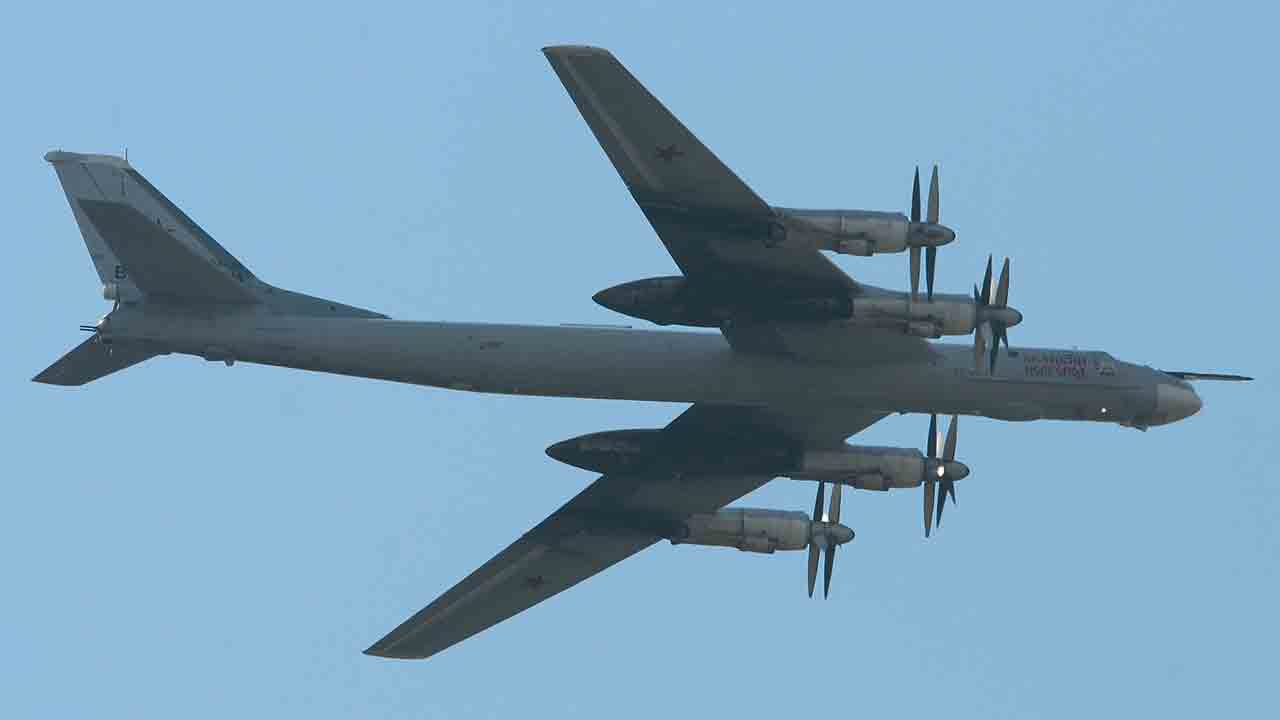
The Tu-95MS is a modernized version of the Tu-142MK, originally developed for anti-submarine warfare but adapted to launch Kh-55, Kh-555, Kh-101, and Kh-102 cruise missiles. Part of the fleet was converted from existing aircraft, while other units were specifically produced to this standard. Since 2015, the bombers have been upgraded to the Tu-95MSM configuration, which incorporates new engines, navigation and defense systems, while also expanding their capacity to carry up to eight missiles on external hardpoints.
Following Operation Spiderweb, carried out by Ukraine in June 2025 and responsible for striking at least eight Russian strategic bombers, Moscow reorganized the deployment of its long-range aviation. The aircraft began operating mainly between Engels-2, where they are armed before missions, and Ukrainka in the Russian Far East, which was chosen because it offers greater protection against Ukrainian attacks.
However, this new strategy has significantly increased the distances traveled by the bombers. To carry out an attack, a Tu-95MS must fly approximately 12,400 kilometers round trip, remaining in the air for about 23 hours. Although dispersing the aircraft reduces their exposure to attacks, the extended flight time accelerates wear on the fleet, increases the burden on crews, and raises maintenance costs.
🔻 Satellite images of 🇷🇺 Engels-2 Air Base as of July 19, 05:10 UTC
On the night of July 16, the Security Service of Ukraine destroyed a Tu-95MS strategic bomber at Engels-2 Air Base.
Two Tu-95MS were at Engels Air Base for a long period of time and conducted rotations,… pic.twitter.com/60707jLmGj
— AviVector (@avivector) July 19, 2026
+ Images show Chinese Navy exercise with an air-cushion landing craft
Source: Militarnyi | Photo: X @avivector | This content was created with the help of AI and reviewed by the editorial team
