
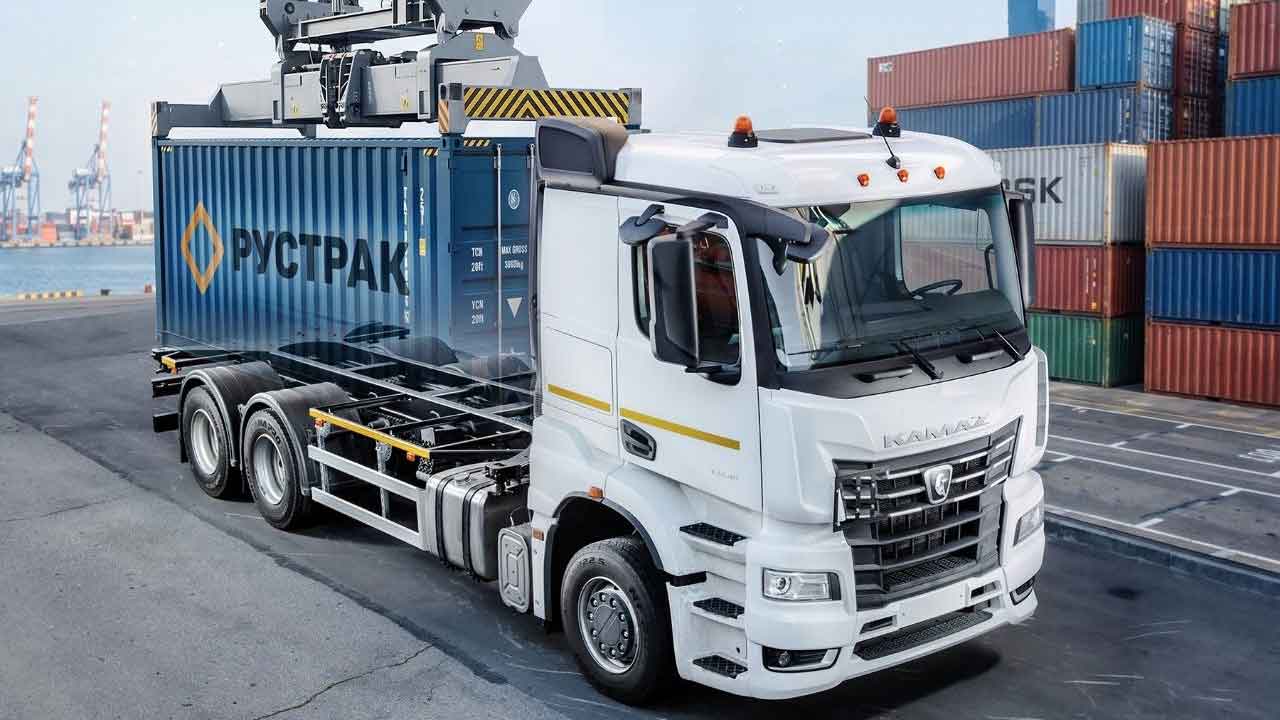
Russian truck manufacturer KAMAZ has expanded its heavy-vehicle lineup with a new container carrier developed in partnership with Rustrak, a company specializing in special-purpose equipment and based in Nizhny Novgorod. According to the companies, this is the first vehicle of its kind produced in Russia on the KAMAZ-65658 chassis.
Built on the K5 platform, the model was designed for logistics operations involving shipping containers, including those intended to transport goods classified as hazardous. The vehicle complies with the FL and AT categories of the ADR, the international agreement that establishes technical and operational requirements for this type of road transport.
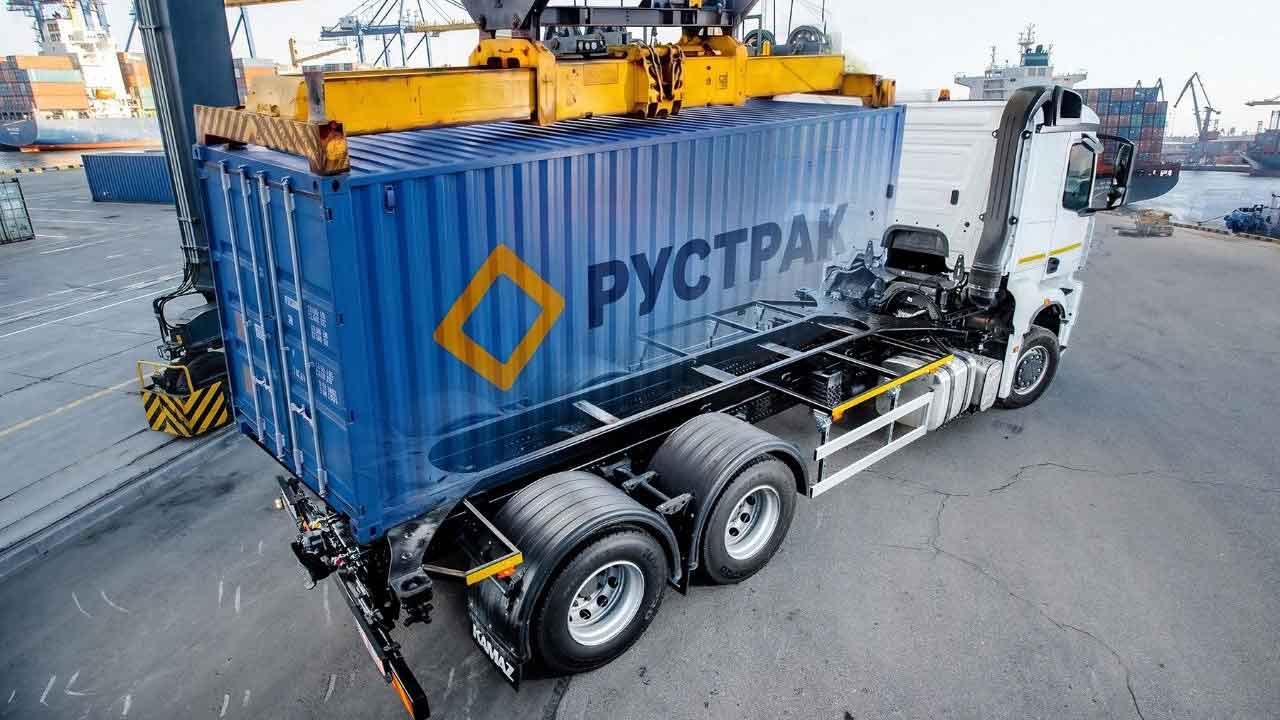
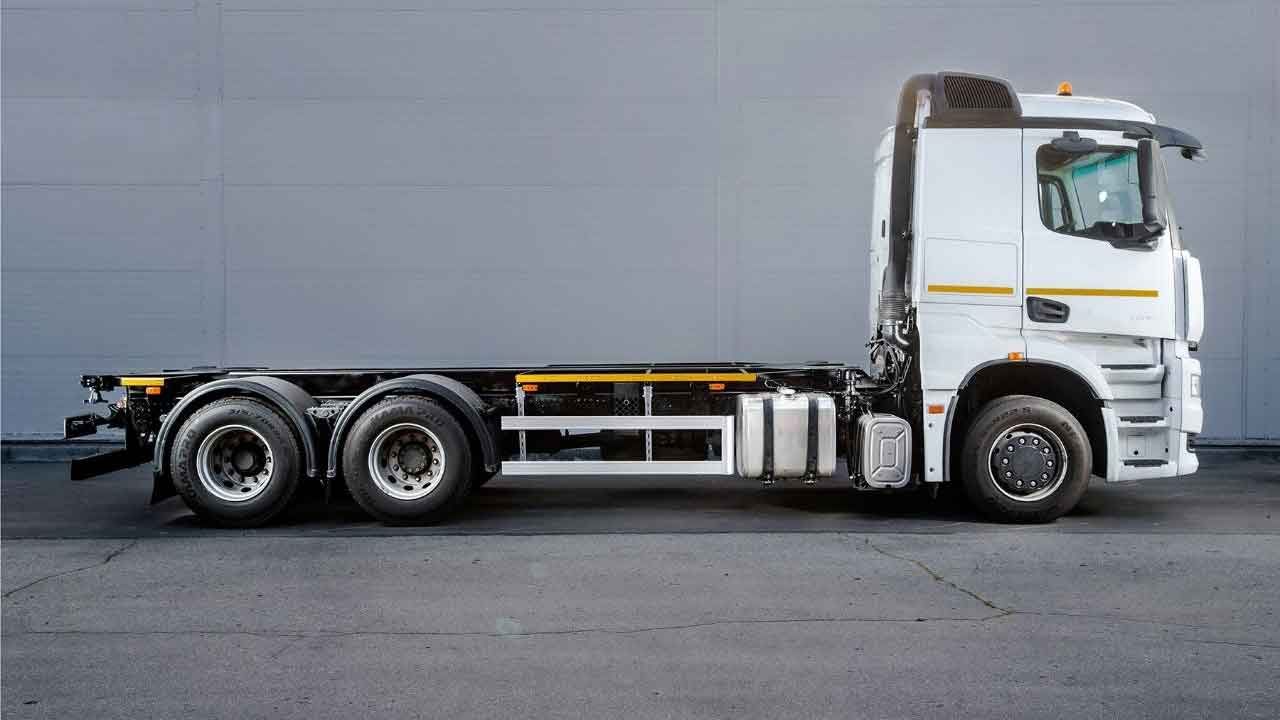
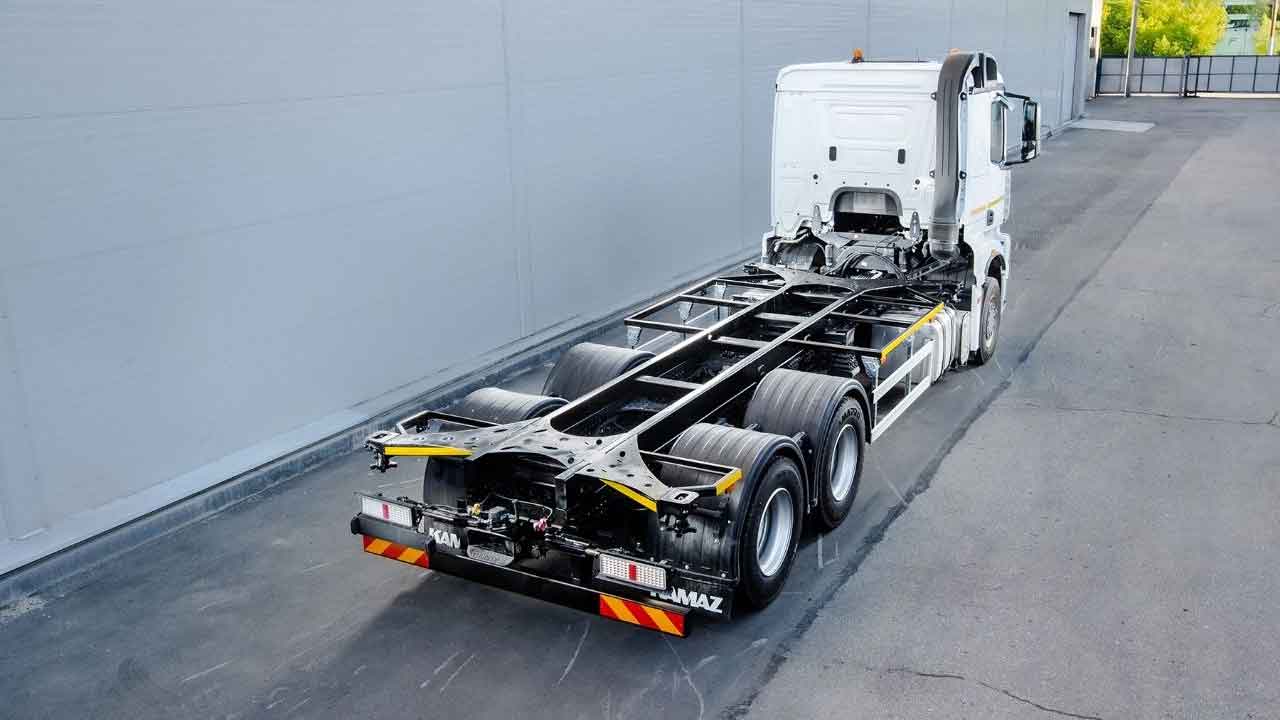
To accommodate the new configuration, the chassis was shortened, allowing for better platform positioning and greater compatibility with the standards used for shipping containers. The vehicle can carry units of the 1CX, 1C, and 1CC types.
The structure installed by Rustrak uses reinforced steel profiles and channels. The platform was also equipped with certified TLT-10 locks, which secure the container to the vehicle and reduce movement during travel, braking, and changes in direction.
Another feature highlighted in the project is corrosion protection, an important factor for vehicles operating in ports, terminals, and regions with high humidity. The metal components undergo a process that includes blast cleaning, the application of an epoxy primer containing zinc phosphate compounds, and a final multilayer paint finish.
390 hp engine and automated transmission
The truck measures 9.04 meters in length, 2.55 meters in width, and 3.48 meters in height. Its payload capacity is 20 tons, while its gross vehicle weight reaches 29.5 tons.
Under the cab, the KAMAZ-65658 uses a 390 hp engine paired with a 12-speed automated transmission. The combination was chosen to balance transport capacity, ease of driving, and agility in areas with limited space.
Although it is a heavy vehicle, the new container carrier features relatively compact dimensions to make maneuvering easier in logistics yards, port terminals, and distribution centers. The configuration can also be used on the final road sections between terminals and the locations where the cargo is delivered or processed.
The arrival of the model expands Russia’s range of specialized vehicles for container logistics. However, the manufacturers have not yet disclosed information about pricing, production volume, or the delivery schedule for the first units.
+ United Kingdom to replace tanks with drones in military reinforcement in Estonia
Source and image: KAMAZ. This content was created with the help of AI and reviewed by the editorial team.
