
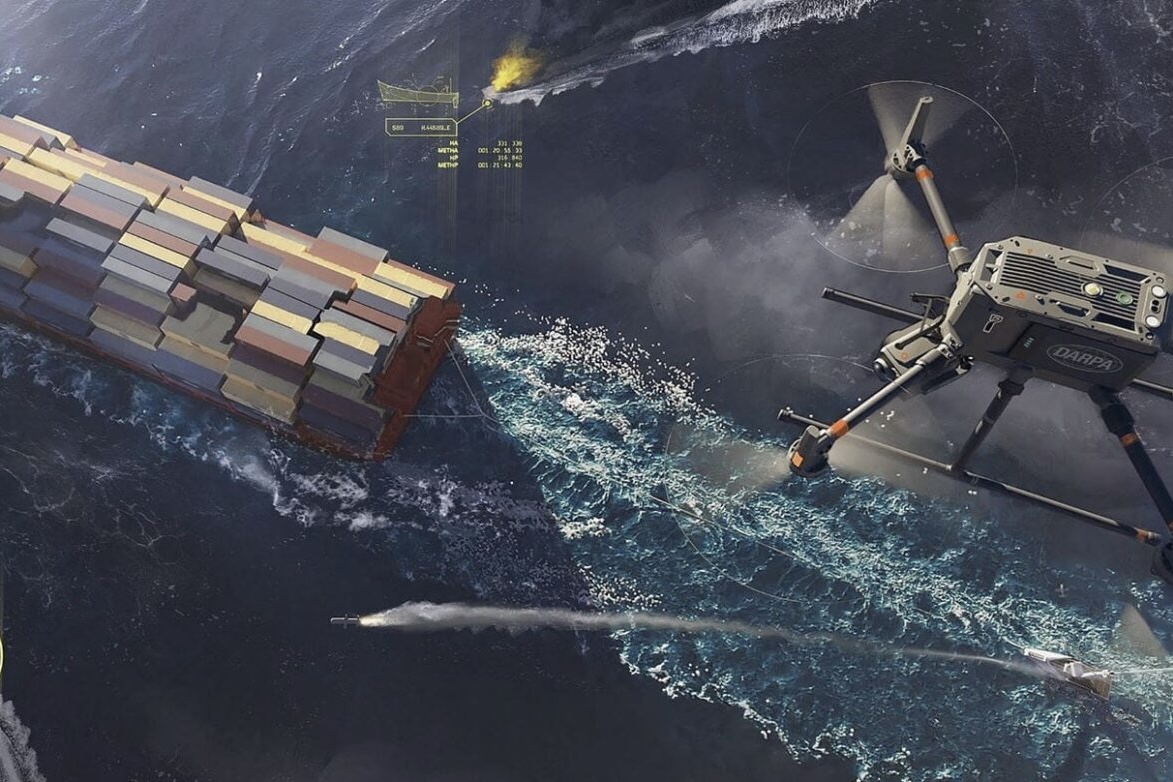
 Raytheon develops tethered drone system for ship defense (Photo: DARPA)
Raytheon was selected by DARPA to develop a detection and targeting system using EO/IR sensors and tethered drones to protect commercial and naval logistics vessels.
In a February 2 announcement, the company revealed it had received a contract from the Defense Advanced Research Projects Agency (DARPA) to proceed with the development of the system under DARPA’s Pulling Guard program.
Now, the Raytheon Advanced Technology team will design, build, and demonstrate a system that combines electro-optical and infrared sensors, advanced detection software, and integrated command and control capabilities.
According to a report from Defence Blog, the goal is to improve situational awareness and allow faster responses to surface threats targeting vulnerable ships operating in contested maritime areas.
According to Raytheon, the tethered drone approach allows sensors to stay airborne for extended periods without the endurance limits associated with free-flying unmanned aircraft.
As described by the company, the architecture deploys EO/IR sensors using a drone connected to a semi-autonomous unmanned platform that is towed behind commercial and naval logistics ships.
Raytheon said the elevated sensor package will provide persistent and wide coverage around the vessel, extending detection ranges beyond what deck-mounted sensors can reach.
This allows the platform to provide power and stability while staying out of the immediate wake of the ship, thus increasing coverage and reducing blind spots.
The first phase of the Pulling Guard program effort will focus on simulated engagements. During this phase, DARPA and Raytheon will evaluate sensor performance, data fusion, and operator workflows in representative threat scenarios.
Next, the second phase will transition the system to integration with operational launchers and effectors, enabling live operational demonstrations.
“Through this development, we are advancing critical security technologies for commercial shipping in regions like the Red Sea,” said Colin Whelan, President of Advanced Technology at Raytheon.
“By integrating our proven expertise in command and control, high-performance detection, and effectors, we will provide a scalable and cost-effective solution that minimizes risk to cargo and naval assets.”
Photo: DARPA. This content was created with the help of AI and reviewed by the editorial team.
