
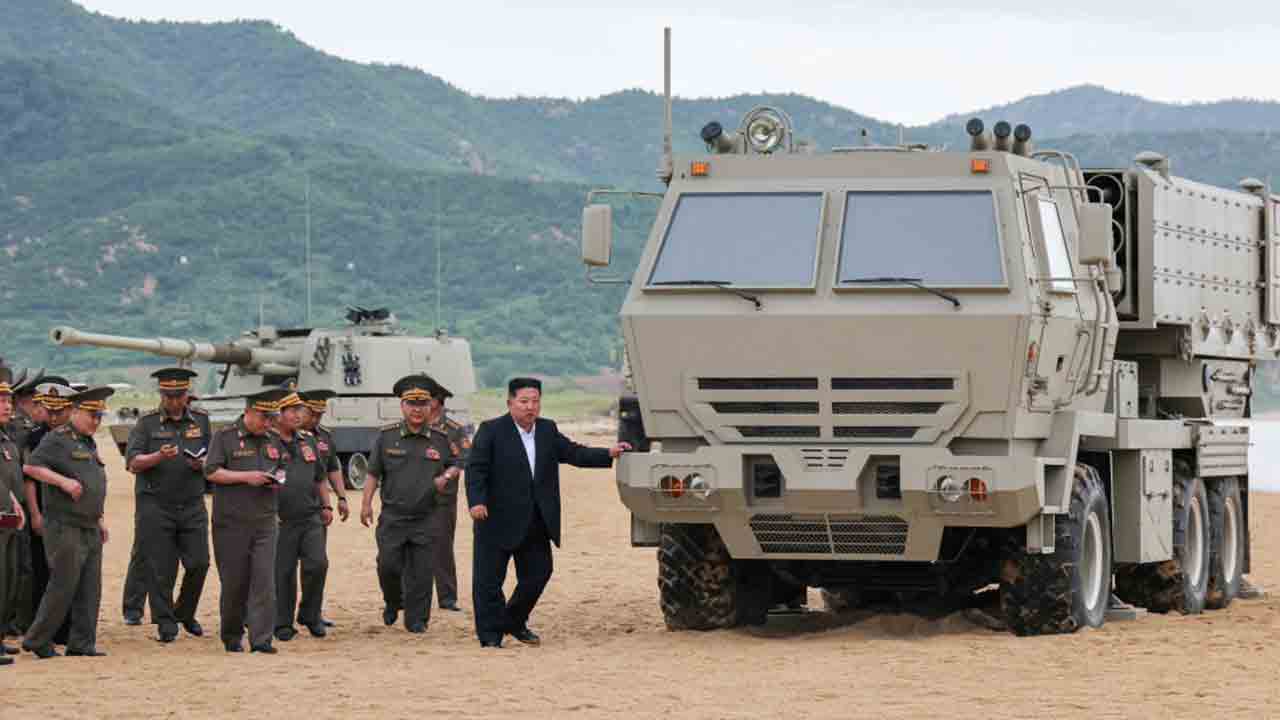
North Korea has carried out a new round of weapons tests aimed at modernizing its artillery and tactical missile systems. According to the state-run KCNA news agency, Kim Jong-un personally observed the exercises conducted by the National Defense Science Research Institutes on June 25 as part of the country’s five-year military development plan.
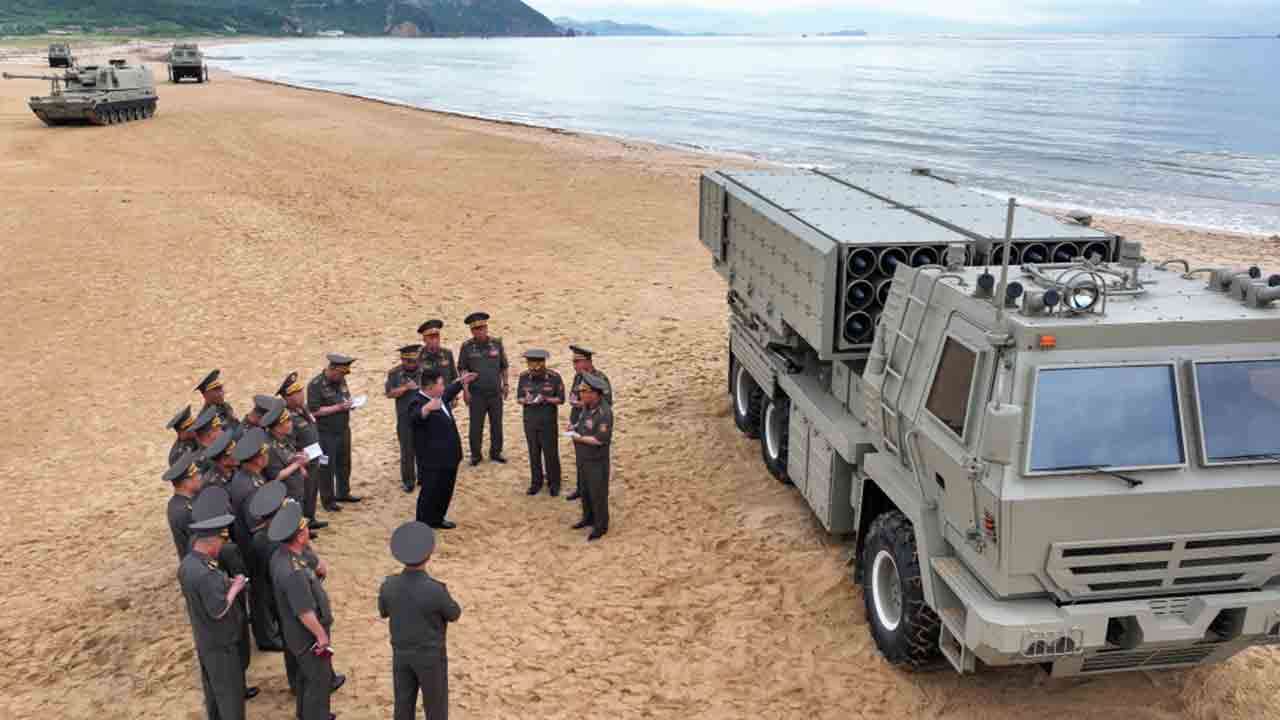
The tests evaluated three main capabilities: a 24-tube 240 mm multiple rocket launcher, tactical missiles equipped with special mission warheads, and an extended-range projectile for a 155 mm self-propelled howitzer. According to KCNA, the upgraded rocket system has a range of up to 90 km, featuring automated fire control elements and precision guidance.
What makes the event significant is Pyongyang’s declared focus on three key pillars: automation, extended range, and improved accuracy. For the average reader, this means North Korea is not simply showcasing larger weapons but attempting to transform traditional artillery systems into platforms that are faster to operate, harder to neutralize, and capable of striking targets with greater precision over longer distances.
One of the most noteworthy aspects is the test of the 155 mm projectile, reportedly capable of reaching a range of 65 km. This caliber is widely used in modern artillery, but achieving such distances requires specialized ammunition, improved aerodynamics, and, in some cases, propulsion or guidance systems. For Pyongyang, demonstrating this capability carries both military and political significance, bringing its artillery closer to the standards seen in forces investing in long-range precision-guided munitions.
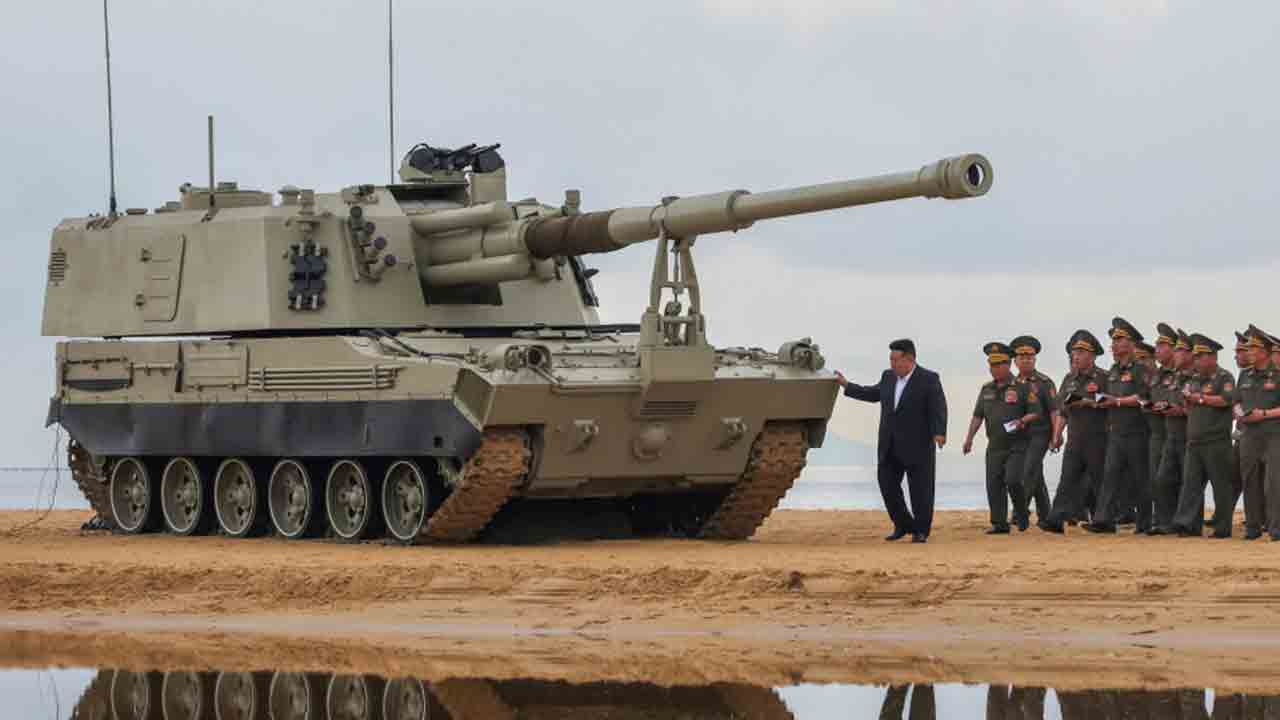
The released images stand out for the visual contrast between Kim Jong-un and North Korean military officers standing alongside large-scale weapons systems. In one image, a tracked self-propelled howitzer with a long barrel is shown, designed for heavy artillery fire. In another, a truck-mounted multiple rocket launcher displays its launch tubes in a robust configuration, reinforcing the message of mobile firepower.
KCNA also stated that the tested tactical missiles are intended to strike critical targets such as airfields, ports, and energy facilities. This suggests that North Korea’s military doctrine continues to prioritize the ability to target military and logistical infrastructure across the region, particularly in the event of a crisis on the Korean Peninsula.
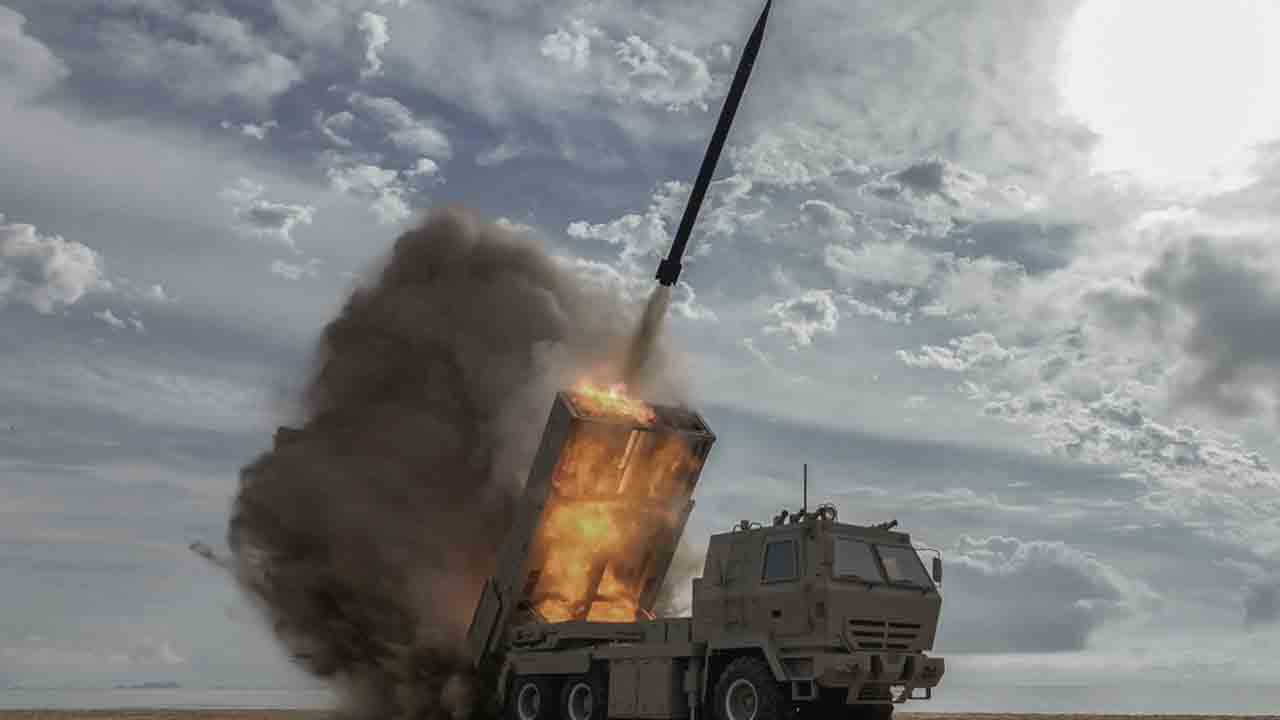
During the inspection, Kim Jong-un reportedly praised the results of the tests and called for accelerating the replacement of existing long-range strike systems with upgraded versions. His remarks, published by state media, reinforce Pyongyang’s official position that strengthening military capabilities is essential to safeguarding national sovereignty.
Although technical performance data were released, the reported capabilities have not been independently verified. Even so, the demonstration is significant because it comes at a time when North Korea is seeking to showcase advances in artillery, guided rockets, and short-range missile systems—capabilities considered central to its deterrence strategy against South Korea, the United States, and regional allies.
Source and images: KCNA. This content was created with the assistance of AI and reviewed by the editorial team.
