
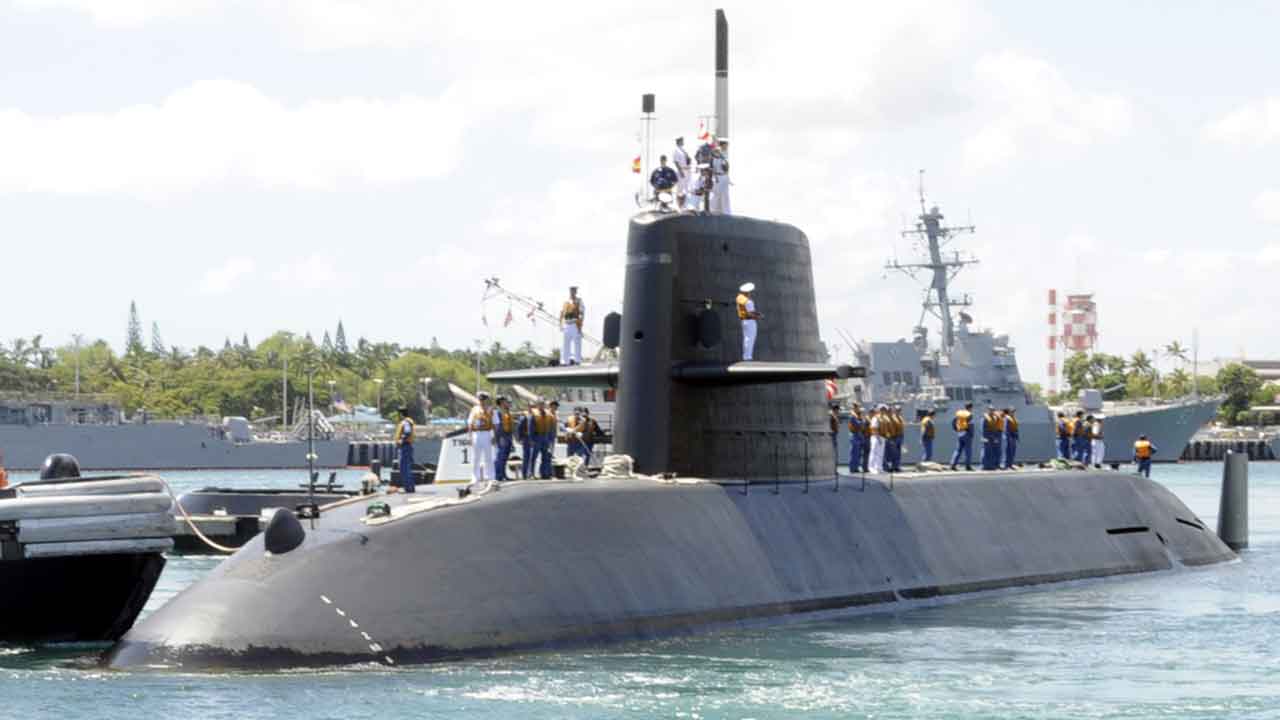
The Japan Maritime Self-Defense Force held an official flag-lowering ceremony for JS Udzushio, an Oyashio-class submarine, marking the end of 25 years of active service in the Japanese fleet.
Udzushio officially entered service on March 9, 2000. Construction began on March 6, 1996, at Kawasaki Heavy Industries’ facilities in Kobe, and the vessel was launched on October 15, 1998. The design is part of a generation that played a central role in Japan’s submarine deterrence and surveillance capabilities over recent decades.
As of December 2025, the Japanese Navy still operates six Oyashio-class submarines. Among them, two units—Isoshio and Makashio—have been converted to training roles and are used in the instruction of new crews.

Technical characteristics
Oyashio-class submarines have a standard displacement of 2,750 tons and a submerged displacement of approximately 5,500 tons. Measuring 82 meters in length with a beam of 8.9 meters, they can reach up to 12 knots on the surface and around 20 knots when submerged.
The standard crew consists of about 70 personnel. Armament includes six 533 mm torpedo tubes, compatible with Type 89 torpedoes and Harpoon anti-ship missiles.
Transition to the next generation
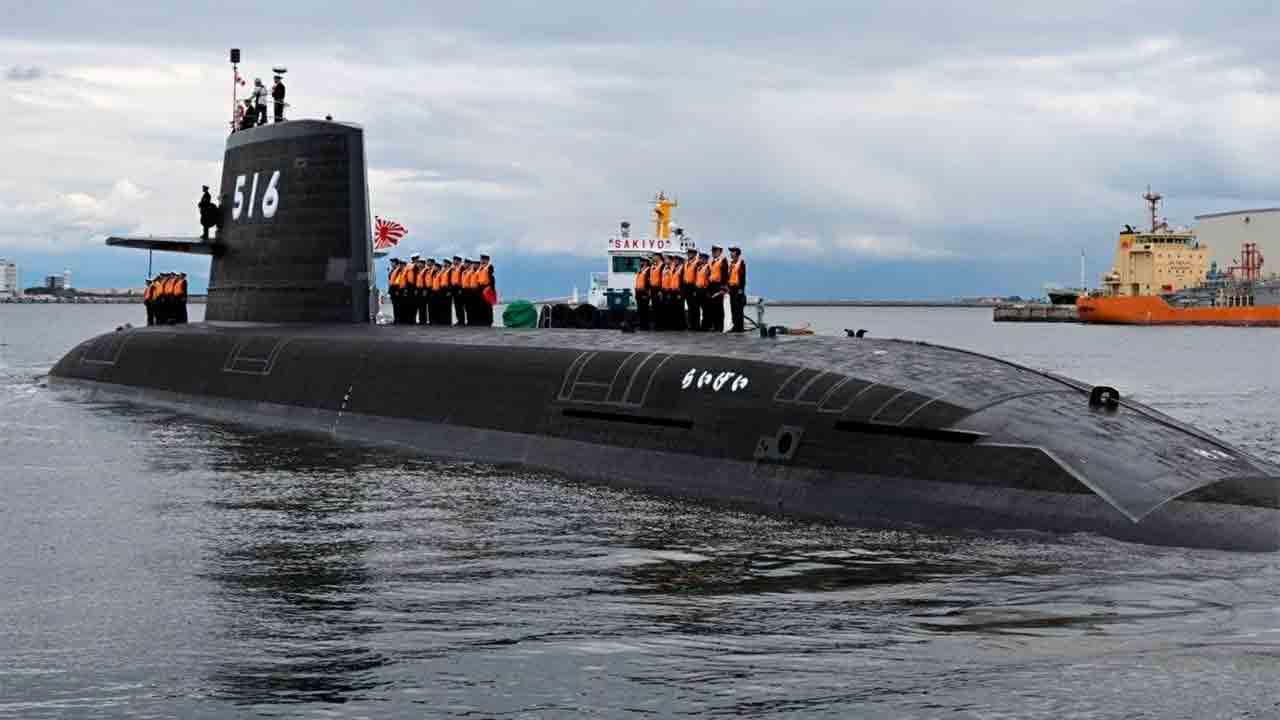
The direct successor to the Oyashio class is the Taigei class, currently under construction for the Japanese Navy. These new submarines incorporate significant advances in acoustic signature reduction and feature a more modern propulsion system. To date, Japan’s Ministry of Defense has funded ten Taigei-class units, with four already commissioned into the fleet and another four at different stages of construction.
自衛艦旗返納、長い間ご苦労さまでした。😍 pic.twitter.com/cwyx3cVxkR
— MICHIYA MURATA (@MICHIYAM) December 19, 2025
Source and images: MICHIYA MURATA X @MICHIYAM | Militarnyi. This content was created with the assistance of AI and reviewed by the editorial team.
