
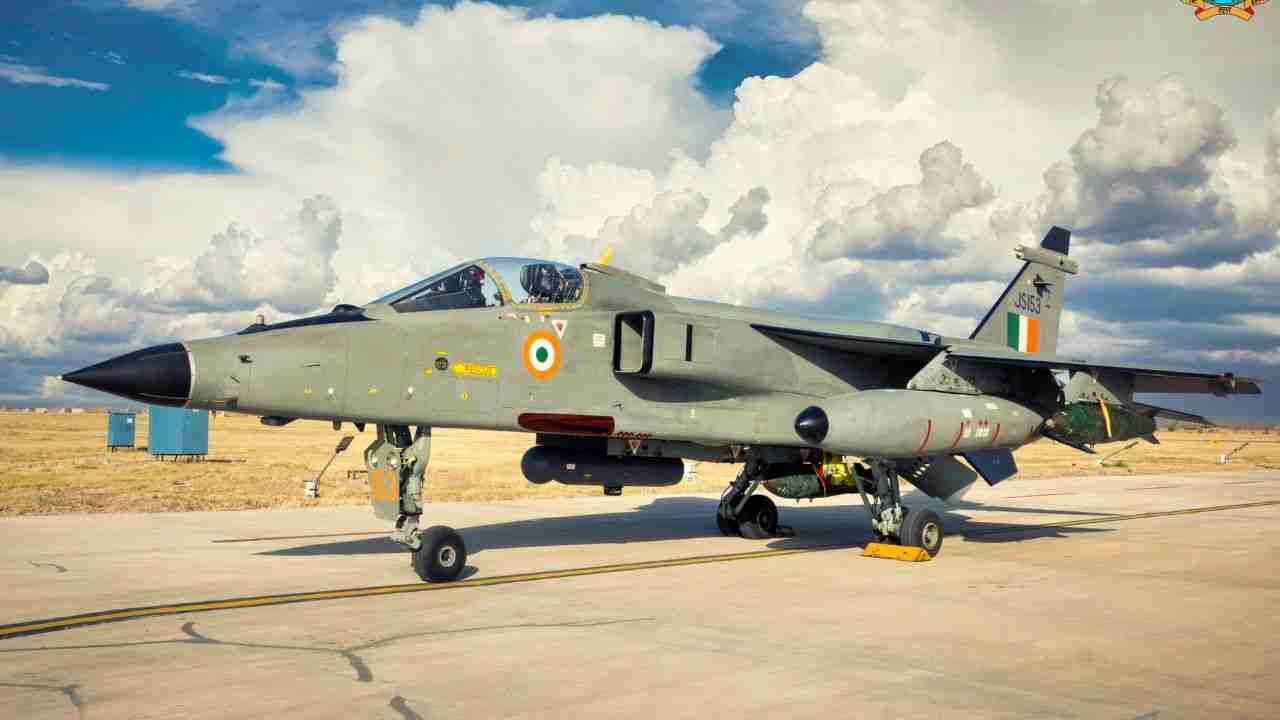
India has decided to use retired Jaguar aircraft from Oman to keep its fleet of strike fighters operational, highlighting both the continued importance of the type for the Indian Air Force (IAF) and the short-term scarcity of alternatives.
As the world’s only operator of the SEPECAT Jaguar, India will receive an undisclosed number of ex-Omani airframes, which will not be inducted into service but dismantled to supply spare parts. The measure seeks to offset the growing difficulty of sourcing components for an aging fleet whose production ended years ago in India, the UK, and France.
Currently, the IAF maintains six Jaguar squadrons, each with roughly 18 to 20 aircraft, but the total number has been declining due to operational losses and natural wear. To extend the fighter’s service life, India has invested for decades in the DARIN modernization program, which has undergone three phases and incorporated new navigation, attack, electronic warfare systems, and advanced sensors, including an AESA radar in the latest version. Despite delays and the cancellation of engine replacement due to cost, part of the modernized fleet is expected to remain in service for at least another decade.
The prolonged reliance on the Jaguar also reflects broader structural issues within the Indian Air Force. With only 29 fighter squadrons operational—well below the 42 considered necessary given challenges from Pakistan and China—India faces delays both in acquiring new foreign fighters and in advancing domestic programs.
In this context, keeping older aircraft operational has become a strategic necessity, even if it requires sourcing parts from abroad and extending the service life of platforms over four decades old.
Source: The War Zone | Photo: X @IAF_MCC | This content was created with the help of AI and reviewed by the editorial team
