
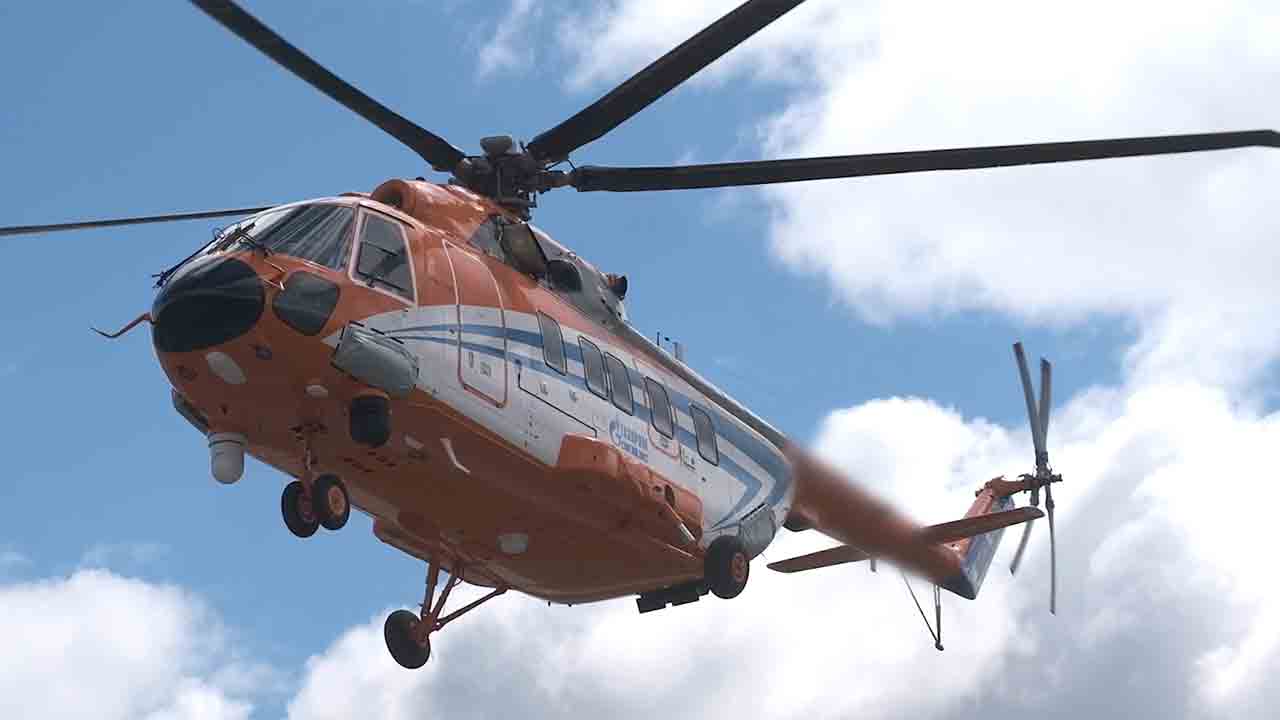
Gazprom has received the first series-produced offshore Mi-171A3 helicopters, in a delivery considered strategic for Russia’s aviation industry and the country’s oil and gas sector. The three aircraft were manufactured by the Ulan-Ude Aviation Plant, part of the Russian Helicopters holding company, owned by state corporation Rostec, under a contract with NatsPromLeasing-Invest.
The helicopters have already completed their ferry flight from the factory to Sakhalin Island, in Russia’s Far East, where they will be operated by Gazprom Avia. Their main mission will be to transport people and cargo to offshore production fields, meaning exploration structures installed at sea, far from the coast and dependent on aircraft capable of operating safely over large stretches of water.
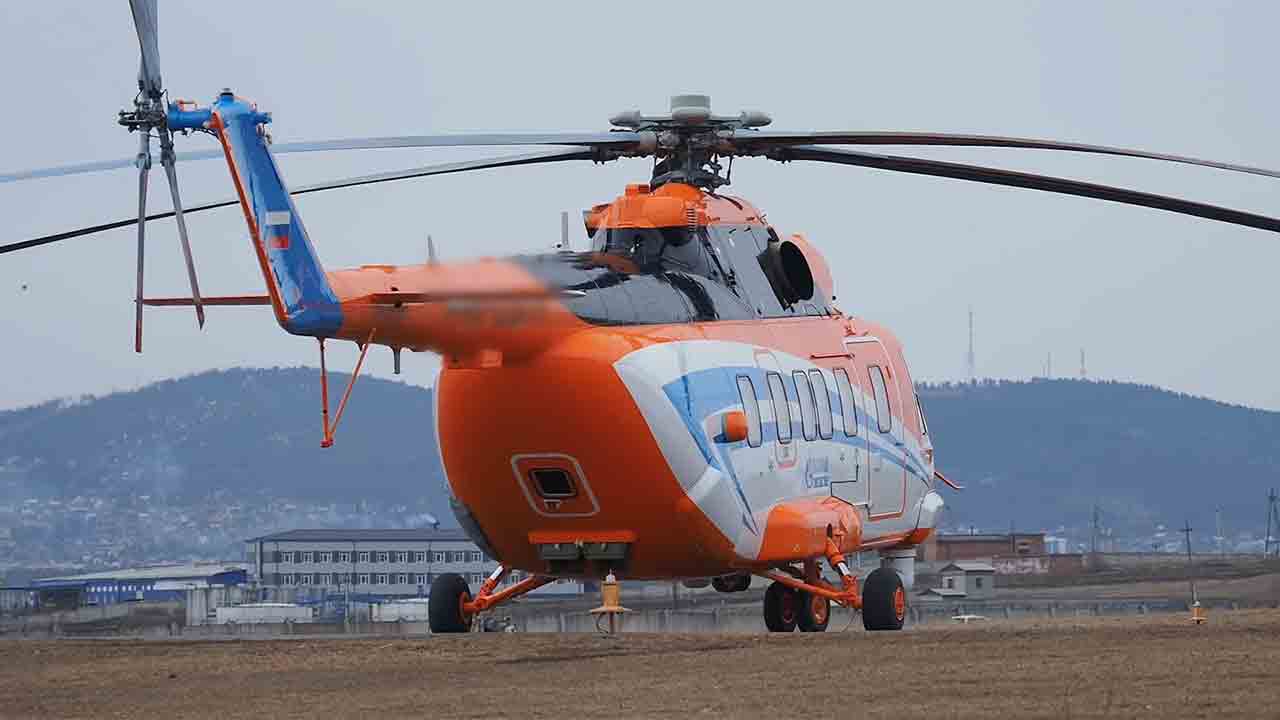
The point that makes the delivery relevant is exactly this: the Mi-171A3 was developed to meet the requirements of extended maritime flights, especially in support of drilling and extraction platforms. For the general reader, the difference compared with a conventional transport helicopter lies in the set of systems focused on safety over the sea, including emergency landing features and equipment adapted for offshore operations.
The curious aspect is that these first units are being presented by the Russian industry as “fully Russian” aircraft, as part of the effort to replace imported components. Amid the technological restrictions imposed on Russia in recent years, the delivery also carries political and industrial value, as it reinforces the message of technological autonomy in a sensitive sector for energy, transportation and infrastructure.
The visual detail that stands out on the Mi-171A3 is the combination of the robust and familiar silhouette of the Mi-8/17 family with elements typical of a modern maritime helicopter. The aircraft retains the imposing profile of a heavy transport platform, but has been adapted for a type of operation in which visibility, stability, endurance and emergency equipment are as important as payload capacity.
+ Click here to watch the Mi-171A3 video
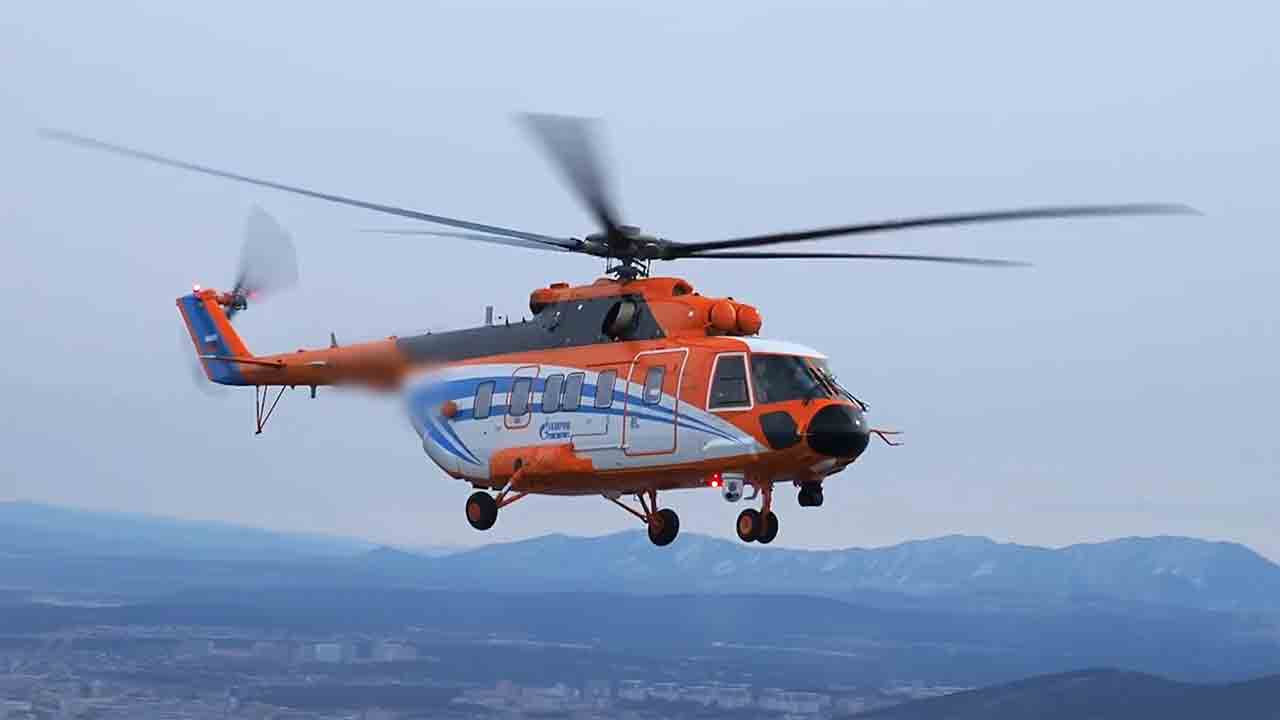
According to Nikolay Kolesov, CEO of the Russian Helicopters holding company, the delivery of the first series-produced Mi-171A3 helicopters represents a milestone for Russian aviation. He said the existence of a modern helicopter capable of ensuring safety during flights over large bodies of water strengthens the country’s “technological sovereignty” and responds to the needs of the national oil and gas industry.
Before delivery, the Mi-171A3 underwent flight tests and inspections to confirm compliance with modern aviation requirements for helicopters in this class. The model was designed to operate in offshore transport missions, but it may also be associated with support and rescue tasks in remote regions, a frequent need in offshore energy exploration areas.
In practice, the arrival of the helicopters in Sakhalin shows how aviation remains an essential part of offshore logistics. In maritime fields, where ships can take hours or days to complete certain routes, helicopters of this size reduce travel time for crews, parts and equipment, while also serving as a critical resource in emergency situations.
Source and images: Telegram / Russian Helicopters — @rhc_aero. This content was created with the help of AI and reviewed by the editorial team.
