
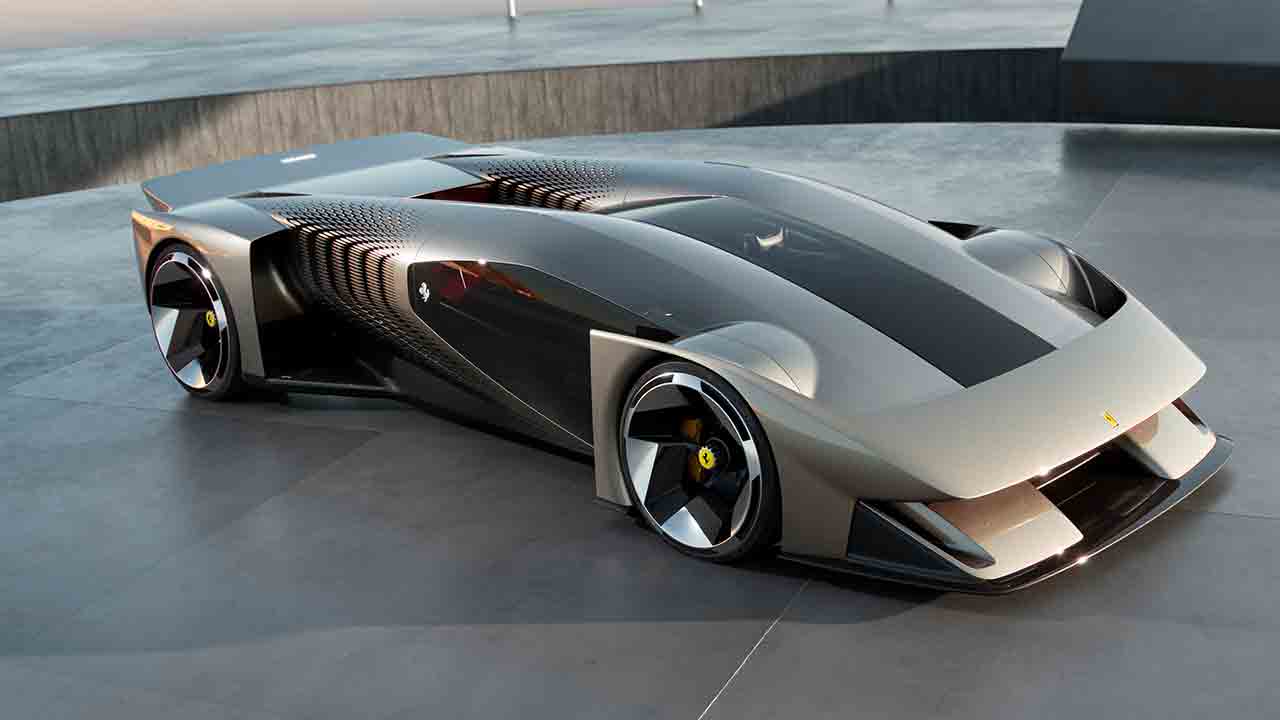
In the year it celebrates its third consecutive victory at the 24 Hours of Le Mans with the 499P, Ferrari has introduced the F76 — the first car conceived entirely for the digital universe, available as an exclusive NFT.
The model’s name pays tribute to the brand’s first victory at Le Mans, achieved 76 years ago in 1949 by Luigi Chinetti and Lord Selsdon behind the wheel of the legendary 166 MM Touring barchetta.
A digital milestone for Ferrari
+ Volkswagen of America Celebrates 70 Years Shaping U.S. Automotive Culture
The F76 is not a physical car but a pioneering virtual project that blends Ferrari’s racing heritage with the innovation of generative design and digital technologies. Developed for members of the Hyperclub program, the vehicle is one of several digital assets created by the Maranello manufacturer to connect clients with the world of endurance racing, such as the FIA World Endurance Championship (WEC).
A design manifesto
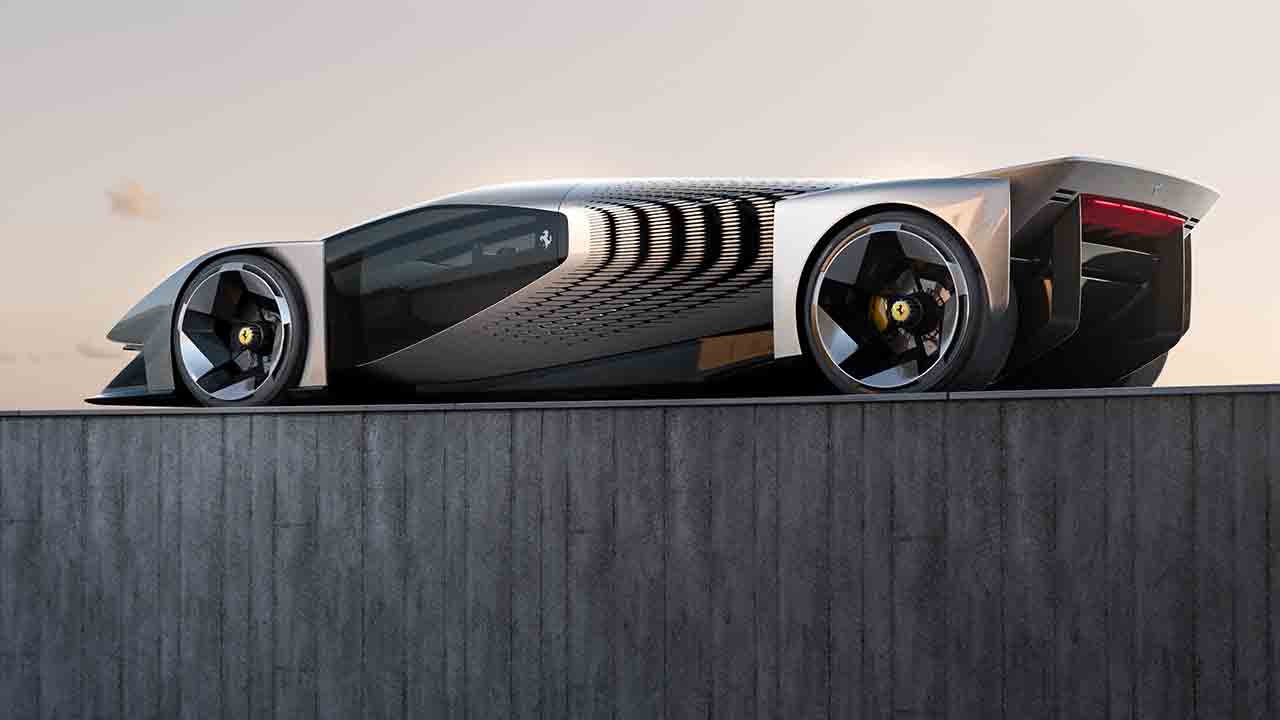
Created by Ferrari’s Centro Stile under the direction of Flavio Manzoni, the F76 is described as a “design manifesto” that anticipates the shapes of future Ferraris. The project applies principles of biomimicry, engineering, architecture, and computer science, with parametric solutions that merge form, function, and performance into a single digital organism.
According to Ferrari, this approach led to the development of several patented solutions, pushing the boundaries of automotive design.
Futuristic aerodynamics and structure

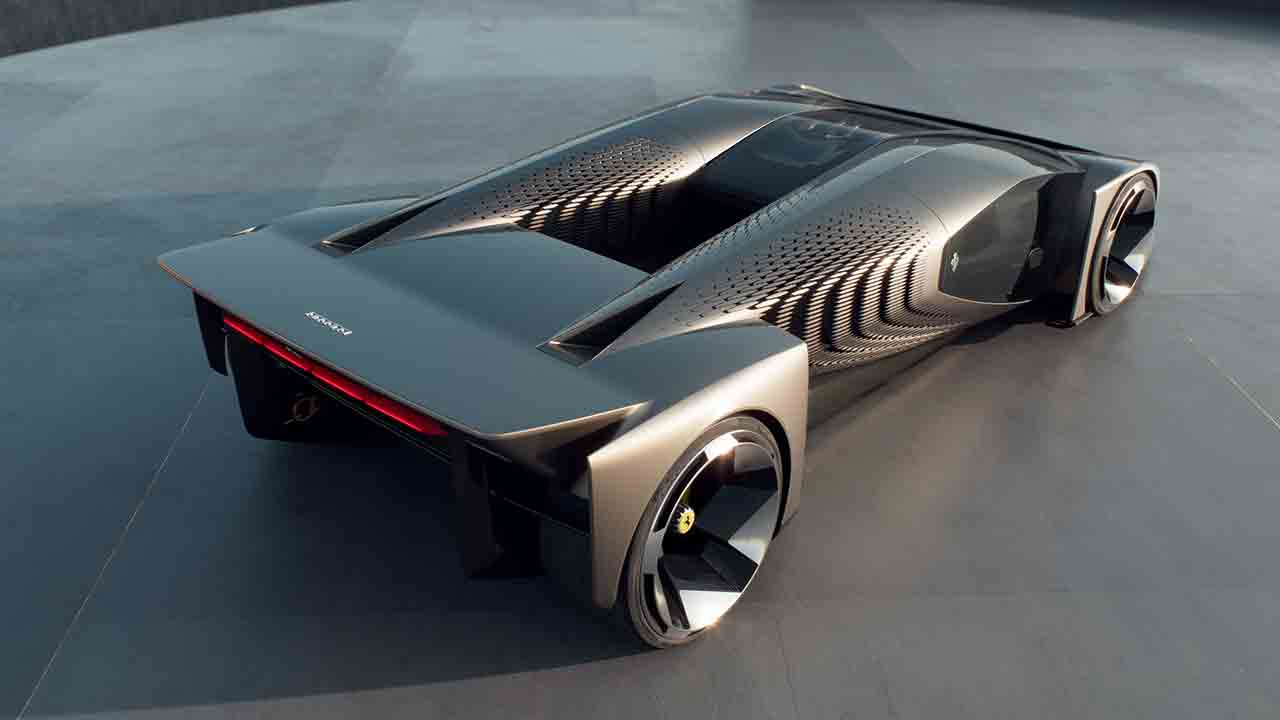
The F76’s design is defined by a dual-fuselage layout that optimizes airflow and turns the body into a wing, maximizing ground effect. The separation between the driver’s and passenger’s cells creates a central channel that improves aerodynamic efficiency, while a second rear wing enhances the diffuser’s performance.
Vertical side panels, inspired by the F80 concept, reinforce the visual link with future models of the brand. The surfaces blend technical and sculptural lines, refined by generative algorithms that define every detail.
At the rear, two vertical fins expand the track width, and an upper wing acts as a conceptual gateway to Ferrari’s new design language. Four taillights integrated into the wing reinforce the Ferrari identity, while the front features a suspended strip between the wings, with dual retractable headlights reminiscent of Ferraris from the 1970s and 1980s.
Interior and interactive experience

The interior features two separate cockpits with drive-by-wire technology, synchronizing all controls — from the steering wheel to the pedals — so both occupants can share the driving experience in real time.
The Hyperclub program enabled unprecedented digital customization, with each F76 individually configured by clients through various design options introduced over a three-year period.
Thus, the F76 is not just a virtual car but a symbol of the transition between Ferrari’s mechanical heritage and its digital future, combining passion, art, and innovation under the same Prancing Horse.
Source and images: Ferrari. This content was created with the help of AI and reviewed by the editorial team.
