
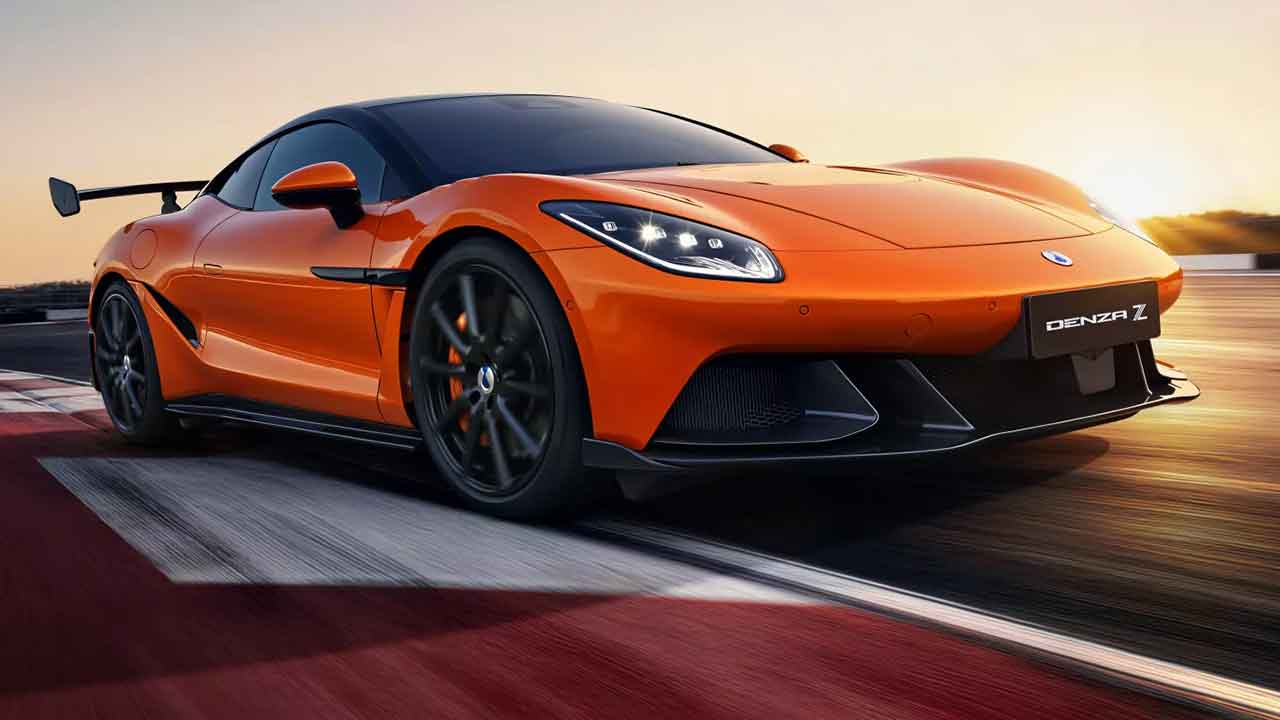
The electric supercar from BYD Group’s premium brand will be offered in Coupé, Spider, and Racing versions, with three motors, all-wheel drive, and a battery capable of accepting up to 1,500 kW
DENZA, the premium brand owned by the BYD Group, has unveiled the Z, its first fully electric supercar. Publicly presented at the Goodwood Festival of Speed in the United Kingdom, the model combines three motors, all-wheel drive, and a maximum output of 1,604 hp.
The lineup will consist of Coupé, Spider, and Racing versions. The manufacturer is also developing a special edition intended for fast-lap attempts at the Nürburgring Nordschleife circuit in Germany.
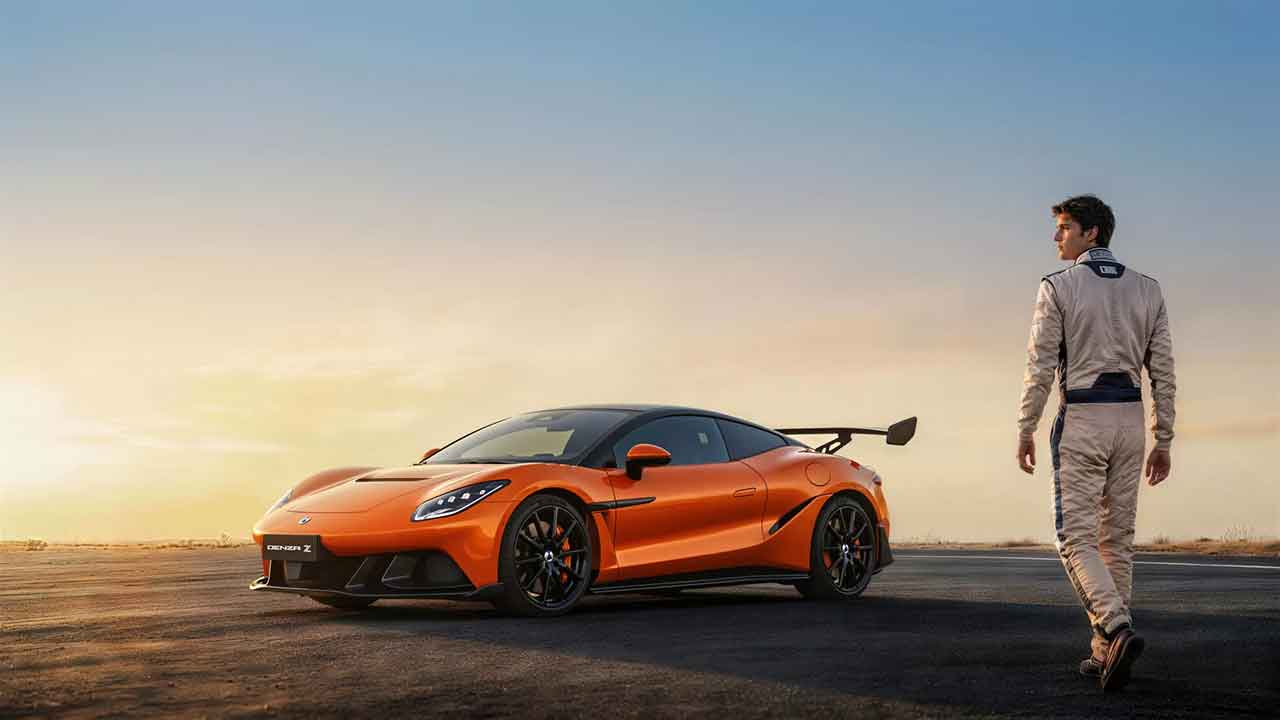
The powertrain uses one electric motor at the front and two more installed on the rear axle, one for each wheel. Together, they produce 1,180 kW, equivalent to 1,604 hp, along with 1,240 Nm of torque.
In Coupé configuration, the DENZA Z accelerates from 0 to 100 km/h in 2.25 seconds and reaches 300 km/h. The Spider, equipped with a retractable roof, completes the same sprint in 2.3 seconds.
The Z Racing can reach 100 km/h in 1.96 seconds when equipped with the optional semi-slick tire package. The top speed of this version is 350 km/h, while acceleration from 0 to 200 km/h takes six seconds.
Platform controls all three motors individually
The model was built on the e³ Sports Car platform, developed specifically for DENZA’s high-performance vehicles. The architecture combines independent torque control, a battery integrated into the structure, active suspension, and a central system responsible for coordinating the steering, brakes, and dampers.
The electronic management system can alter power distribution between the wheels within intervals of just a few milliseconds. According to the manufacturer, the system can also stabilize the vehicle if it detects a sudden loss of tire pressure.
Another function allows the car to perform a maneuver similar to the so-called “compass turn.” In this mode, the front wheels act as the pivot point, while the force applied to the rear motors makes the vehicle rotate almost within its own footprint.
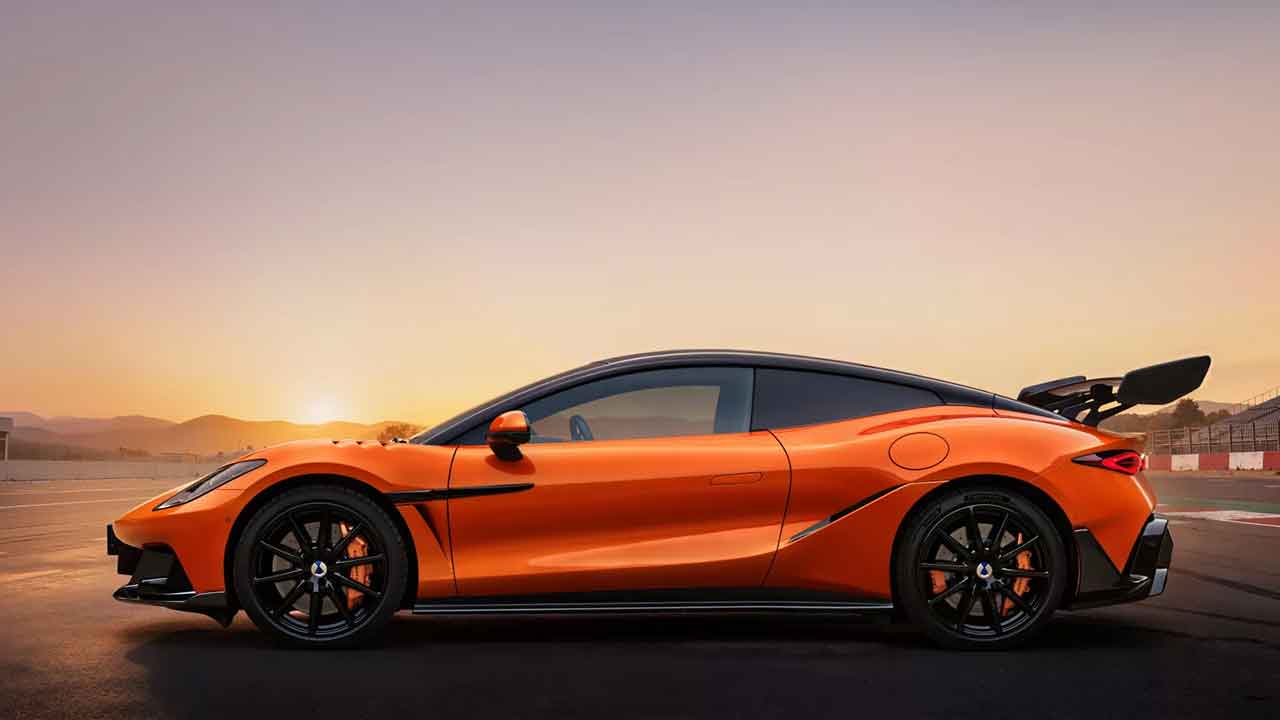
The suspension uses the DiSus-M system, with dampers filled with magnetorheological fluid. The viscosity of the material can be altered by a magnetic field, allowing rapid adjustments between a more comfortable setting and a firmer one.
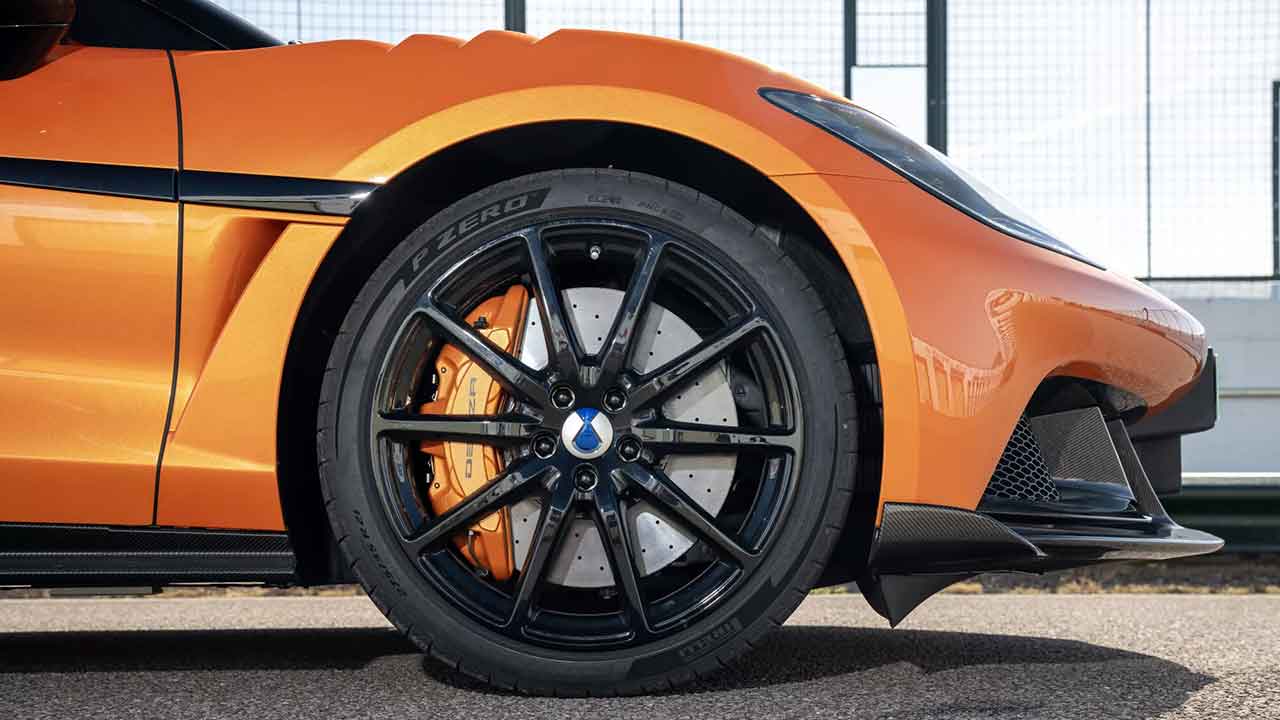
The Coupé and Spider versions will feature air suspension. The Racing model will use conventional coil springs, a solution designed to provide a more direct response on racetracks. All configurations will be equipped with carbon-ceramic brakes, six-piston calipers at the front, and four-piston calipers at the rear.
Charging from 10% to 97% in nine minutes
The DENZA Z uses a second-generation Blade battery with lithium iron phosphate chemistry and a capacity of 76 kWh. The estimated WLTP range is 410 kilometers for the Coupé, 400 kilometers for the Spider, and 380 kilometers for the Racing.
The main highlight is its charging capability. At a station compatible with Flash Charging technology, power can reach 1,500 kW. According to DENZA, the battery goes from 10% to 70% in five minutes and reaches 97% in nine minutes.
These figures depend on access to the specific infrastructure developed by the BYD Group and on the conditions established during the manufacturer’s tests. Charging times will be longer with conventional chargers. For alternating-current charging, the stated limit is 11 kW.
Racing version produces more than one metric ton of aerodynamic downforce
The DENZA Z Coupé measures 4.78 meters long, 1.97 meters wide, and 1.33 meters tall. Its wheelbase is 2.78 meters. Despite its supercar proportions, the interior has four seats.
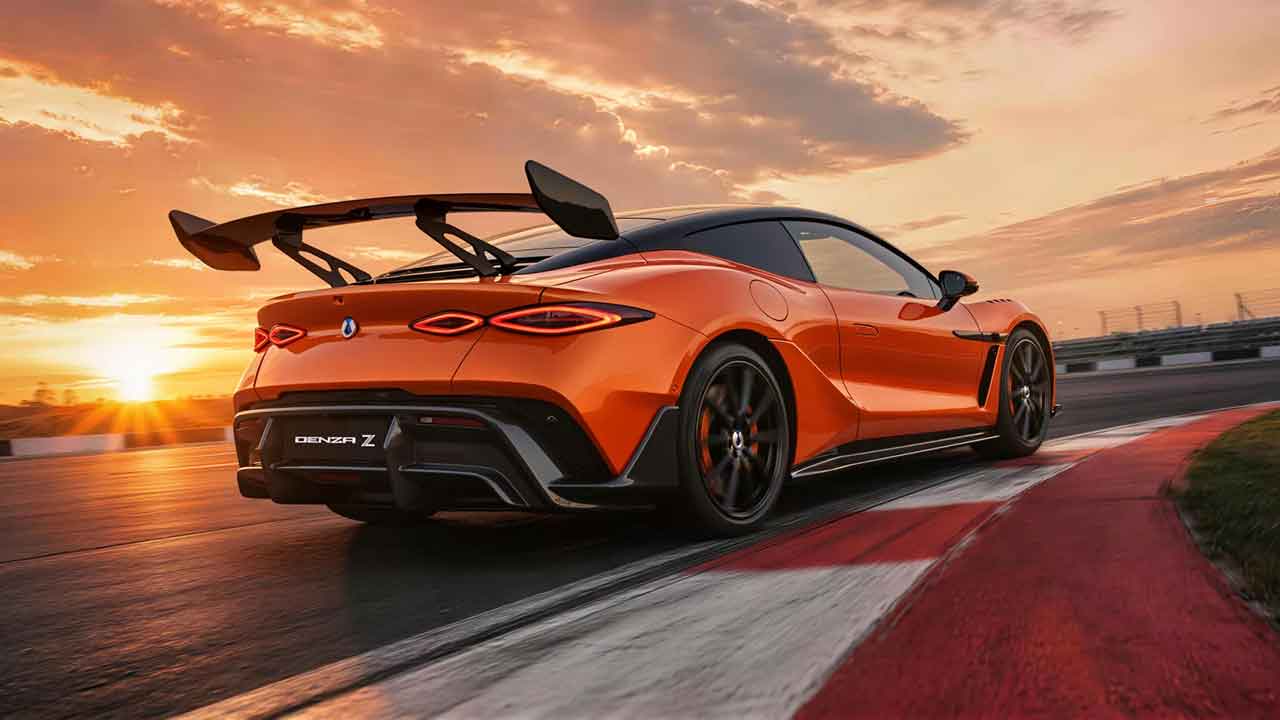
The Racing version is slightly larger, measuring 4.87 meters in length. It receives enlarged air intakes, carbon-fiber components, underbody vortex generators, and an adjustable rear wing offered as an option.
According to the company, the package produces up to 1,060 kg of downforce at 350 km/h. The cooling system has also been revised to increase motor cooling capacity by 50% and brake-disc heat dissipation by 32%.
In the Coupé and Racing versions, the trunk holds 250 liters. With the rear seats folded, capacity can reach 550 liters. For track-focused use, Racing buyers will be able to replace the rear seats with a protective structure.
Special Edition will have more than 2,000 hp
The most extreme configuration will be the DENZA Z Special Edition. Still under development, it will feature carbon-fiber panels, reinforced thermal management, and an active aerodynamic system combining a front diffuser and a movable rear wing.
The brand claims an output of more than 2,000 hp and acceleration from 0 to 100 km/h in less than 1.7 seconds. The car is expected to undergo further testing before timed attempts at the Nürburgring Nordschleife.
According to DENZA, this version will be capable of generating more than 2,000 kg of downforce at 300 km/h. Final specifications, however, have yet to be announced.
Interior combines screens, physical buttons, and four seats
The cabin will feature an 8.88-inch digital instrument panel and a 12.8-inch central multimedia display. The motorsport-inspired steering wheel includes six physical buttons, including controls for Track and Boost modes.
Boost mode temporarily increases accelerator torque delivery for 20 seconds. Track mode allows drivers to configure power distribution, traction control, energy regeneration, damping, brake assistance, and torque vectoring.
The front seats feature electric adjustment, heating, ventilation, and massage functions. The Devialet audio system has 12 speakers in the Coupé and Racing versions and ten in the Spider. Personalization options include ten exterior paint choices and ten interior trim combinations.
Orders for the Coupé, Spider, and Racing versions are expected to open during the Northern Hemisphere summer in selected markets. First deliveries are scheduled before the end of 2026. Pricing and details about which countries will receive the model have not yet been announced.
Source and images: DENZA | BYD. This content was created with the help of AI and reviewed by the editorial team.
