

On February 14, 2025, a retired and demilitarized AV-8B Harrier II+ was officially added to the collection of the Pima Air & Space Museum in Tucson, Arizona.
+ AH-1Z vs Ka-52: Which Attack Helicopter is the Most Powerful?
The aircraft, tail number BUNO 165574, is now part of one of the largest aviation museums in the United States, allowing visitors to explore its history and technological advancements.
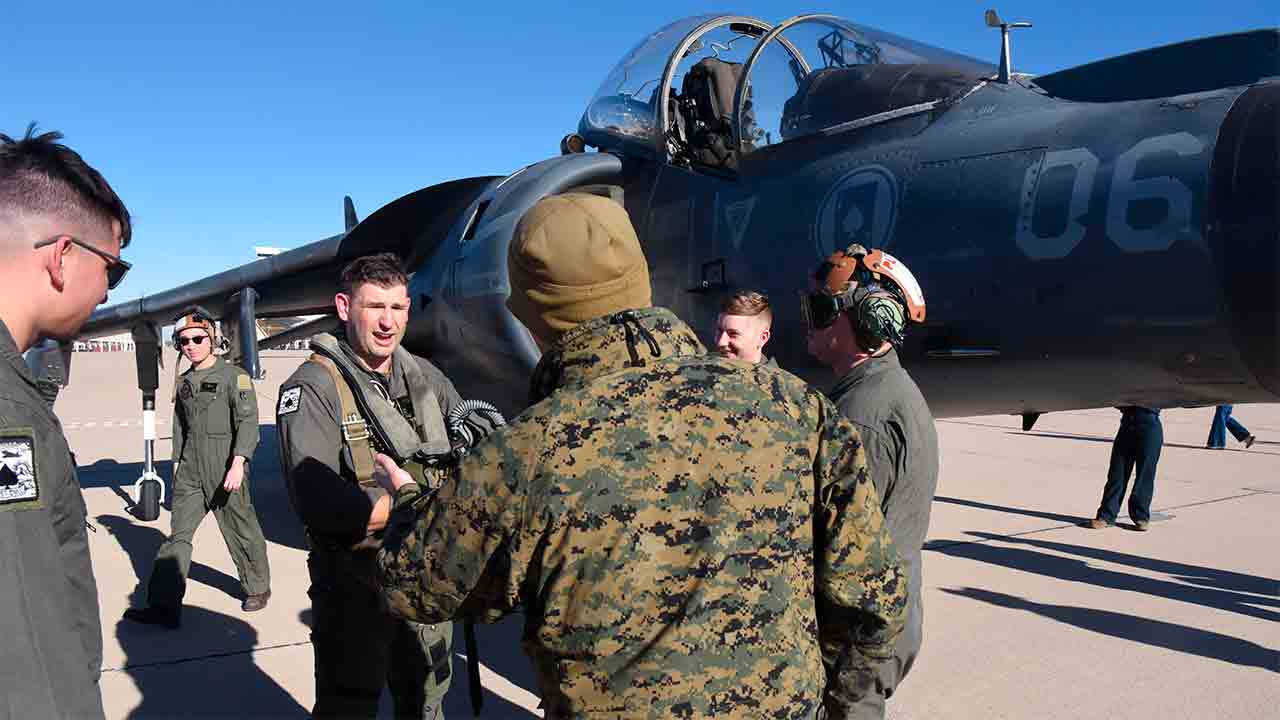
Colonel Mark Amspacher, program manager of the AV-8B Weapon Systems Office (PMA-257), emphasized the importance of this preservation:
“This is a unique opportunity to preserve and share a vital chapter in aviation history while also playing a valuable role in inspiring future generations. I hope that this piece of Marine Corps history, along with its embodiment of innovation, courage, and dedication, will motivate younger generations to consider a career in aviation and service within the Marine Corps.”
Operational History of the Aircraft
The aircraft was originally introduced on January 14, 1986, as a daytime attack AV-8B version. Later, it underwent a remanufacturing process and was upgraded to the AV-8B II+ model, receiving an enhanced radar system on July 31, 2001. Throughout its operational life, it served in the following U.S. Marine Corps attack squadrons (VMAs):
- VMA-311, VMA-223, VMA-214, VMA-513, and VMA-231.
The Harrier achieved an impressive service record, totaling 1,539 combat flight hours and 9,671 total flight hours across various operations, including:
- Deployments with Marine Expeditionary Units,
- Operation Iraqi Freedom and Operation Enduring Freedom,
- Humanitarian missions and international crisis response efforts.
Demilitarization Process and Arrival at the Museum
This is the second AV-8B Harrier II+ to be placed in a museum as the Harrier fleet continues its transition toward full retirement by 2026. The first preserved model, BUNO 164560, was inducted into the Hickory Aviation Museum in North Carolina on July 15, 2024.
The demilitarization and transfer of BUNO 165574 were overseen by PMA-257, the U.S. Marine Corps Headquarters, Marine Aircraft Group (MAG-14), and VMA-231. The process ensured that the aircraft was safe for public display.
Major Robert M. “Robin” Weede, an aviation maintenance officer with VMA-231, piloted the Harrier to the Pima Air & Space Museum, where it is now on display, allowing visitors to learn about its unique engineering design and operational impact.
Source and images: navair.navy.mil / Wikimedia. This content was created with AI assistance and reviewed by the editorial team.
