
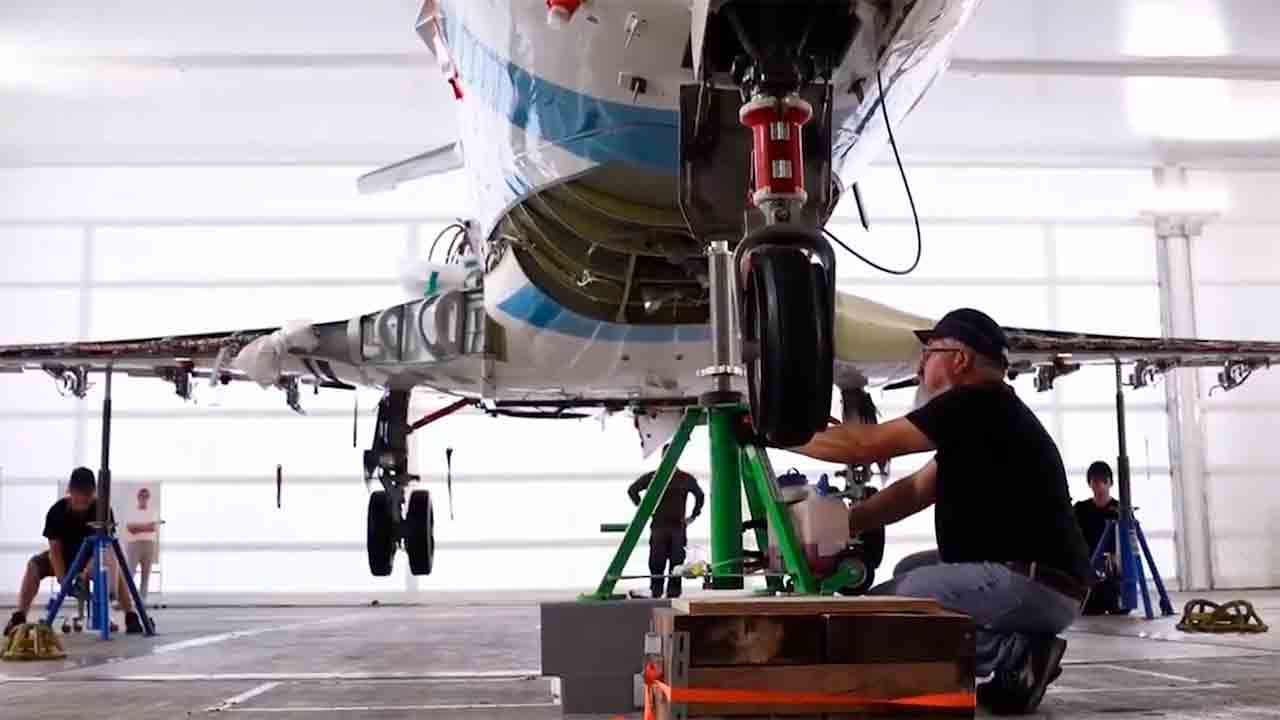
Airbus has released a video showing the installation of the experimental eXtra Performance Wing on a Cessna Citation VII business jet, which will be transformed into a flying laboratory to validate new aerodynamic efficiency technologies.
The project is part of the Airbus UpNext program, launched in 2021, and aims to develop innovative solutions for next-generation commercial aircraft.
+ Click here to watch the video
The new wing stands out for its large aspect ratio (17:1) and foldable wingtips. Its structure incorporates automatic load-relief systems inspired by biomimicry, capable of reducing weight and improving fuel efficiency.
+ Russian aviation completes maiden flight of Superjet-100 with PD-8 engines
Origin in the AlbatrossONE project
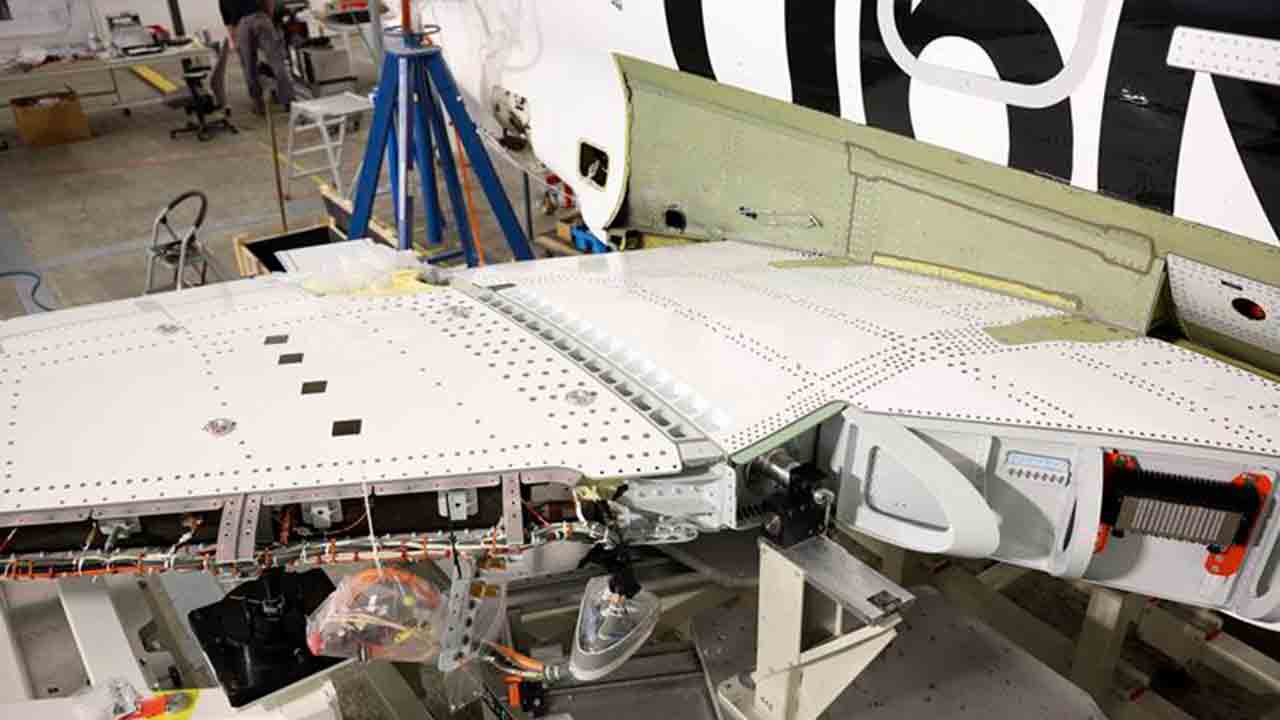
The eXtra Performance Wing originates from earlier Airbus research, such as the AlbatrossONE, which tested semi-elastic articulated wings. These structures, similar to the joints of seabirds, could unlock in flight to relieve loads during wind gusts or turbulence.
Installation and ground tests

Adaptation work began in 2024, with the removal of the Citation VII’s standard wing and the installation of a special “transition block” connecting the fuselage to the new composite wing. After final assembly in July 2025, the aircraft began ground tests, including checks of structural strength, aeroelasticity, and the performance of a novel electrodynamic control system, which replaced traditional mechanics.
The aircraft’s first flight with the new wing is scheduled for mid-2026, and the test campaign is expected to continue until the end of the same year.
Active control systems
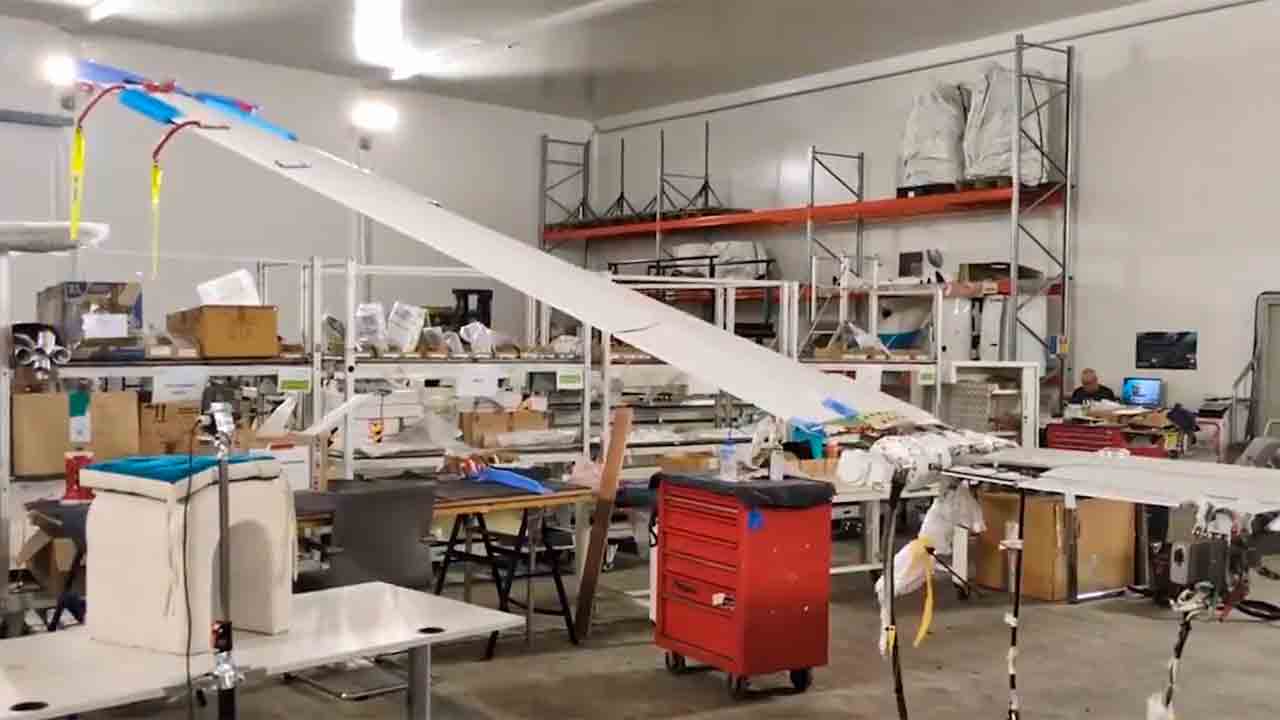
According to Sébastien Blanc, the project’s technical director, the main goal is not only to demonstrate aerodynamic efficiency but also to validate the operation of active control systems. These include ailerons with “morphing” capability (shape-changing) and retractable spoilers, connected to wind gust sensors installed on the aircraft’s forward section.
Preparing for the future
The experimental wing has a 20-meter wingspan but represents a scaled-down version of a future wing designed for narrowbody aircraft, which could reach up to 50 meters. This technology will be incorporated into the Wing of Tomorrow program, which will guide the development of Airbus’s next generation of aircraft.
With this project, Airbus follows the same trend as Boeing, which is already investing in larger and higher-aspect-ratio wings to increase the efficiency of commercial aircraft.
Source and images: Airbus. This content was created with the help of AI and reviewed by the editorial team.
