
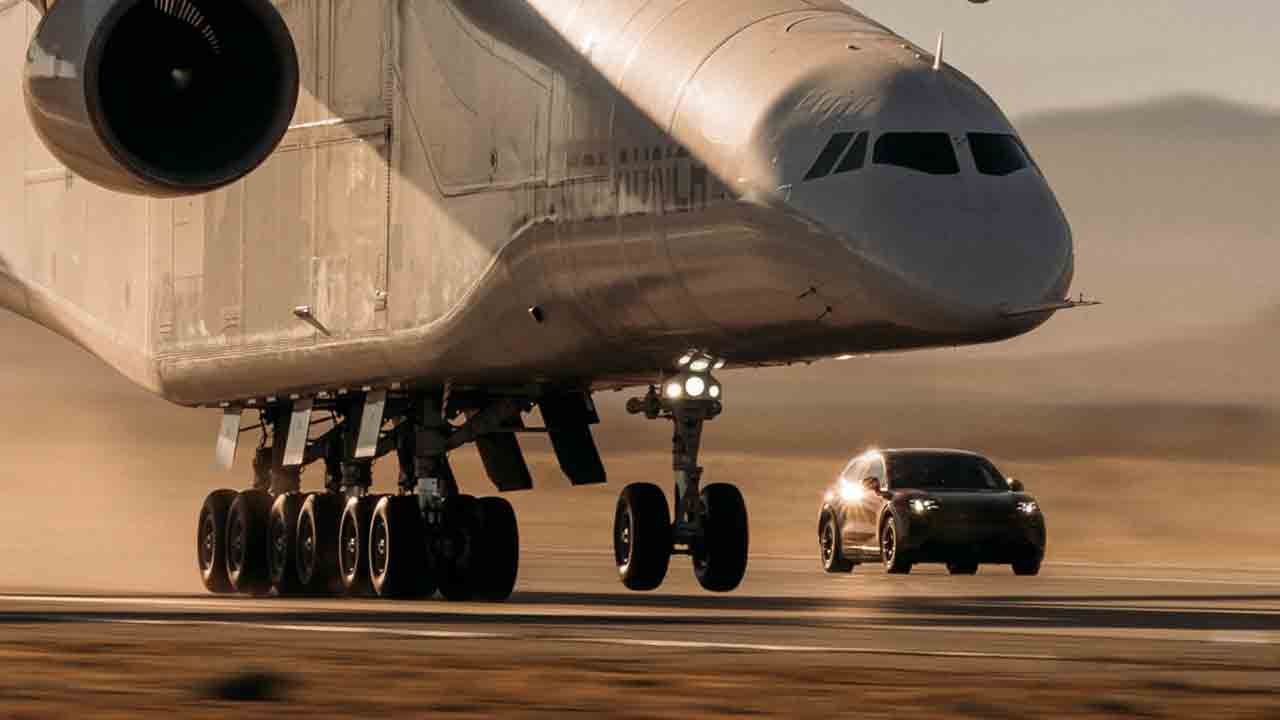
The 1,156 hp prototype had to maintain a precise position beneath the Stratolaunch Roc during a demonstration of acceleration, stability, and control conducted in the Mojave Desert
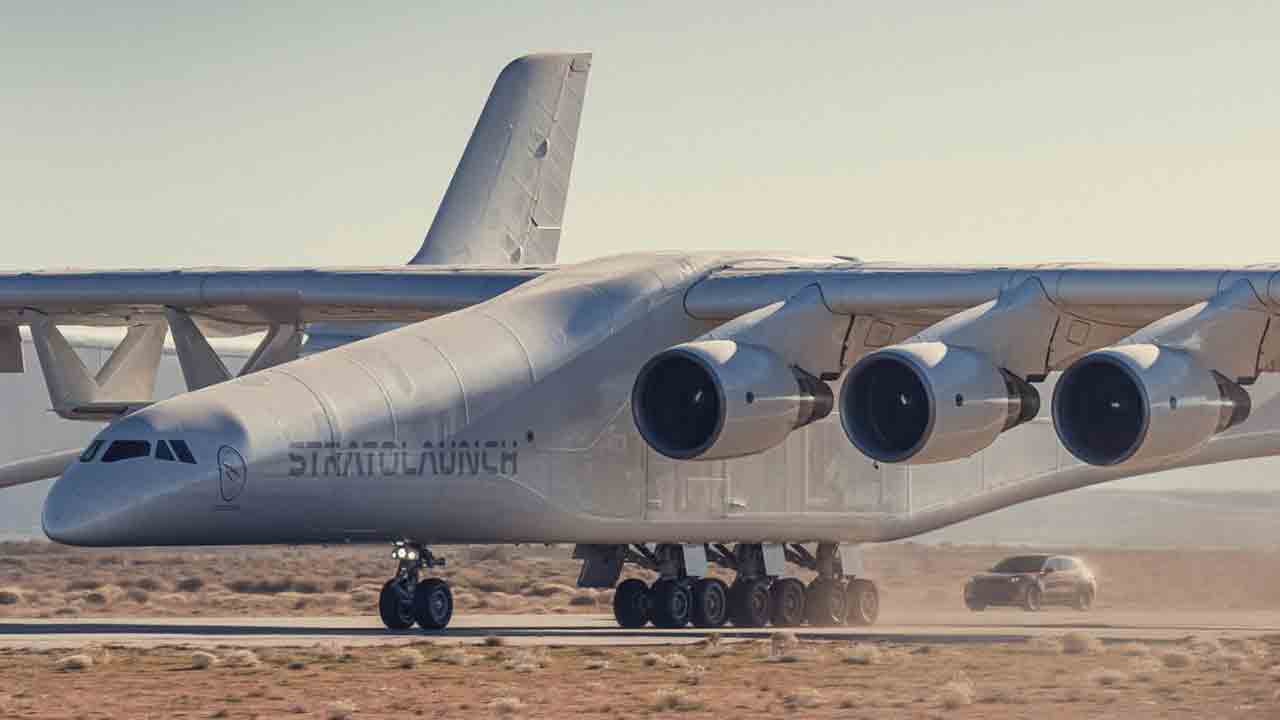
A prototype of the Porsche Cayenne Turbo Electric accompanied the Stratolaunch Roc, considered the world’s largest aircraft currently in operation by wingspan, during takeoff and landing procedures at the Mojave Air and Space Port in the United States.
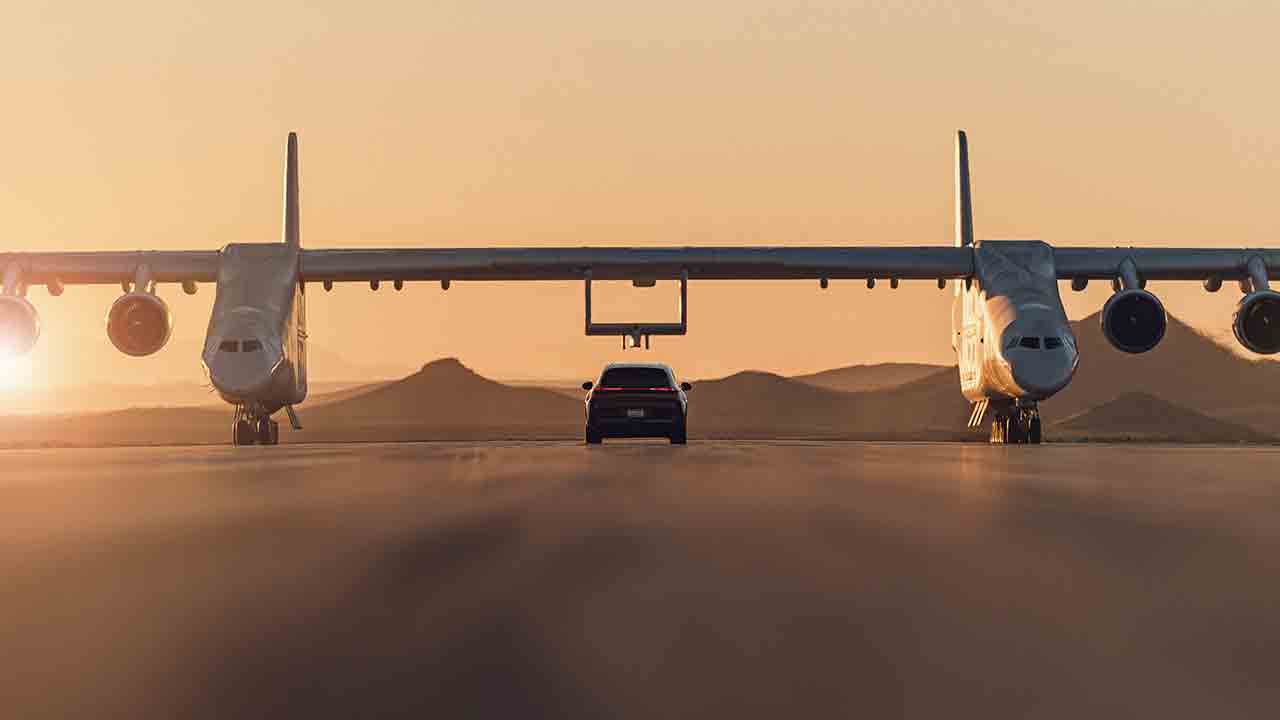
Although the images may suggest a speed race, the activity organized by Porsche and Stratolaunch was not a competition. The aim was to determine whether the electric SUV could accelerate alongside the aircraft and remain within an extremely restricted area calculated by engineers to have less exposure to turbulence generated by the engines.
The vehicle was driven by American racing driver Patrick Long, a former member of Porsche’s factory team. During the activity, he had to follow the aircraft’s landing gear without moving ahead or falling behind, even as the speed increased progressively.
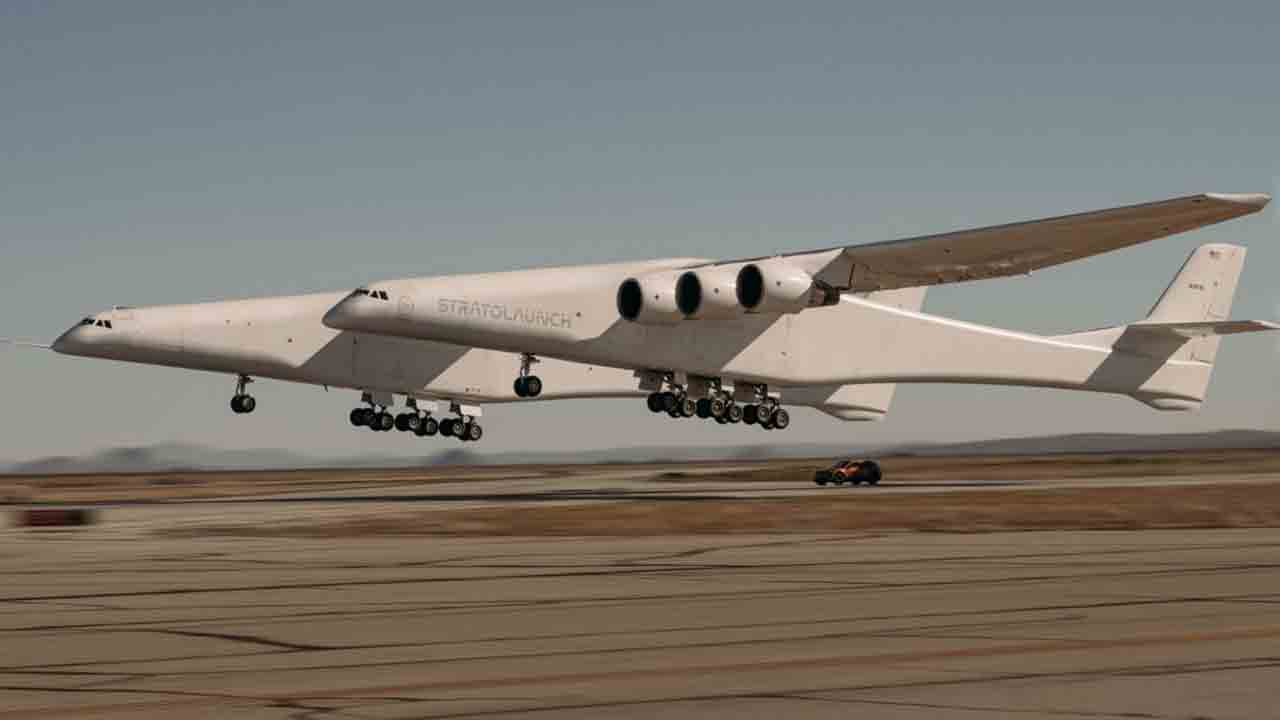
Engineers calculated an area with less turbulence
The Roc uses an unusual configuration, with two fuselages connected by a central wing. According to those responsible for the project, this architecture creates a small region with reduced turbulence behind the landing gear and ahead of the tail.
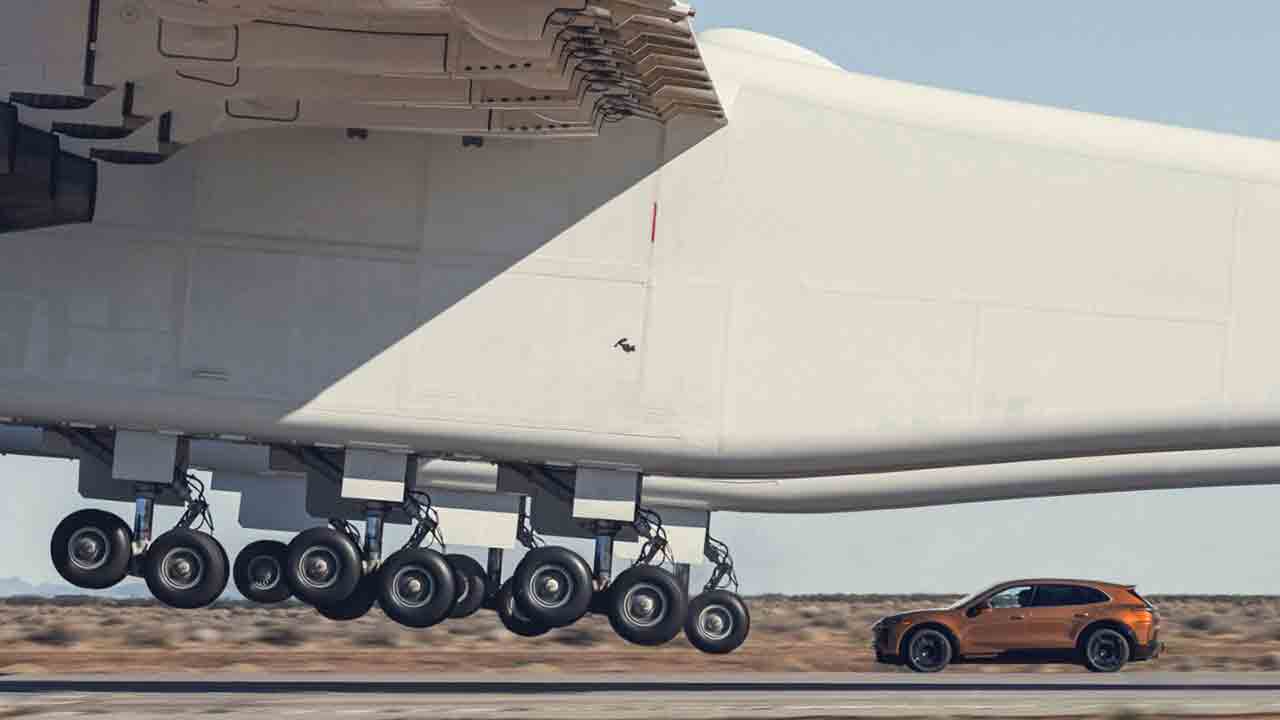
This kind of aerodynamic “bubble” moves together with the aircraft. To remain inside it, the Cayenne had to maintain almost the same speed as the plane during the takeoff run, requiring precise throttle responses and stability even under the influence of the airflow produced by the six engines.
The challenge involved more than just power. If the driver lost the established position, the vehicle could enter an area with considerably stronger turbulence and airflow. For this reason, aerodynamic calculations and coordination between the car’s driver and the aircraft’s crew were essential to the demonstration.
Cayenne reportedly exceeded 270 km/h
Long said he began the run using little power, slowly following the Roc’s movement. When the aircraft’s six engines increased their thrust, the driver activated the Cayenne’s Boost mode to remain close to the landing gear.
According to the driver, the instrument panel showed a speed of more than 170 mph, equivalent to approximately 274 km/h, before he eased off the accelerator. Porsche did not release an independent measurement of that speed, which exceeds the 260 km/h announced as the production model’s official top speed.
After the pass, the SUV had to slow down before reaching the end of the runway. The prototype was equipped with Porsche’s optional carbon-ceramic braking system, developed to maintain a more consistent response during deceleration from high speeds.
+ Click here to watch the video
The Turbo version uses two electric motors and can deliver up to 850 kW, equivalent to 1,156 hp, with Launch Control activated. The stated maximum torque is 1,500 Nm, while acceleration from 0 to 100 km/h can be completed in 2.5 seconds. These figures make the Cayenne Turbo Electric the most powerful production Porsche presented by the manufacturer to date.
World’s largest aircraft by wingspan
Developed to transport and launch experimental vehicles at altitude, the Stratolaunch Roc has a wingspan of approximately 117 meters. This is significantly greater than the roughly 80 meters of the Airbus A380.
The aircraft has two fuselages, six engines derived from the Boeing 747, and a maximum takeoff weight close to 590 tonnes. Its payload capacity can reach approximately 250 tonnes, according to data released by Stratolaunch.
The aircraft is used as an airborne launch platform for test vehicles, including projects focused on researching high-speed technologies. The payload is carried beneath the central section of the wing and released when the aircraft reaches the conditions specified for each mission.
Car also accompanied the landing
After accompanying the first takeoff, the team repeated the exercise during a second departure. The Cayenne was also used during two landings, accelerating along the runway to meet the Roc shortly before the aircraft touched the ground.
The procedure resembles the use of chase cars during landings of the Lockheed U-2 reconnaissance aircraft. In this type of operation, the driver follows the aircraft along the runway and assists the pilot with information about altitude and alignment.
In the Roc’s case, however, the Cayenne drove directly beneath the aircraft’s central structure, positioning itself behind the landing gear as the plane approached the ground.
In total, two takeoffs and two landings were carried out with the vehicle beneath the Roc. Some passes also carried passengers, including actor Orlando Bloom, automotive journalist Mat Watson, and members of Stratolaunch’s technical team.
Although it was not a standardized performance test and was designed as a promotional activity, the demonstration placed the Cayenne in an unusual situation. More than proving its maximum speed, the exercise highlighted its ability to control power delivery and keep the vehicle stable while accelerating alongside an aircraft of enormous proportions.
+ Romanian F-16 shoots down second drone in two days near the Ukrainian border
Source and images: Porsche | Stratolaunch. This content was created with the help of AI and reviewed by the editorial team.
