
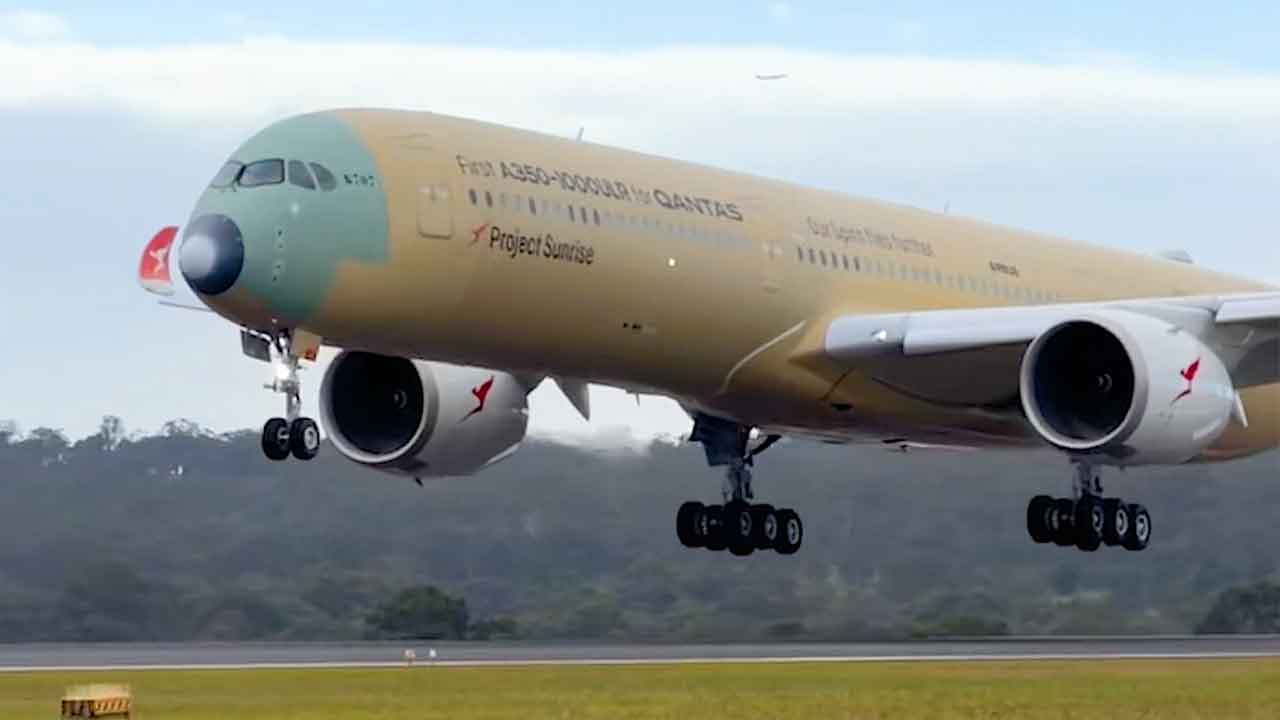
Experimental aircraft flies between Toulouse and Melbourne during the Project Sunrise certification campaign
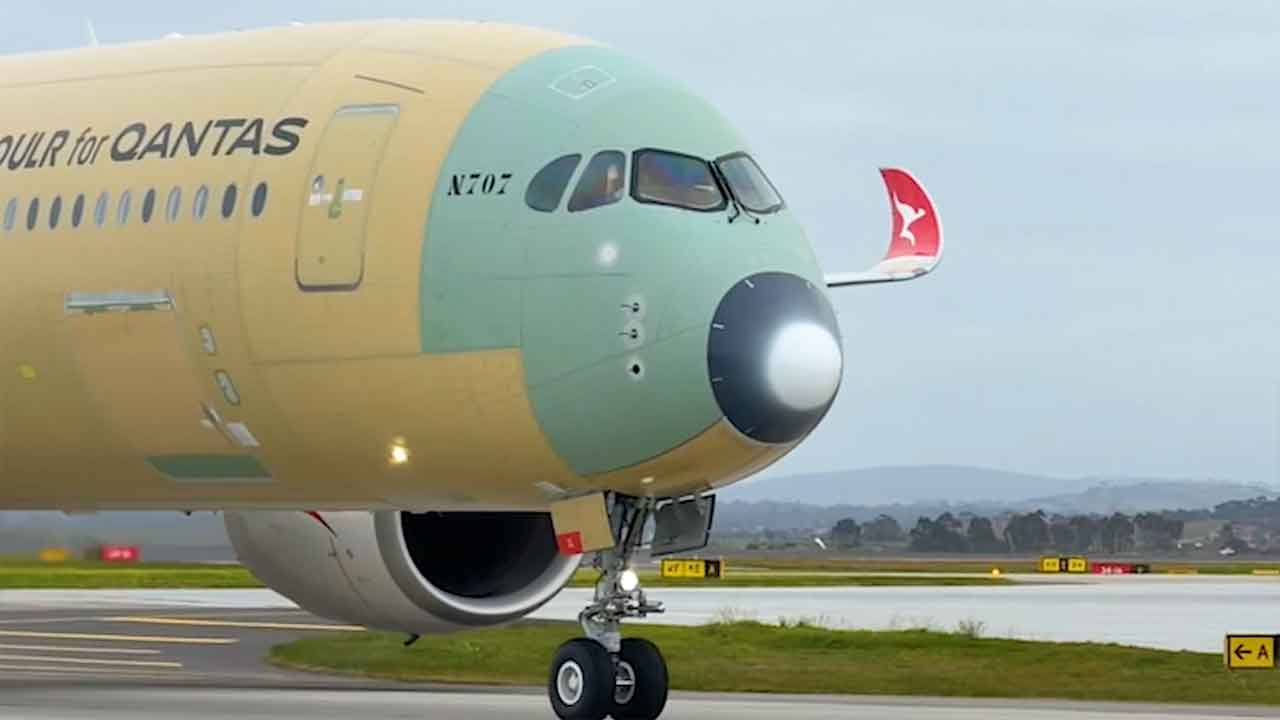
The Airbus A350-1000ULR developed for Qantas has landed in Australia for the first time after completing a nonstop flight between Toulouse, France, and Melbourne.
The journey lasted 19 hours and 12 minutes and is part of the testing campaign required to certify the extended-range version of the largest aircraft in the A350 family. Identified by serial number MSN 707 and the temporary registration F-WULR, the aircraft covered approximately 17,000 kilometers without stopping.
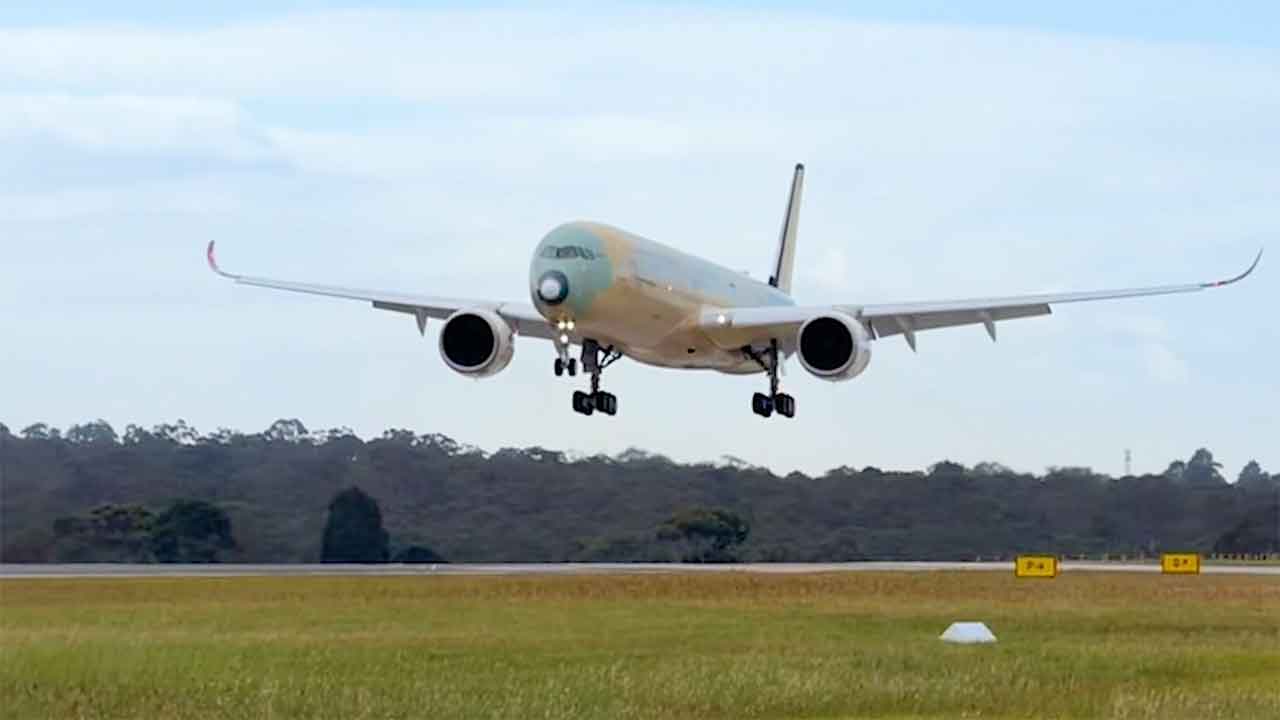
There were no passengers on board. The flight was operated by Airbus test pilots and engineers, who were responsible for monitoring the behavior of the aircraft’s systems during an operation close to the conditions expected on future ultra-long-haul routes.
More than a demonstration of range, the journey was used to collect data on fuel consumption, tank management, pressurization, cabin temperature and the performance of equipment installed specifically for flights that could last up to 22 hours.
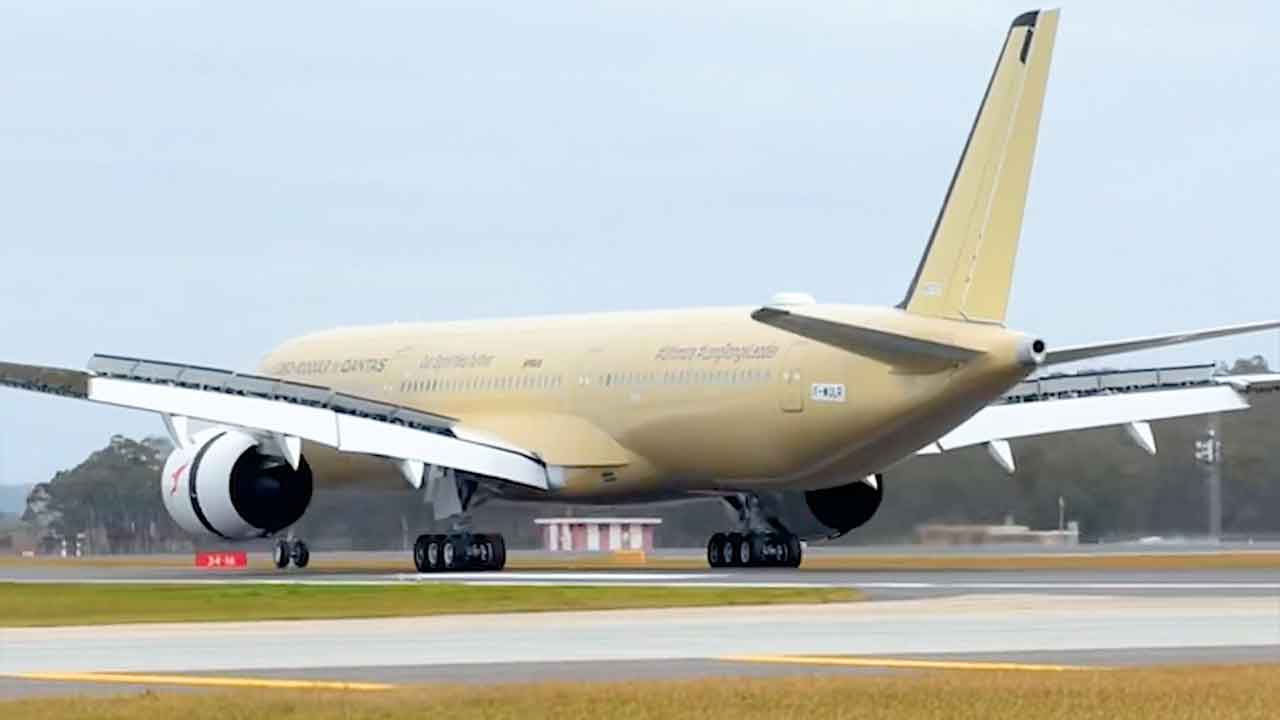
The main technical difference of the A350-1000ULR is an additional rear center tank with a capacity of 20,000 liters. Integrated into the aircraft’s structure, the component extends its range by approximately 1,000 nautical miles, or about 1,850 kilometers, compared with the conventional A350-1000. The modification requires changes to the fuel transfer and management system, as well as new sensors, pumps and controls. During the certification campaign, more than 1,000 sensors are being used to record parameters such as flow, pressure, temperature and oxygen concentration inside the tanks.
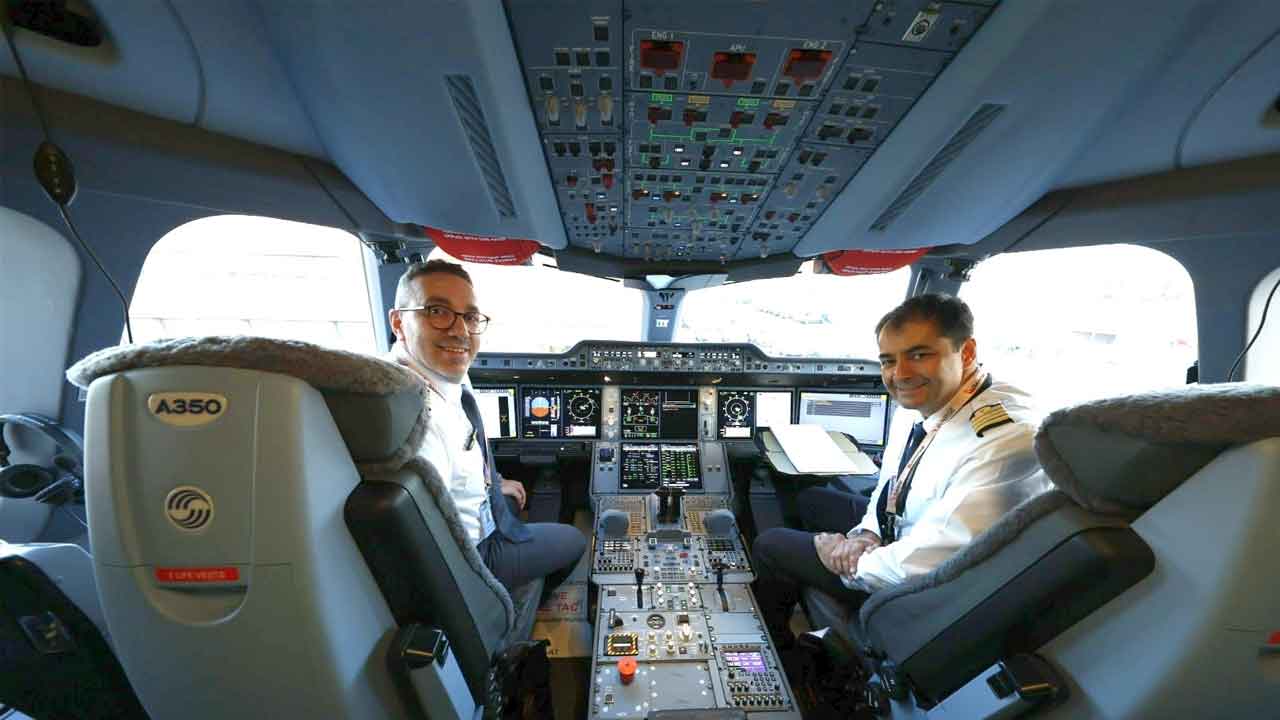
Airbus is also evaluating a new galley cooling system and the cabin’s thermal control. These systems become especially important on flights of this length, during which equipment, food, passengers and crew remain inside the aircraft for almost an entire day. The configuration prioritizes space but reduces capacity.
Qantas has ordered 12 A350-1000ULR aircraft for Project Sunrise. Each aircraft will have only 238 seats distributed across four classes, the lowest seating density announced for an Airbus A350 in commercial service.
The configuration will include six first-class suites, 52 business-class seats, 40 premium-economy seats and 140 economy seats. The interior will also feature an area dedicated to stretching, hydration and short breaks during the journey. The reduction in the number of seats is not merely a comfort-related decision. It also helps limit the aircraft’s weight and provides room for fuel, baggage, food and crew-rest areas. On the other hand, it makes the operation more dependent on passengers willing to pay higher fares, particularly in the premium cabins.
The project therefore does not eliminate the economic challenges associated with ultra-long-haul flights. Although a nonstop service could reduce total travel time by up to four hours, the airline will need to balance fuel consumption, cargo capacity, crew costs and ticket prices.
Landing does not yet mark the beginning of operations
The aircraft that arrived in Melbourne is a production airframe being temporarily used by Airbus for the testing campaign. After the program is completed, MSN 707 will be adapted to receive the commercial configuration selected by Qantas.
Although it is the first A350-1000ULR built, it will not be the first example delivered to the Australian airline. That role will go to a second aircraft named Vega, which is currently undergoing assembly and cabin installation. Delivery is scheduled for April 2027. Qantas intends to begin daily nonstop flights between Sydney and London in October 2027, with ticket sales expected to begin in February of the same year. The direct service between Sydney and New York is expected to launch later, but it does not yet have an official date. The landing in Melbourne represents concrete progress for Project Sunrise, but it does not mean that the aircraft is already ready to carry passengers.
Before that happens, the A350-1000ULR will need to complete its tests, obtain regulatory certification and demonstrate that its modifications can operate reliably during repeated commercial services — a far more complex requirement than completing a single long-duration flight.
Our Project Sunrise Airbus A350-1000ULR has touched down in Australia for the first time.
This journey is part of its two-month flight testing campaign, with the aircraft flying directly from Toulouse to Melbourne in 19 hours and 12 minutes. pic.twitter.com/B8lvCmZER8
— Qantas (@Qantas) July 24, 2026
Source and images: Qantas | Airbus. This content was created with the assistance of AI and reviewed by the editorial team.
