
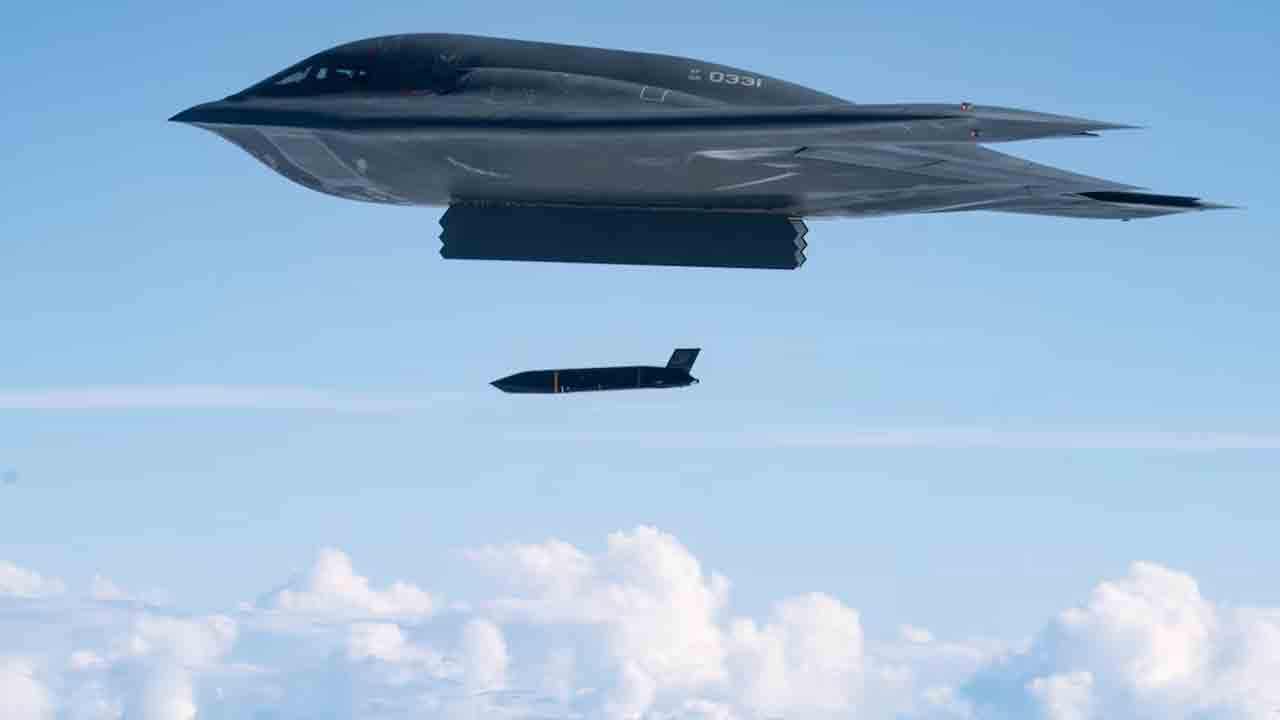
The United States Air Force conducted a live-fire exercise with a B-2 Spirit stealth bomber north of the Mariana Islands in the Pacific. The operation involved the launch of the long-range AGM-158C LRASM anti-ship missile against a maritime target as part of the Valiant Shield 2026 exercise.
The activity was conducted by the Pacific Air Forces in coordination with U.S. Navy personnel, demonstrating joint capability for maritime strike operations in distant and highly complex areas.
The central point of the exercise was the use of the Long Range Anti-Ship Missile, known by the acronym LRASM. The weapon was developed to locate and engage ships at long distances, expanding the ability of U.S. forces to act against naval threats without requiring the aircraft to make a direct approach to the target.
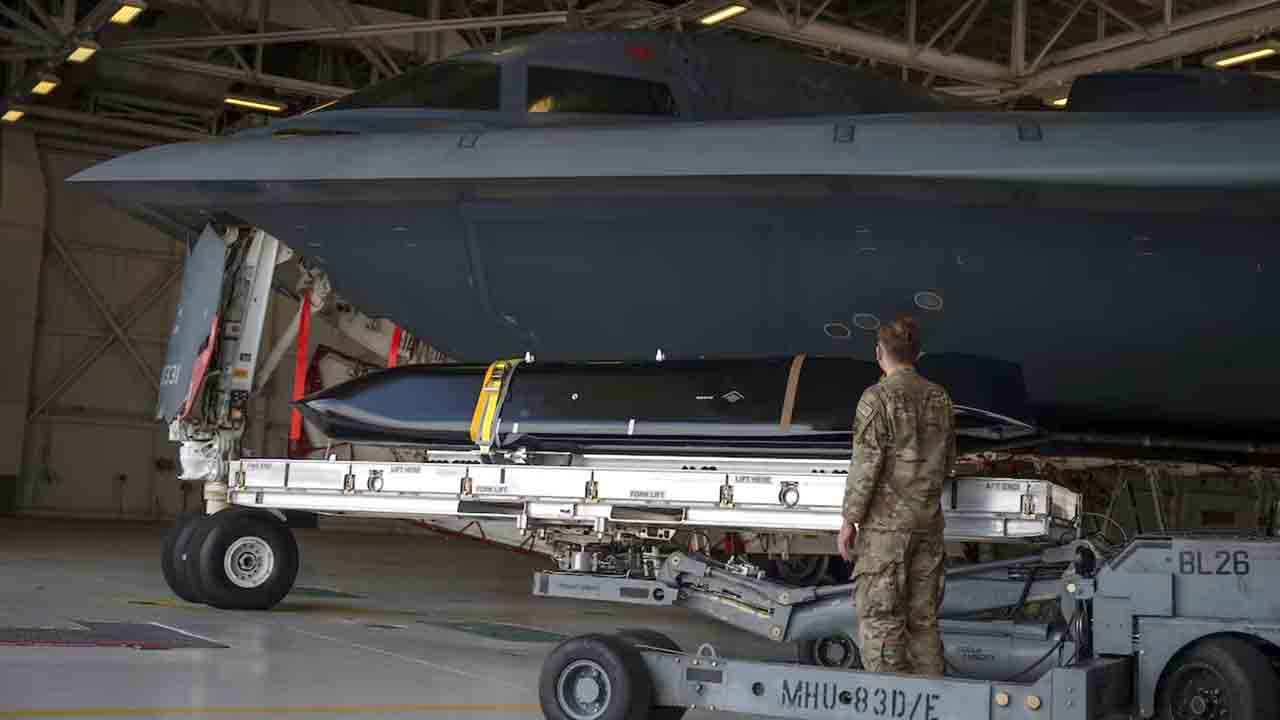
The test stands out because it combines two strategic capabilities: the global reach and low radar signature of the B-2 Spirit with an anti-ship missile designed to operate in contested environments. In practice, this reinforces the message that the United States seeks to maintain response capability in the Indo-Pacific, a region marked by growing naval competition, territorial disputes and China’s expanded military presence.
The location of the exercise is also relevant. The Mariana Islands, Guam, the Philippine Sea and routes near Taiwan are part of an area considered essential for U.S. and allied power projection. In the event of a regional crisis, this stretch of the Pacific would play an important role in the movement of forces, the protection of sea lines and support for joint operations.
The geopolitical context with China
The launch of the LRASM from a B-2 comes at a time of growing attention to China’s military posture around Taiwan, in the South China Sea and in the Western Pacific. Beijing considers Taiwan part of its territory and has intensified the presence of ships, aircraft and Coast Guard assets in areas near the island, while the United States and its allies defend the maintenance of freedom of navigation and the regional status quo.
China has also been expanding its naval capabilities, with aircraft carriers, modern surface ships, submarines and long-range missiles. For Washington, this progress requires forces capable of operating at great distances, with precision and in an integrated way across air, sea, space, cyberspace and communications.
In this scenario, the use of the B-2 with the LRASM should not be seen merely as a weapons test, but as a deterrence message. The demonstration indicates that the U.S. intends to maintain assets capable of reaching relevant maritime targets even in areas protected by advanced surveillance and defense systems.
Adapting the stealth bomber to the naval environment
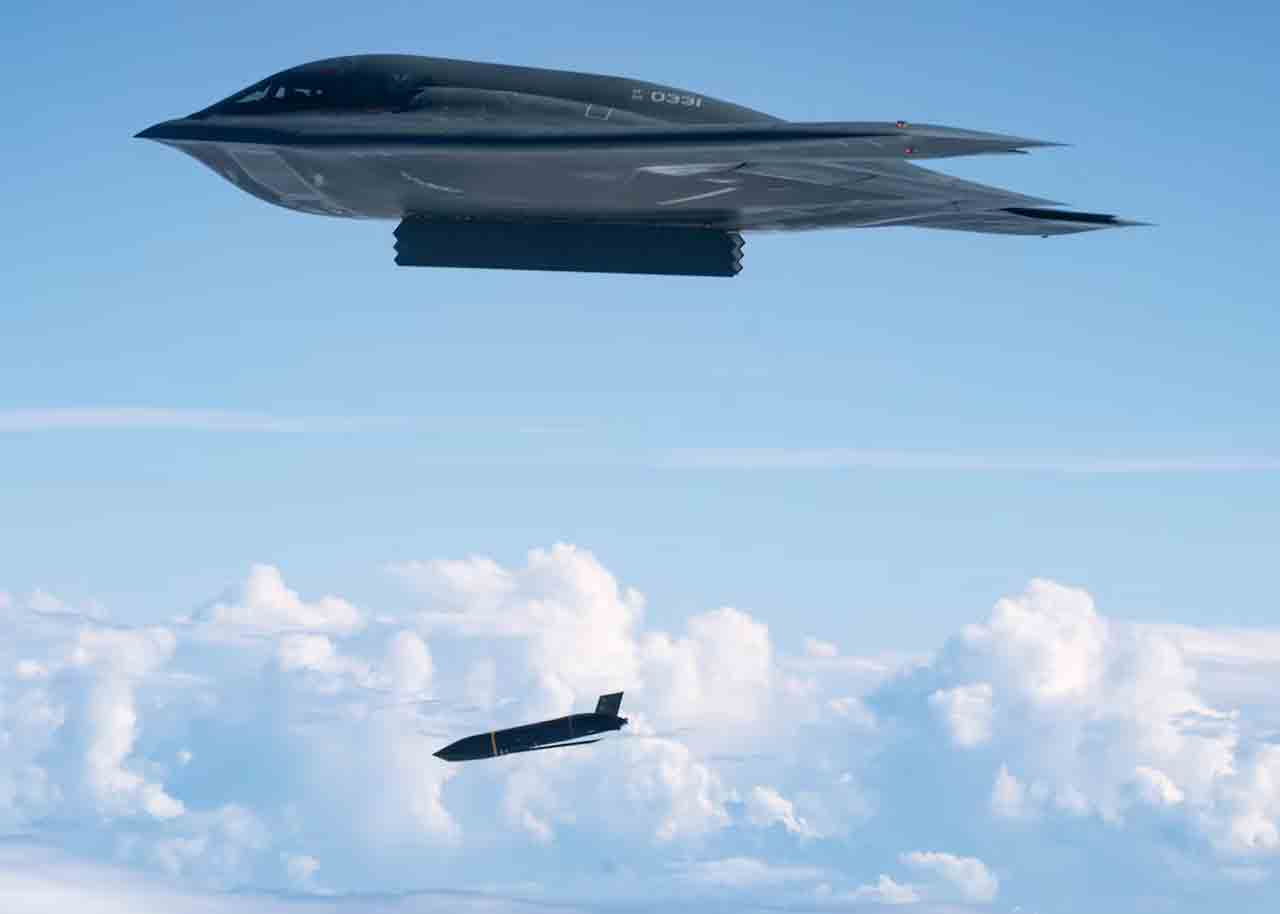
Although the B-2 is best known for long-range strategic missions against land targets, the launch of the LRASM shows an important adaptation of the stealth bomber to the naval environment. This expands the aircraft’s role in scenarios in which sea control and the protection of maritime routes become decisive.
General Kevin B. Schneider, commander of Pacific Air Forces, said the B-2’s performance reinforces the need for adaptation and flexibility in the face of new security challenges. According to him, maritime strike capability helps the United States protect its national interests and maintain an operational advantage in the Pacific.
Valiant Shield
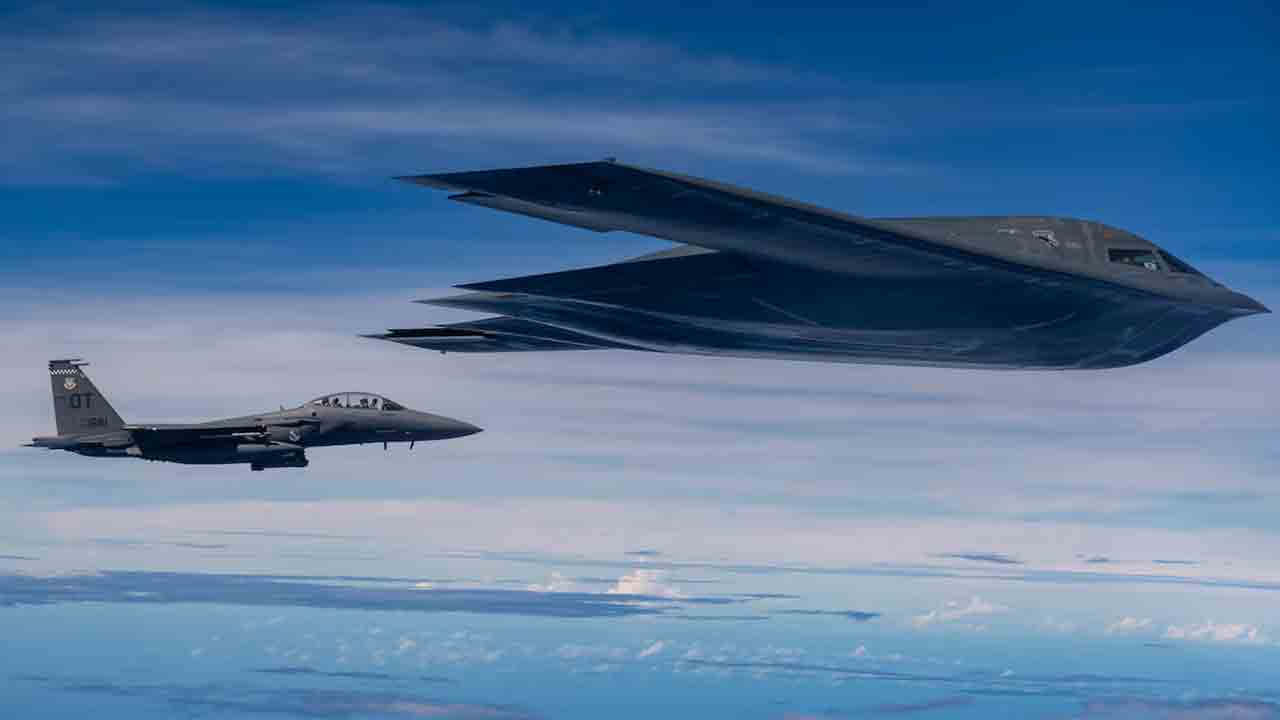
Valiant Shield is a large-scale military exercise held in the Indo-Pacific to integrate U.S. and allied forces in air, naval and joint operations. This type of training makes it possible to test communications, planning, mobility, the use of advanced systems and coordination between different branches of the Armed Forces.
A SINKEX, short for Sinking Exercise, is a controlled exercise in which a maritime target is used to assess strike capabilities, coordination and precision in a realistic environment. Despite the technical name, the main objective is to validate procedures, integrate platforms and demonstrate operational readiness.
Source: Pacific Air Forces / U.S. Air Force / U.S. Navy. This content was created with the help of AI and reviewed by the editorial team.
