
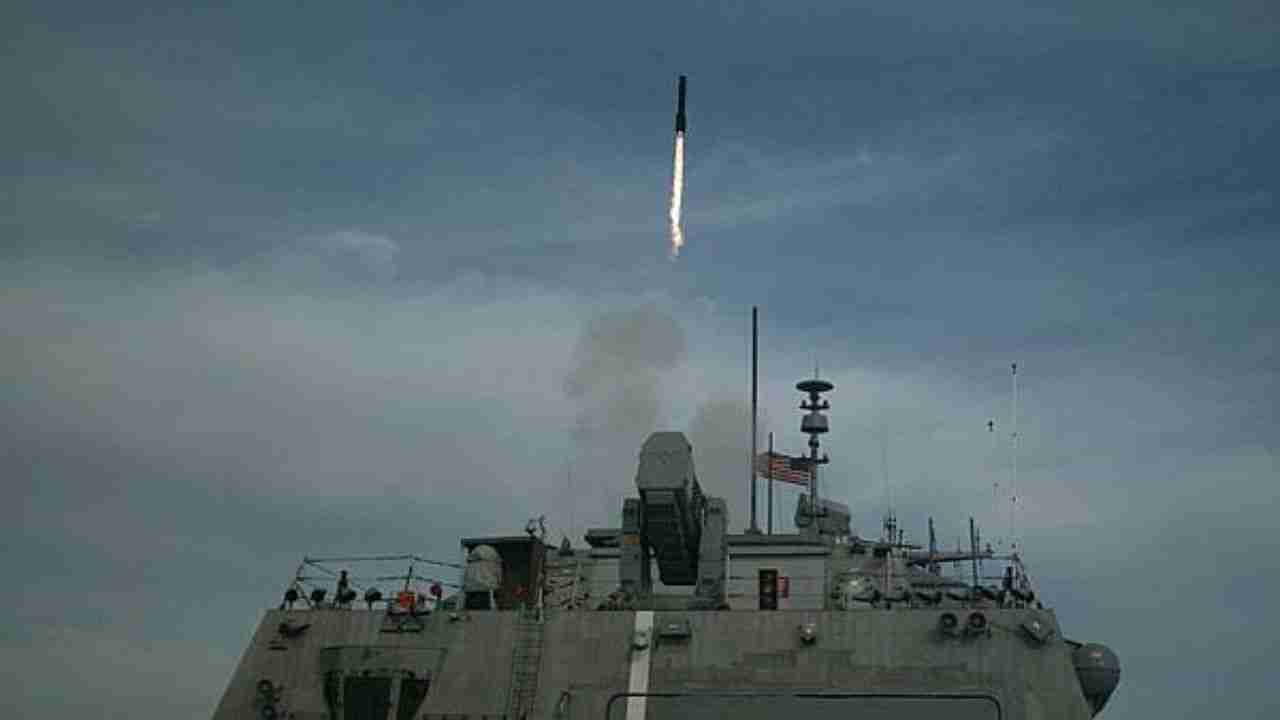
The United States Navy is accelerating the installation of new defense systems in its aircraft carrier strike groups, with a special focus on countering drones.
The initiative includes the rapid integration of radar-guided Longbow Hellfire missiles and Coyote interceptors on ships within task forces led by the aircraft carriers Gerald R. Ford and Theodore Roosevelt. The move reflects growing concern over unmanned aerial threats, especially following recent operations in the Red Sea and tensions involving Iran.
According to budget documents, funding has been allocated in recent years to enable the acquisition, installation, and integration of these systems. Although there is no official confirmation regarding which vessels have already received the launchers, Arleigh Burke-class destroyers have been the primary focus of these upgrades. Additionally, previous tests had already indicated the use of the AGM-114L missile, a Hellfire variant with proven capability against drones and targets on land and at sea.
At the same time, the Navy has been expanding the use of Coyote interceptors, now with new eight-cell launchers installed on destroyers assigned to the aircraft carrier Harry S. Truman strike group. These systems, which can be removed and transferred between ships, offer greater operational flexibility and are part of a broader layered defense strategy against emerging threats.
The effort also includes the development and testing of new technologies, such as advanced interceptors and laser systems, as well as modular containerized solutions. With the evolution of increasingly sophisticated drones, driven by artificial intelligence and swarm tactics, the Navy is betting on the rapid expansion of these capabilities to strengthen the protection of its fleet in increasingly complex conflict scenarios.
Source: The War Zone | Photo: X @USFleetForces | This content was created with the help of AI and reviewed by the editorial team
