
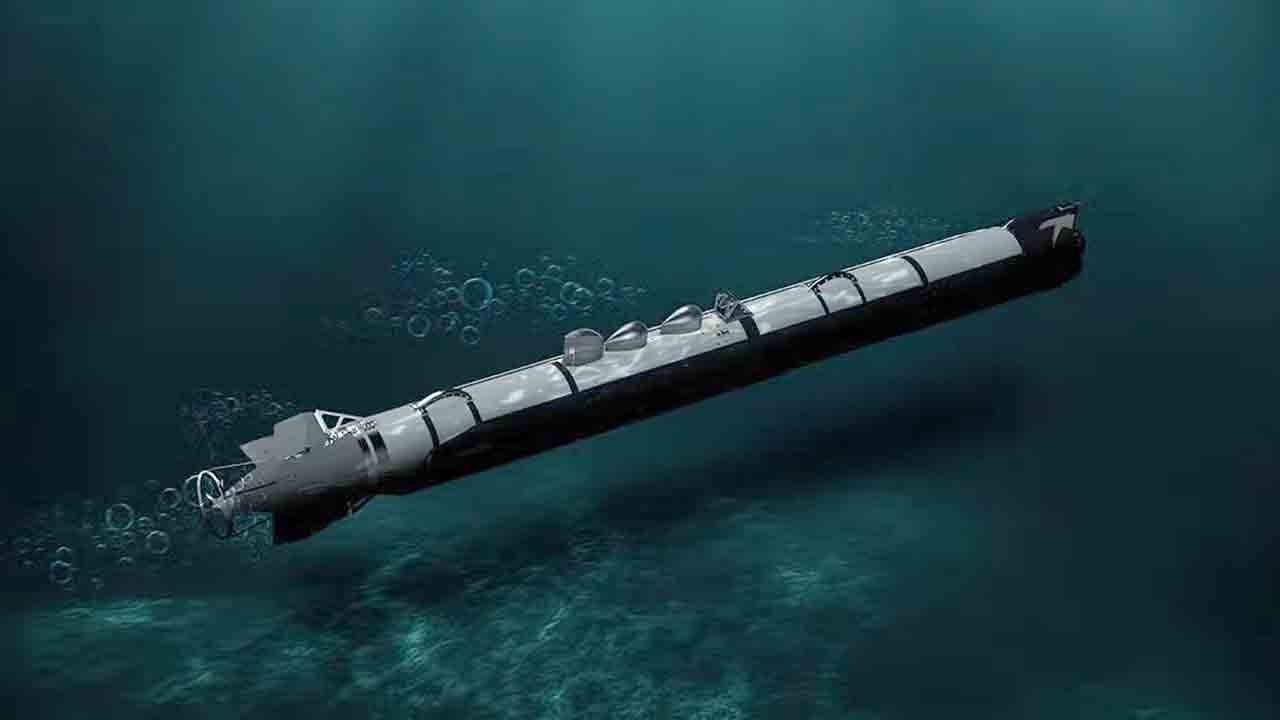
The contract calls for the delivery of the TTLR system, capable of launching and recovering Iver4 900 autonomous underwater vehicles through torpedo tubes, expanding ISR, mine detection, and seabed warfare missions without compromising the submarine’s stealth.
L3Harris Technologies announced on March 25, 2026, that it had received an Other Transaction Authority contract through the U.S. Defense Innovation Unit to provide the Torpedo Tube Launch and Recovery, or TTLR, system for U.S. Navy submarines. The solution allows the launch and recovery of Iver4 900 autonomous underwater vehicles directly through the vessel’s torpedo tubes.
According to the company, the system has already been validated by the navies of the United States and allied countries for intelligence, surveillance, and reconnaissance missions, as well as mine detection and seabed warfare operations. One of its main advantages is the ability to carry out these tasks without requiring the submarine to surface, reducing crew exposure and preserving operational discretion.
In a statement, Nino DiCosmo, President of L3Harris’ Maritime, Space & Mission Systems division, said that TTLR is already meeting current operational needs and is not merely a future capability. According to the company, the system is the first to successfully launch and recover AUVs from a submarine, offering greater flexibility for persistent undersea operations while maintaining the stealth considered essential for this type of mission.
L3Harris also highlights that TTLR features a modular architecture and can expand the force capacity of existing submarines without requiring the construction of new platforms. The company further states that the solution incorporates the first lithium-ion battery technology for AUVs approved by the U.S. Navy and U.S. naval aviation, enabling longer missions and rapid battery swaps for continuous operations.
Another point emphasized by the manufacturer is the system’s interoperability across different submarine classes and allied platforms. In the company’s view, this reinforces the integration concept between crewed and uncrewed U.S. Navy assets and also aligns with the technological cooperation envisioned under AUKUS Pillar 2.
+ FBI Recovers Deleted Signal Messages From iPhone and Raises Alert Over Notifications
+ Japan completes conversion of JS Izumo to operate F-35B fighter jets
Source and image: L3Harris. This content was created with the help of AI and reviewed by the editorial team.
