
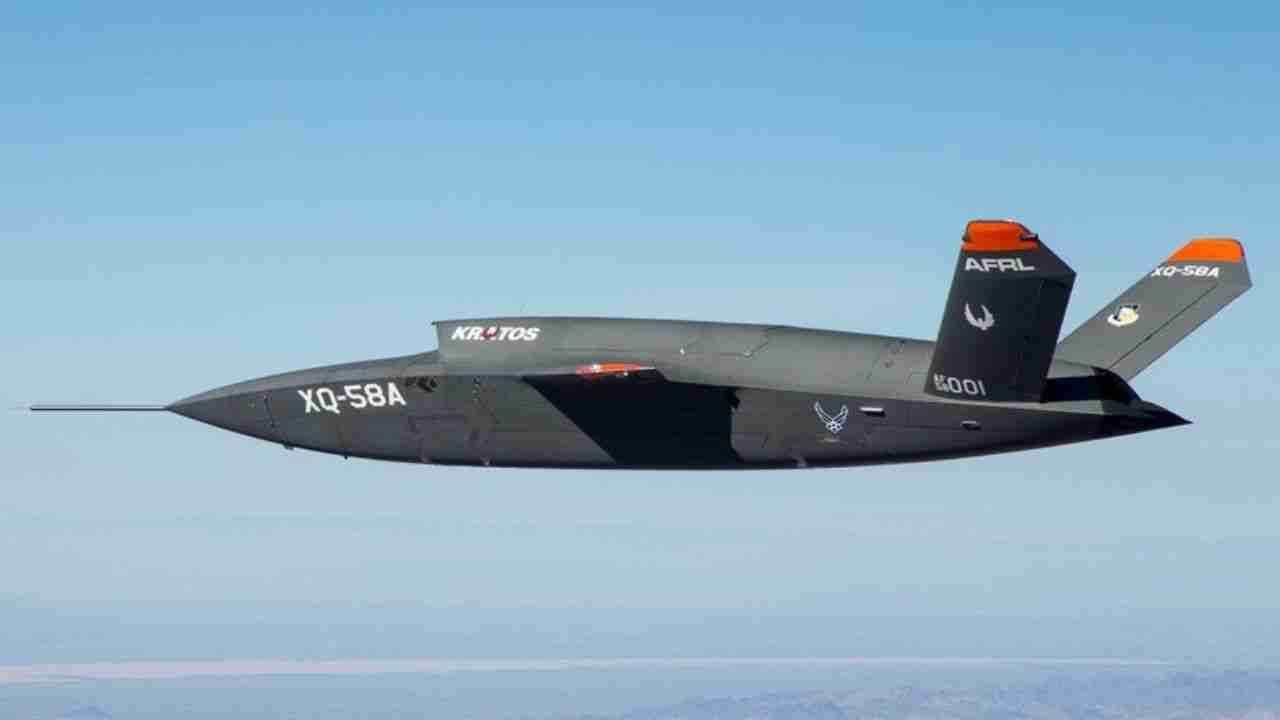
Kratos confirmed that the new CTOL version of the stealth drone XQ-58 Valkyrie, developed for the U.S. Marine Corps, will be able to take off both from conventional runways and via static launchers with rocket assistance.
Despite this takeoff flexibility, the landing-gear-equipped model will be required to land exclusively on runways, unlike current versions that use parachutes for recovery. The first flight of the new variant is scheduled for early this year.
The CTOL version is part of the MUX TACAIR CCA program, resulting from the partnership between Kratos and Northrop Grumman, and retains a high degree of structural similarity with previous models. The main change is the incorporation of landing gear, which requires a reduction in part of the internal volume allocated to payload. Even so, the aircraft preserves the ability to launch via rockets, ensuring continued operations from remote and minimally prepared locations.
From an operational standpoint, the new concept makes it possible to combine dispersed launches from forward areas with subsequent operations from conventional runways. In practice, the Valkyrie could begin missions from mobile launchers, land at secondary bases, and from there sustain a higher operational tempo. Runway landings also facilitate maintenance, reduce the risk of structural damage, and speed up the drone’s return to combat.
Despite the advantages, the CTOL version involves trade-offs, such as reduced internal payload volume and continued reliance on expendable boosters for rocket launches. Even so, the Marine Corps views the new configuration as part of a strategy to expand the flexibility of its future combat drone fleets, especially in expeditionary and distributed scenarios, where the ability to operate from improvised locations remains essential.
Source: The War Zone | Photo: X @usairforce | This content was created with the help of AI and reviewed by the editorial team
