
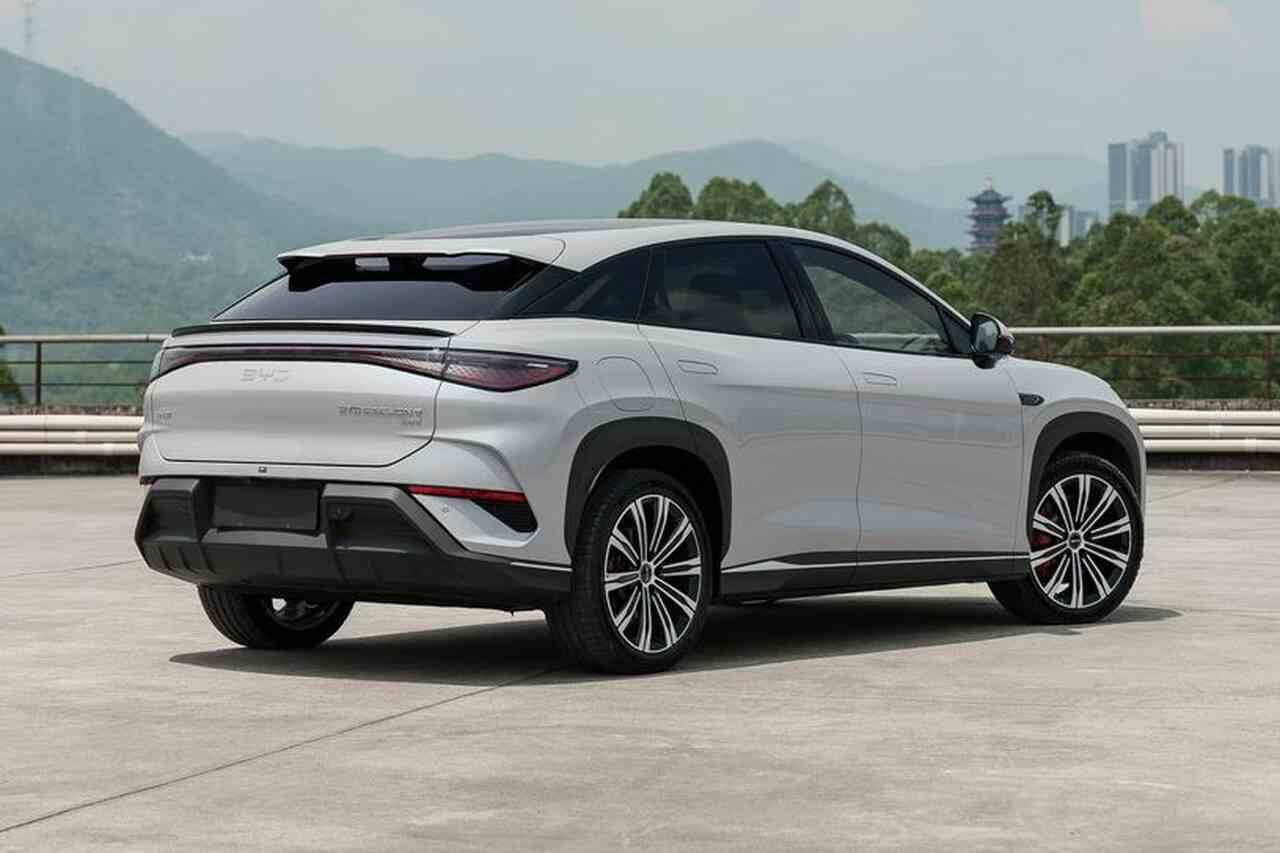
China is planning a comprehensive ban on fully retractable car door handles across the automotive industry, citing safety risks.
Discussions among Chinese authorities are reportedly close to finalizing a new mandatory rule that would completely prohibit fully retractable handles on future cars.
The draft, expected this month, would give automakers a one-year grace period before the rule takes effect, likely starting in July 2027. Authorities also mentioned including automatic unlocking mechanisms for conditions such as accidents.
If implemented, the change would mark a shift in automotive design, especially for new energy vehicles (NEVs) that have widely adopted the feature.
As a result, the news caused a stir in the industry. “We have already notified several projects to implement this,” a source told Car News China.
While the measure is still under discussion, the potential impact is significant. On the other hand, fully retractable handles have long been a safety concern.
These handles have become a prominent design element in new NEVs, whether “lever type” (mechanical) or “electronically controlled pop-out” (motorized). But in emergencies, these electronic handles can become a deadly trap.

The China Insurance Automotive Safety Index (C-IASI) found that in side-impact crash tests, vehicles with electronic handles had only a 67% success rate in opening doors, compared to a 98% success rate for cars with traditional mechanical handles.
Real-life incidents are even more alarming. During a cold wave in Changchun in 2024, occupants of an electric vehicle were trapped inside when the handle motors froze.
In the same year, heavy rains in Guangdong caused short circuits in several electric vehicles, preventing doors from opening and forcing passengers to break windows to escape.
Furthermore, while automakers claim that hidden handles can improve a car’s drag coefficient by up to 0.03 Cd, this translates to an energy savings of just 0.6 kWh over 100 km—a negligible amount for most drivers.
To make matters worse, the motors and mechanisms required for these handles add 8 kg of weight, which can easily negate any small aerodynamic advantage.
They are also notoriously unreliable and expensive, costing three times as much as mechanical handles and failing eight times more frequently.
The potential ban on hidden handles is part of a broader global discussion on questionable design trends in modern vehicles, especially electric cars.
Regulators are also reviewing the absence of physical buttons for critical functions, which are increasingly being replaced by touchscreens.
Photo and video: BYD / Geely. This content was created with the help of AI and reviewed by the editorial team.
