
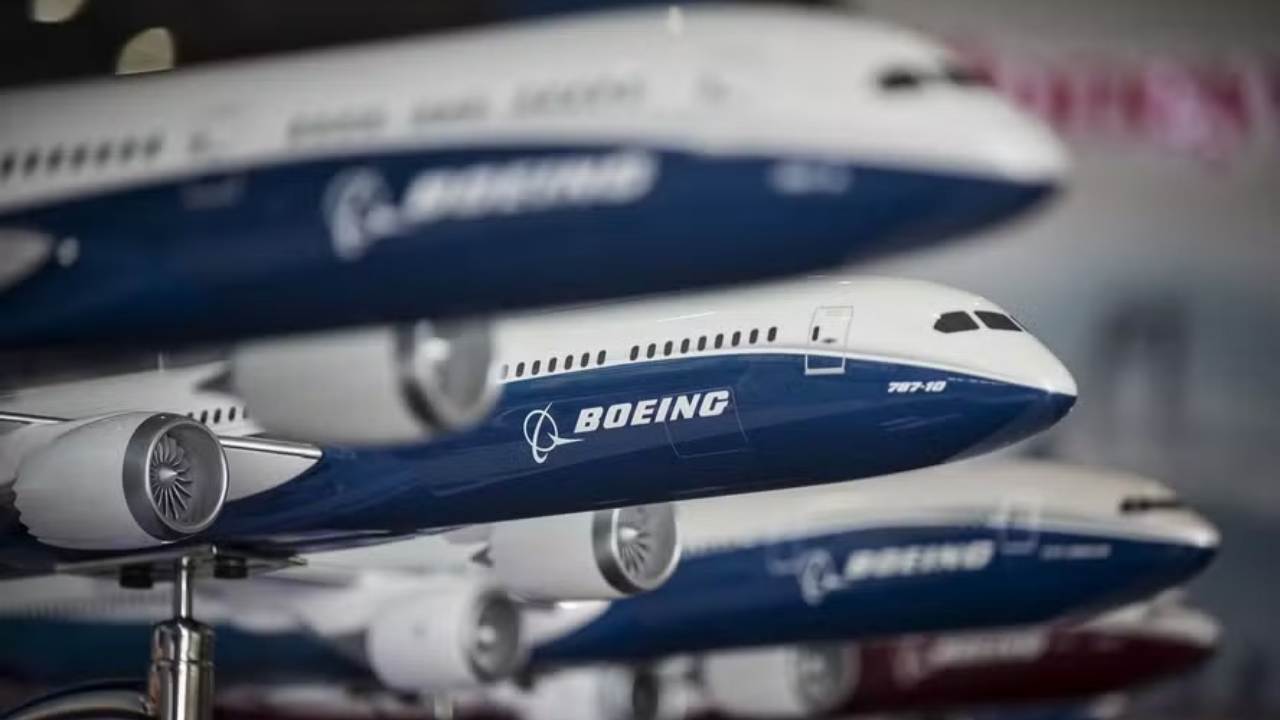
Decision is a response to U.S. tariffs and increases uncertainty in the aviation sector; manufacturer’s shares fall nearly 5%
The Chinese government has ordered the country’s airlines to suspend any new orders of aircraft from the American company Boeing. According to sources cited by Bloomberg, the move is part of Beijing’s response to the rise in trade tariffs imposed by President Donald Trump.
In addition to jets, the ban also covers the purchase of parts and equipment from U.S. companies. The decision came shortly after China announced tariffs of up to 125% on American products, in retaliation for new tariff sanctions imposed by Washington, which now total 145%.
The tariffs make it unfeasible to purchase aircraft and components manufactured in the U.S., and are expected to directly affect Boeing’s business with companies like China Southern Airlines, Air China, and Xiamen Airlines. Around ten Boeing 737 Max aircraft were about to be integrated into the fleets of these airlines.
The news caused Boeing’s shares to fall by as much as 4.6% in pre-market trading, accumulating a 10% drop for the year. The manufacturer is still dealing with the impact of the 737 Max grounding, trade disputes with the Trump and Biden administrations, and internal issues such as the recent incident involving a door plug detachment during a flight.
Sources say the Chinese government is considering offering financial support to airlines that already have Boeing jets under leasing arrangements, due to rising costs. At the same time, some deliveries may still take place in specific cases, depending on the contract signing date.
The dispute highlights how China, despite increasingly betting on the domestic Comac C919 model and its partnership with European company Airbus, still depends on American manufacturers to meet its aviation demand. Boeing, in turn, is watching one of the world’s largest aviation markets pull away at a time when the company is seeking recovery.
According to Bloomberg, companies such as Juneyao Airlines have already postponed scheduled deliveries, and Boeing still holds dozens of aircraft in storage that were originally intended for the Chinese market.
With the new tariffs in effect since April 12, the escalation between the two largest economies in the world is putting even more pressure on the global aviation sector, already weakened by logistics crises and the slow post-pandemic recovery.
Source and images: O Globo / Bloomberg. This content was created with the help of AI and reviewed by the editorial team.
