
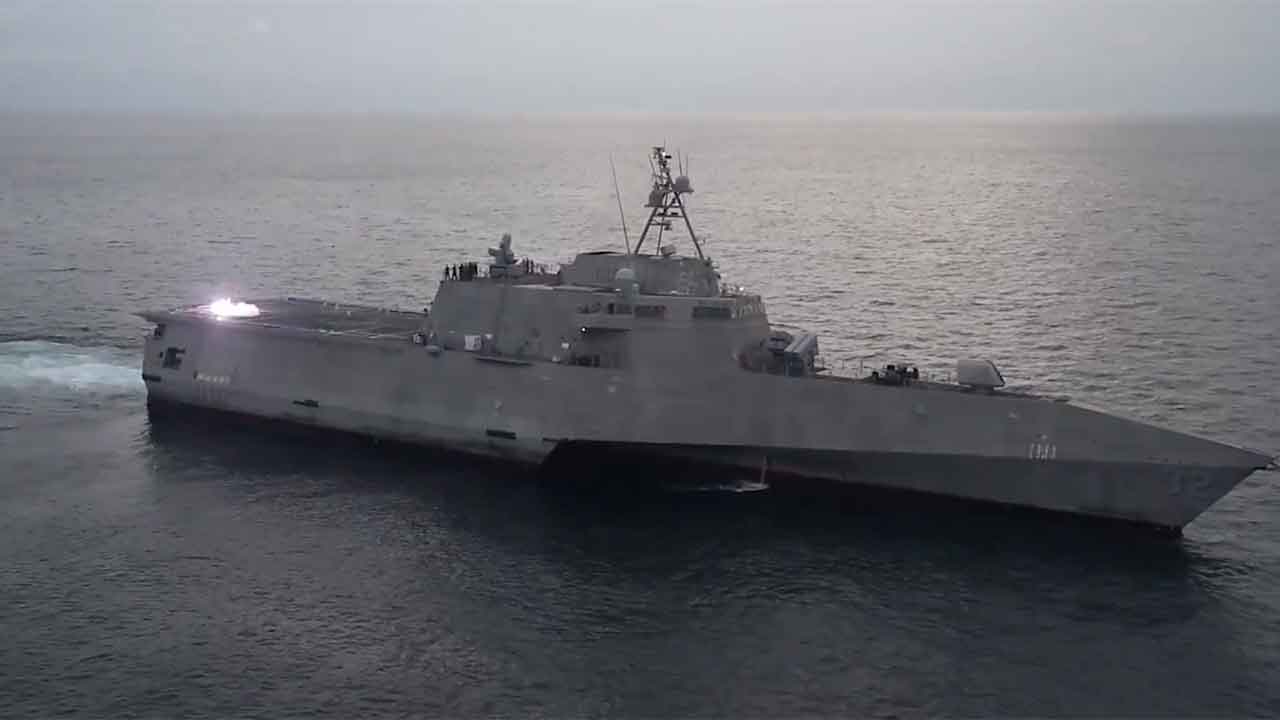
The United States Navy has carried out, for the first time, the operational launch of the LUCAS drone (Low-Cost Uncrewed Combat Attack System) from a warship.
The operation took place on December 16, when a system unit was launched from the aft deck of the USS Santa Barbara, an Independence-class ship, while the vessel was conducting missions in the Persian Gulf.
+ Click here to watch the video
According to official information, the launch was conducted by teams from Task Force 59 of U.S. Naval Forces Central Command (NAVCENT) and used a rocket booster, demonstrating the feasibility of employing LUCAS from naval platforms. The initiative significantly expands the operational options of U.S. forces by enabling the use of these drones both in maritime environments and from land-based positions.
The test comes just two weeks after the announcement of the creation of Task Force Scorpion Strike (TFSS) in the Middle East. The new task force was designed to operate LUCAS attack drones and currently consists of around two dozen service members responsible for deploying and operating the system in the region. On December 3, the arrival of the first U.S. combat unit equipped with these drones in the Middle East had already been confirmed.
U.S. officials state that the creation of TFSS represents a direct strategic shift in the regional balance, particularly with regard to Iran, which makes extensive use of Shahed-136-type drones through allied groups and proxy structures. However, according to official sources, LUCAS drones have not yet been fitted with warheads and are still in the early phase of operational deployment.
LUCAS system

Developed by Arizona-based company SpektreWorks, LUCAS was designed as a low-cost, highly flexible uncrewed platform, initially focused on supporting operations in the Indo-Pacific, but with growing application in other theaters.
The system adopts an open architecture, allowing the integration of different payloads for reconnaissance, attack, and communications missions. The drone is reusable and can be launched both from ground-based catapults and by rocket boosters, as demonstrated in the launch from the USS Santa Barbara.
In addition to its role as an attack platform, LUCAS is also intended to operate as a communications repeater within the U.S. multi-domain uncrewed systems cellular network. This capability is expected to enhance secure communications between U.S. and allied forces in environments where traditional networks are degraded or under threat.
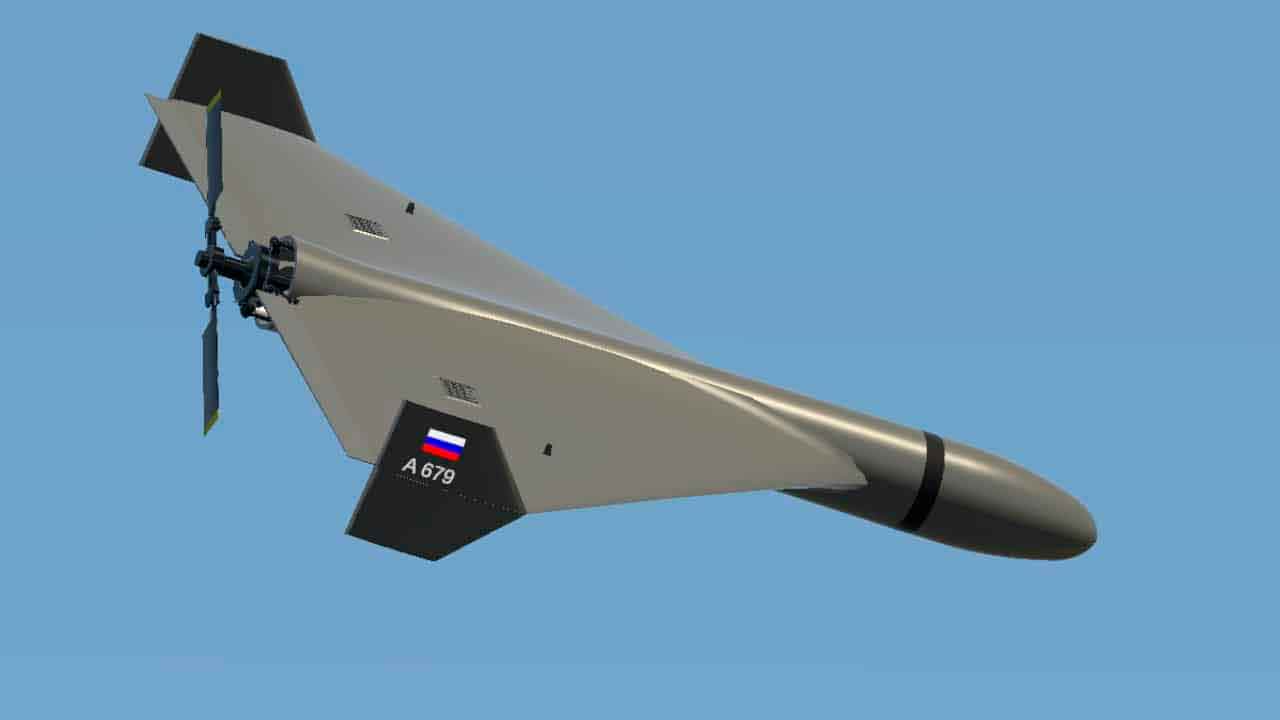
Visually, LUCAS bears similarities to the Iranian-Russian Shahed-136 (Geran-2) drone, adopting a triangular delta wing and a piston engine. The estimated cost of each unit is approximately US$35,000, significantly lower than that of traditional U.S. long-range munitions, reinforcing the concept of mass, low-cost employment.
With this launch, the U.S. Navy advances the concept of integrating low-cost attack drones into the naval environment, signaling a new phase in operational adaptation to contemporary asymmetric threats.
+ Mercedes-Benz Special Trucks unveils Unimog concept to celebrate 80 years of the model
Source and images: U.S. Navy | Militarnyi. This content was created with the help of AI and reviewed by the editorial team.
