
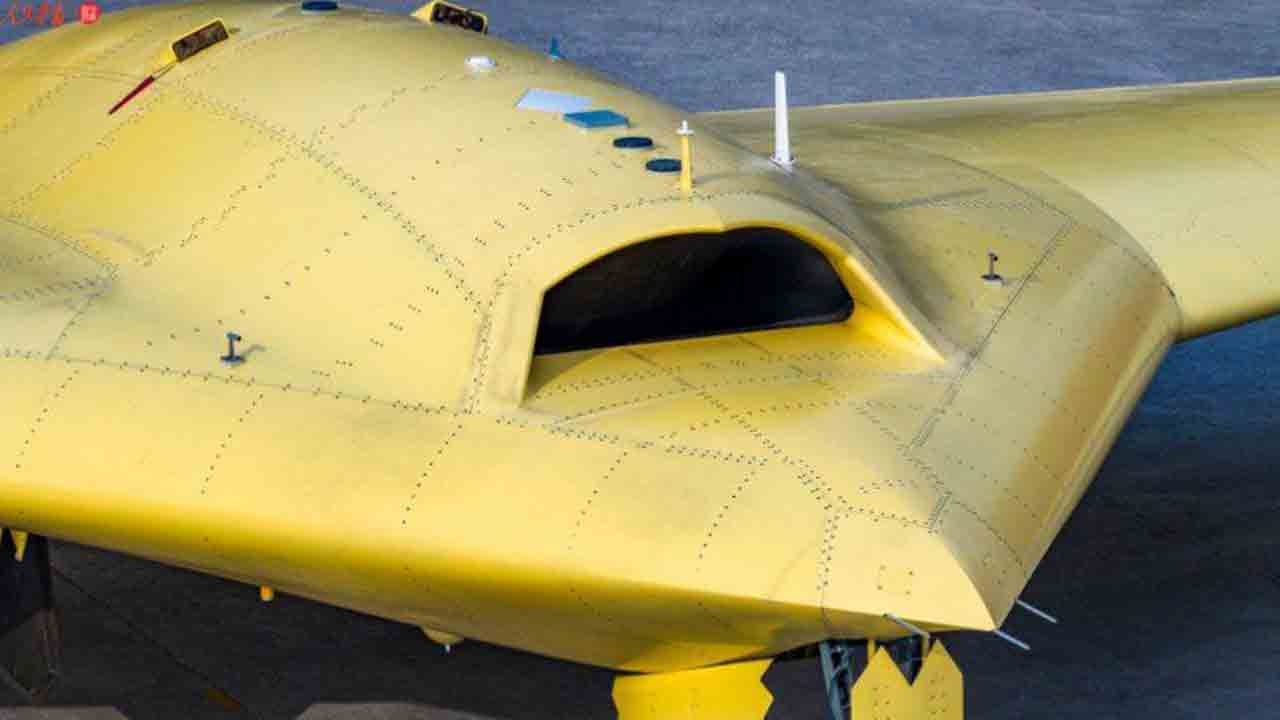
China has completed the maiden flight of the CH-7, a high-altitude, high-speed stealth combat drone, marking the program’s entry into its flight-testing phase.
Also known as Caihong-7 or Rainbow-7, the unmanned aerial vehicle took off from an airfield in the country’s northwest, according to information released by Chinese media on December 15, 2025.
+ Click here to watch the video
According to Global Times, the first flight had a limited scope and focused on validating basic airworthiness, flight-control systems, and autonomous taxi, takeoff, and landing functions.
These steps are considered particularly challenging for unmanned aircraft without vertical and horizontal tail surfaces, as is the case with the CH-7, whose flying-wing configuration requires advanced solutions for directional stability and control.
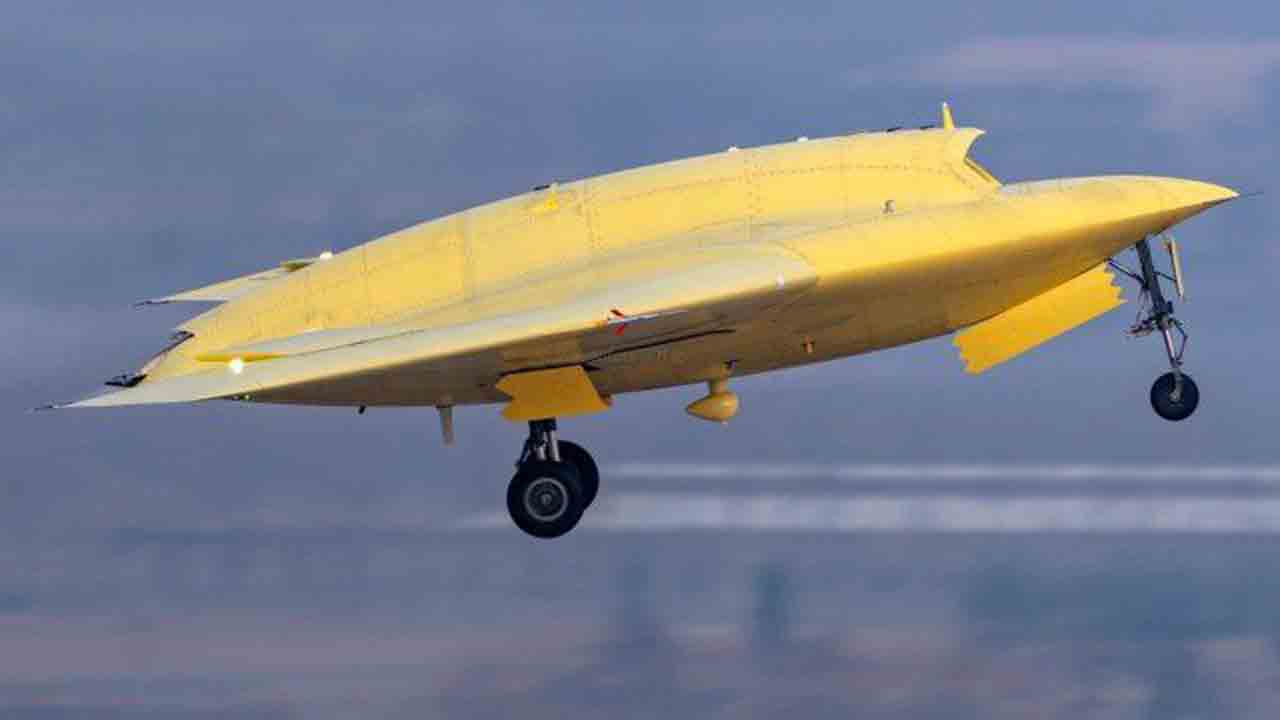
Chinese authorities and media emphasize that the objective of this initial phase was not to demonstrate mission capabilities, but to confirm the integrity of the aerodynamic design, flight-control laws, and propulsion-system integration. The next stages of the program are expected to gradually introduce flights at higher altitudes and speeds, longer-duration missions, and more complex autonomous behaviors, along with the progressive integration of sensors, data links, and payload testing in internal bays.
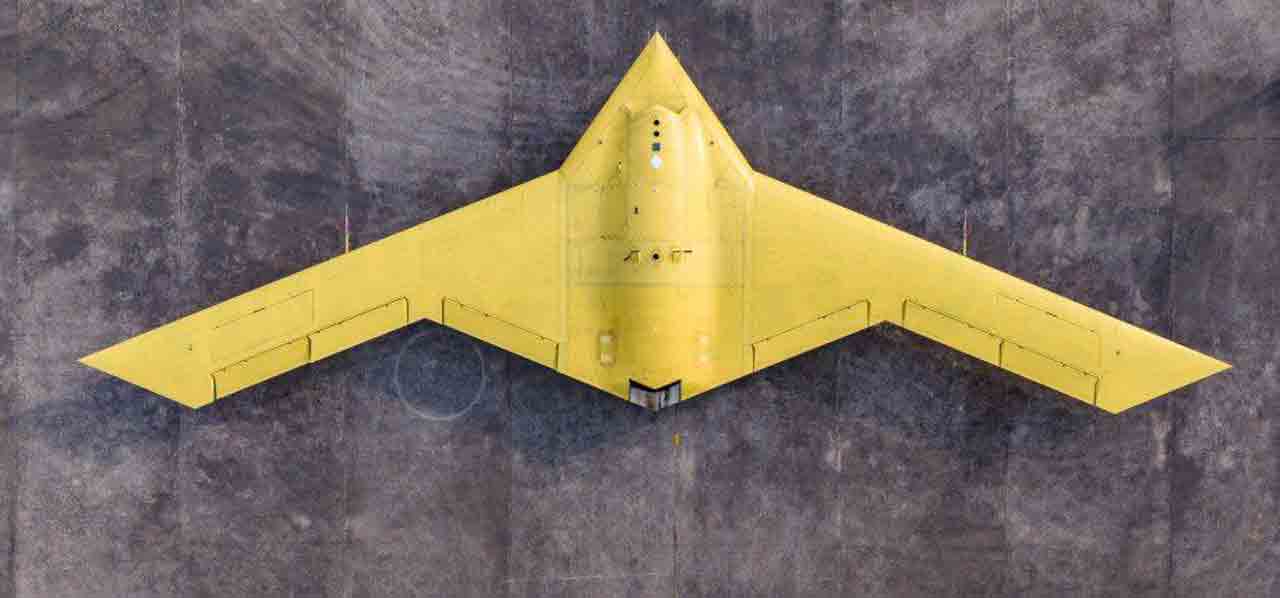
CH-7 stealth combat drone makes maiden flight in northwest China. Global Times | WeiboFrom a design perspective, the CH-7 is a jet-powered, long-endurance drone conceived to reduce detectability by radar and infrared sensors, while preserving internal space for fuel, sensors, and weapons. The design includes a dorsal air intake feeding a single jet engine and an exhaust system shaped to limit thermal and radar signatures. Images of the prototype indicate particular attention to leading edges, landing-gear doors, internal-bay contours, and panel joints, as well as the presence of typical flight-test instrumentation and antennas associated with satellite communications, navigation, and secure data links.
According to Chinese sources, CH-7 missions are expected to focus on intelligence, surveillance, and reconnaissance (ISR), as well as support for strike operations within a networked combat architecture. The drone is described as an advanced sensor and target-designation node, capable of detecting, identifying, and tracking objectives and transmitting data in real time to command centers, manned aircraft — such as the J-20 and J-16 fighters and the H-6K bomber — and land- and sea-based missile forces. There are also references to potential support for long-range weapon guidance, although the operational concept emphasizes speed and independent operation, in contrast to slower “loyal wingman”–type drones.
Disclosed technical characteristics:
- Length: 10 m
- Wingspan: 21.95 m
- Height: 3.2 m
- Empty weight: 6,500 kg
- Weight with payload: 12,250 kg
- Maximum speed: 885 km/h
- Service ceiling: 10,000 m
- Flight range: 3,500 km
+ Volkswagen Begins Testing the Gen.Urban Autonomous Vehicle on the Streets of Wolfsburg
Source and images: Global Times | Weibo. This content was created with the assistance of AI and reviewed by the editorial team.
