
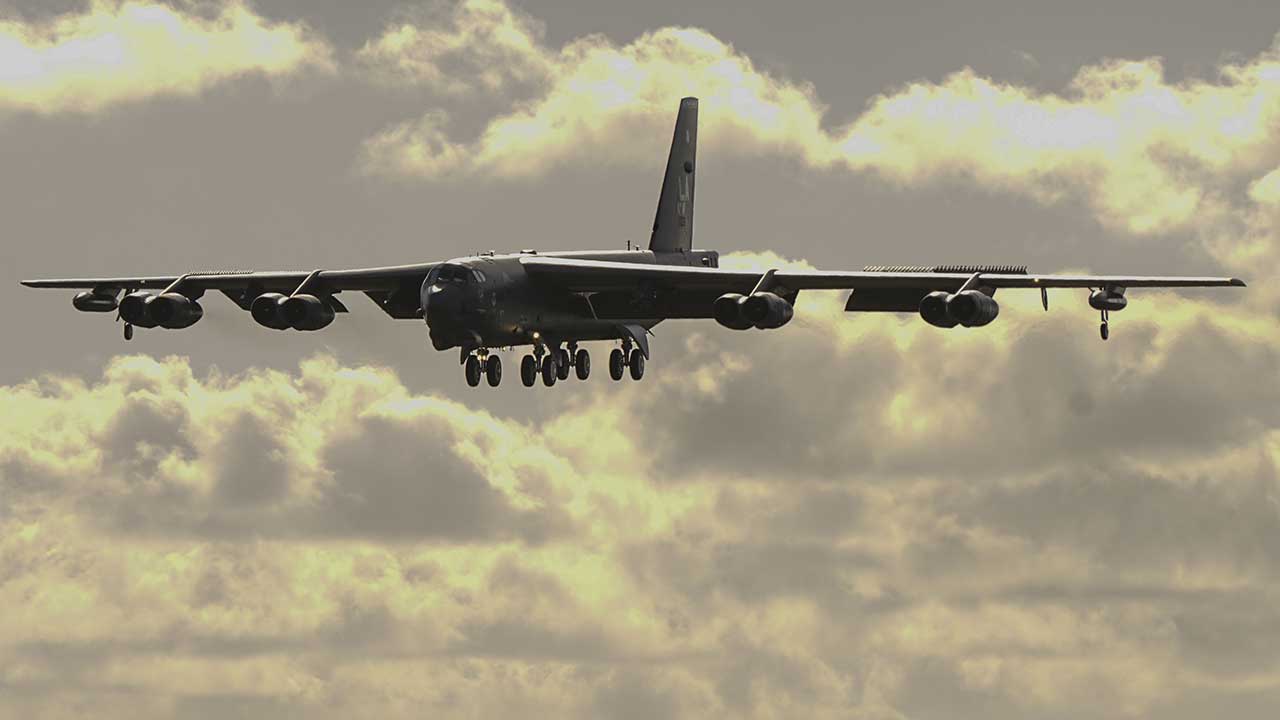
The United States Central Command (CENTCOM) confirmed that Boeing B-52H Stratofortress strategic bombers took part in strikes against Iranian ballistic missile facilities and command-and-control positions during the initial phase of Operation Epic Fury.
The confirmation was released alongside official images published by the military command’s public affairs office, showing United States Air Force crews preparing a B-52H for takeoff in support of the operations.
First hours of the operation targeted missile infrastructure
According to U.S. military officials, the first 100 hours of Operation Epic Fury primarily targeted Iranian ballistic missile infrastructure and command centers considered operational threats.
The strikes hit missile launch sites and command-and-control posts inside Iranian territory, aiming to reduce the country’s ability to coordinate and respond militarily.

Then–U.S. Secretary of Defense Pete Hegseth highlighted the intensity of the operations while commenting on the strikes.
“This was never planned to be a fair fight, and it isn’t a fair fight. We are striking while they are at a disadvantage,” Hegseth said.
Three types of strategic bombers were used
According to a statement published on social media by Admiral Brad Cooper, commander of CENTCOM, the initial phase of the campaign involved the use of three types of U.S. Air Force strategic bombers.
According to Cooper, aircraft Boeing B-1B Lancer and Northrop Grumman B-2 Spirit carried out what he described as “uncontested surgical strikes” against missile installations located deep inside Iranian territory.
In addition, the B-52 Stratofortress was responsible for strikes against command-and-control posts, expanding the reach of the air offensive.
As a result, all three main long-range strategic bombers of the U.S. Air Force — the B-1B Lancer, B-2 Spirit, and B-52 Stratofortress — were reportedly employed in the operations.
B-52 remains a key asset in US air campaigns

The B-52 Stratofortress is one of the longest-serving aircraft still in operation within the United States Air Force. The heavy bomber has participated in conflicts involving the United States since 1965 and continues to serve as a central platform for long-range strike missions.
The B-52H version currently in service is capable of carrying large payloads of weapons across intercontinental distances while operating at high altitudes.
The aircraft can launch various types of long-range weapons, including cruise missiles and precision-guided bombs, allowing crews to strike targets without entering heavily defended areas.
Although it often operates alongside stealth aircraft or high-speed strike platforms, the B-52 continues to be valued for its large weapons payload capacity.
In modern air campaigns, the bomber is frequently used in sustained strike missions against fixed targets such as command centers, missile depots, and military logistics infrastructure.
+ Italy deploys missile frigate to Cyprus amid rising tensions with Iran
Source and images: U.S. Central Command, X @CENTCOM | United States Air Force. This content was created with the help of AI and reviewed by the editorial team.
