
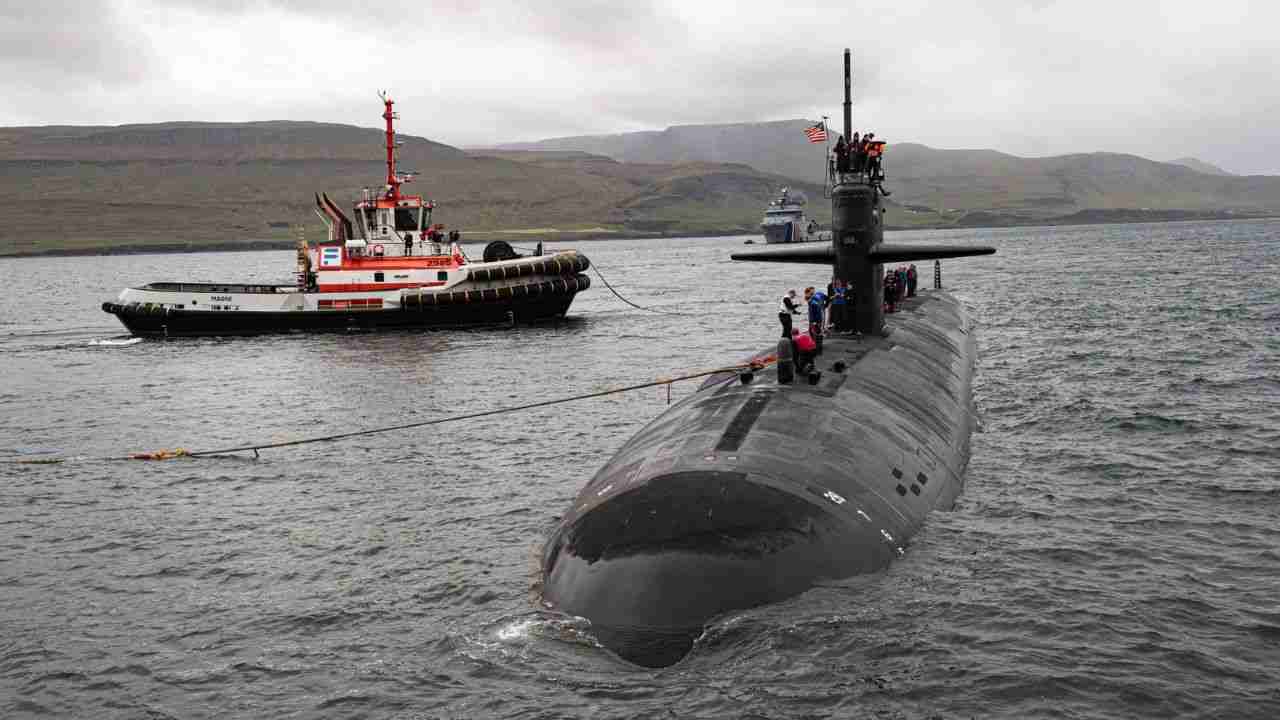
The nuclear submarine USS Newport News, from the United States Navy, made an unprecedented stop at the port of Reykjavik, Iceland, marking the first time a vessel of this type has docked in the country.
The visit comes amid rising geopolitical tensions in the Arctic and reinforces the strategic role of the island, located on an important route used by Russian submarines.
Iceland only authorized the entry of nuclear-powered submarines into its territorial waters in 2023. Since then, six quick visits had been made for partial crew changes, but this is the first official docking in port.
The operation strengthens the alliance between the US and Iceland within NATO and highlights the joint effort to maintain regional security, especially in light of Russia’s military buildup in the region and increased submarine activity.
The presence of the USS Newport News, equipped with Tomahawk missiles and advanced surveillance and undersea warfare capabilities, also aims to bolster the protection of critical infrastructure, such as the submarine cables surrounding Iceland. In recent years, suspicions of Russian sabotage in the Baltic Sea have raised concerns over the security of these systems and led NATO to intensify underwater protection measures.
Located in the so-called GIUK (Greenland-Iceland-United Kingdom) corridor, Iceland is becoming increasingly important to US strategic interests. The country was already used in 2019 as an advanced base for stealth B-2 bombers. Now, with American nuclear submarines able to operate directly from its ports, the island reinforces its role as a key surveillance and defense point in the North Atlantic.
Source and images: X @USNavyEurope | This content was created with the help of AI and reviewed by the editorial team.
🇺🇸🤝🇮🇸
The Los Angeles-class fast-attack submarine USS Newport News (SSN 750) conducted a port visit in Iceland, marking the first time a nuclear-powered submarine pulls into port on Iceland’s shores, July 9, 2025. ⚓️ @usnavy #Navy250 https://t.co/IoMVURc9VG pic.twitter.com/838hEt5dsf
— U.S. Naval Forces Europe-Africa/U.S. 6th Fleet (@USNavyEurope) July 9, 2025
