
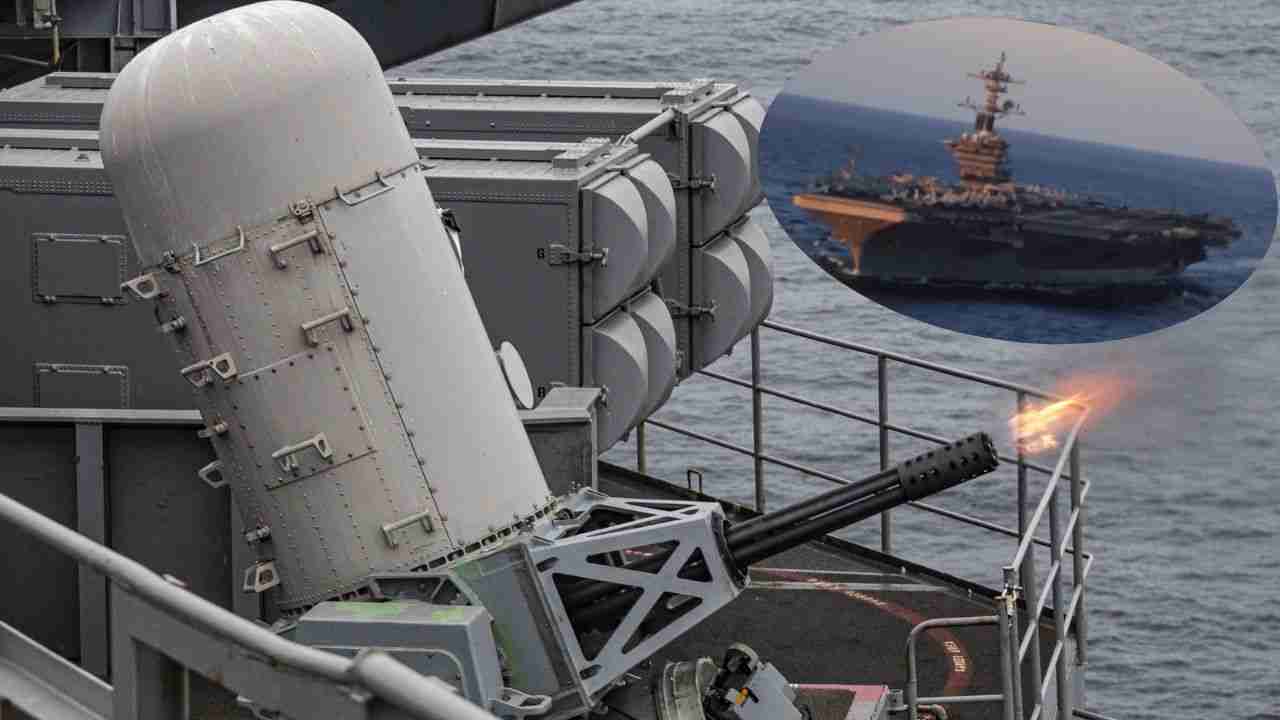
The aircraft carrier USS Abraham Lincoln conducted live-fire exercises in the South China Sea as part of the United States Navy’s Indo-Pacific operations.
The action is part of the 7th Fleet’s strategy to maintain a military presence in the region and send a deterrence signal amid potential geopolitical tensions.
During the training, the Nimitz-class ship used its Phalanx CIWS defense system, designed to neutralize short-range aerial threats. According to the Navy, this type of exercise reinforces naval readiness and demonstrates the U.S. commitment to regional security and its allies.
The USS Abraham Lincoln strike group operates in coordination with Carrier Air Wing 3 and is escorted by three destroyers. Since departing Guam in December, the task force has remained active in the Philippine Sea, while other U.S. vessels, including the USS Tripoli and the USS Seawolf submarine, continue operations in the Indo-Pacific.
With the capacity to operate about 90 aircraft, the USS Abraham Lincoln is one of the United States’ main naval power projection platforms. Equipped with multiple defensive systems, the aircraft carrier represents a central element of U.S. strategy to ensure stability, continuous presence, and rapid response capability in the region.
Source: UK Defence Journal | Photo: X @USNavy | This content was created with AI assistance and reviewed by the editorial team
USS Abraham Lincoln (CVN 72) fires one of it’s Phalanx Close-In Weapon System (CIWS) during a live-fire exercise. Also in view is one of the ship’s ESSM launchers. South China Sea. Jan 8, 2026. pic.twitter.com/mQ28tsaLxq
— Virtual Bayonet (@VirtualBayonet) January 11, 2026
