

The United States National Nuclear Security Administration has completed, three months ahead of schedule, the certification of components planned for production of the B61-13 gravity bomb during the current fiscal year.
The work was carried out at the Y-12 National Security Complex in Oak Ridge, Tennessee. According to the agency, all canned subassemblies, known by the acronym CSA, underwent the process known as “diamond stamping.”
The marking confirms that the components met the technical and quality requirements established by the U.S. nuclear program. After this stage, the parts receive the “war reserve” designation, authorizing their incorporation into the United States’ operational stockpile.
What is the B61-13?
The B61-13 is a new configuration of the B61 family, considered one of the oldest and most versatile lines of air-delivered weapons still maintained by the United States. The variant will be certified for carriage and release by U.S. Air Force strategic bombers.
The model uses the safety features, protections against unauthorized use and precision capabilities developed for the B61-12. The main difference is the greater planned yield of the B61-13, intended for certain hardened military targets, underground facilities and larger areas.
The proposal is to expand the options available for the United States’ deterrence strategy, particularly in scenarios in which protected structures could pose a challenge to conventional systems.
Accelerated production
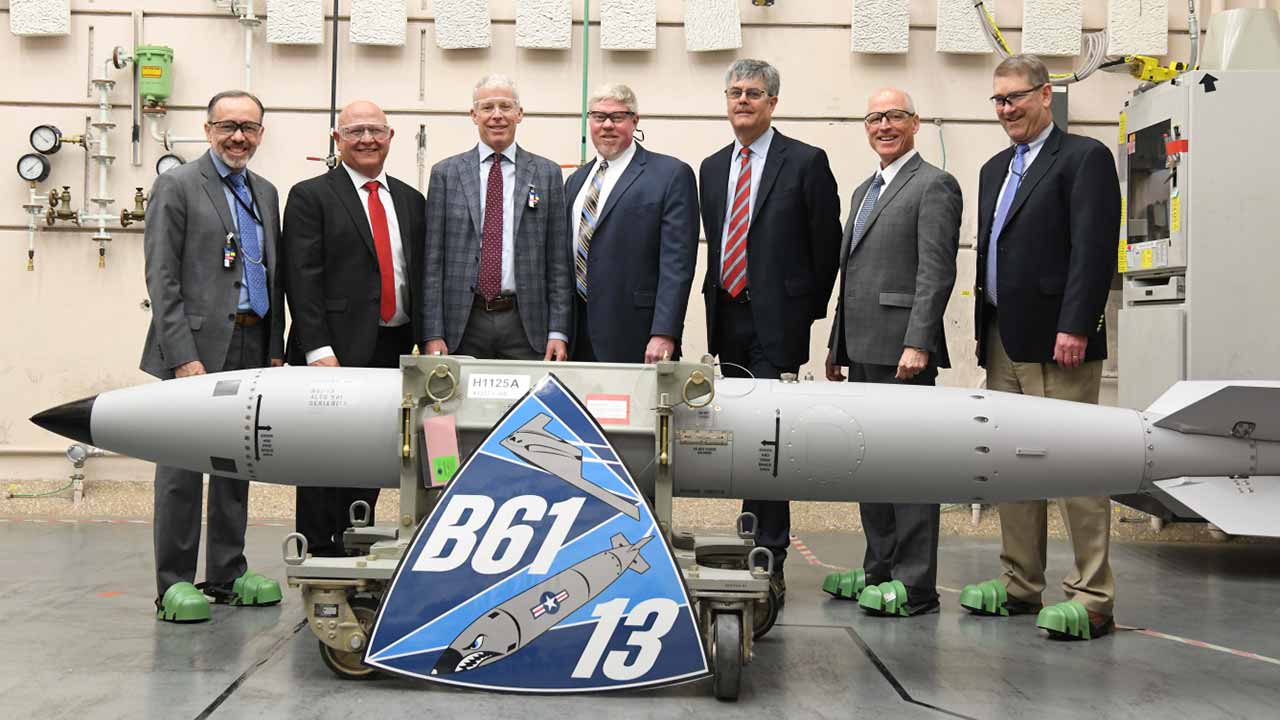
The first B61-13 unit was completed in May 2025 at the Pantex facility in Texas. The milestone was reached almost a year ahead of the original schedule and less than two years after the program was formally announced.
At this pace, the B61-13 became one of the fastest U.S. nuclear modernization projects to be developed and placed into production since the end of the Cold War.
Manufacturing makes use of some of the infrastructure and industrial processes previously employed in the B61-12 life-extension program. Production of that variant ended in January 2025, allowing the production lines to transition to the new model.
Component underwent rigorous certification
The CSA contains essential parts of the weapon’s energy package inside a sealed metal container. The “diamond stamping” procedure represents the component’s final approval following inspections, tests and compliance assessments.
According to the NNSA, the early completion demonstrates that the industrial network responsible for the U.S. strategic arsenal was able to accelerate production without changing certification standards.
The B61-13 is part of a group of programs conducted by the United States to modernize its nuclear stockpile and preserve the reliability of its systems over the coming decades. The project also reinforces the role of strategic bombers in the air-based component of the country’s deterrence policy.
Source: United States National Nuclear Security Administration (NNSA). This content was created with the assistance of AI and reviewed by the editorial team.
