
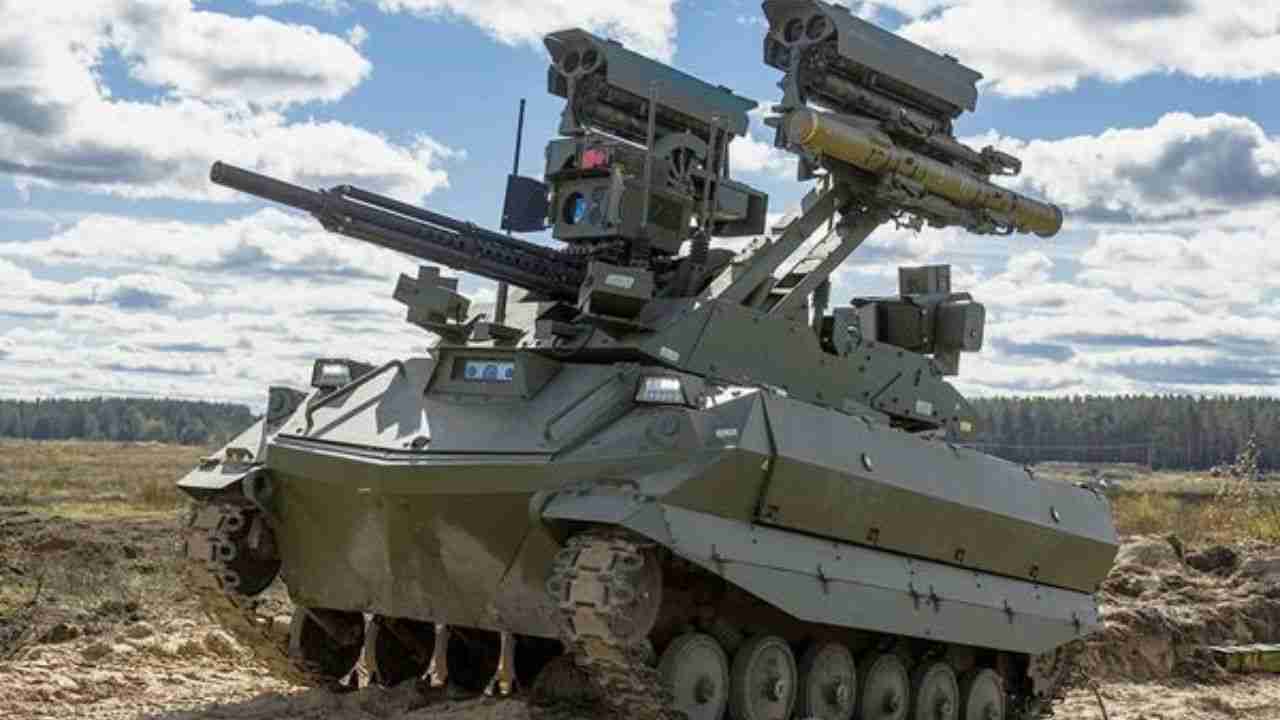
The Uran-9, a ground combat robot promoted as a technological breakthrough by Russia and praised by Vladimir Putin, has become a costly example of failure in the country’s military modernization efforts.
Developed by Rostec, the vehicle was introduced in 2016 as an unmanned “mini-tank” armed with anti-tank missiles, an autocannon, and a machine gun, capable of operating in combat zones without putting soldiers at risk. Promised as a replacement for tanks and infantry vehicles, the Uran-9 faced serious mechanical problems, sensor and weapon failures, and limited control range during combat tests in Syria.
Despite these failures, the Russian Ministry of Defense officially put the Uran-9 into service in 2019 and stated that a new version of the vehicle was in production. The robot was even offered for export to countries like Saudi Arabia, India, the United Arab Emirates, Serbia, and Myanmar, but no significant deals were made due to unsatisfactory performance and lack of system reliability. Western analysts also pointed out serious limitations, noting that the sensors and weapon systems were practically useless in motion and that the vehicle was not combat-ready.
In practice, during the invasion of Ukraine, the Uran-9 was never deployed in combat operations. Instead, Russian forces have used improvised platforms built by engineers and enthusiasts in small workshops, adapted for limited functions.
The Uran-9 program, which consumed billions of rubles over a decade, has become a symbol of unfulfilled promises, military propaganda, and the real challenges of turning technological ambition into battlefield effectiveness.
Source: Defence Blog | Photo: X @AlexHollings52 | This content was created with the help of AI and reviewed by the editorial team
