
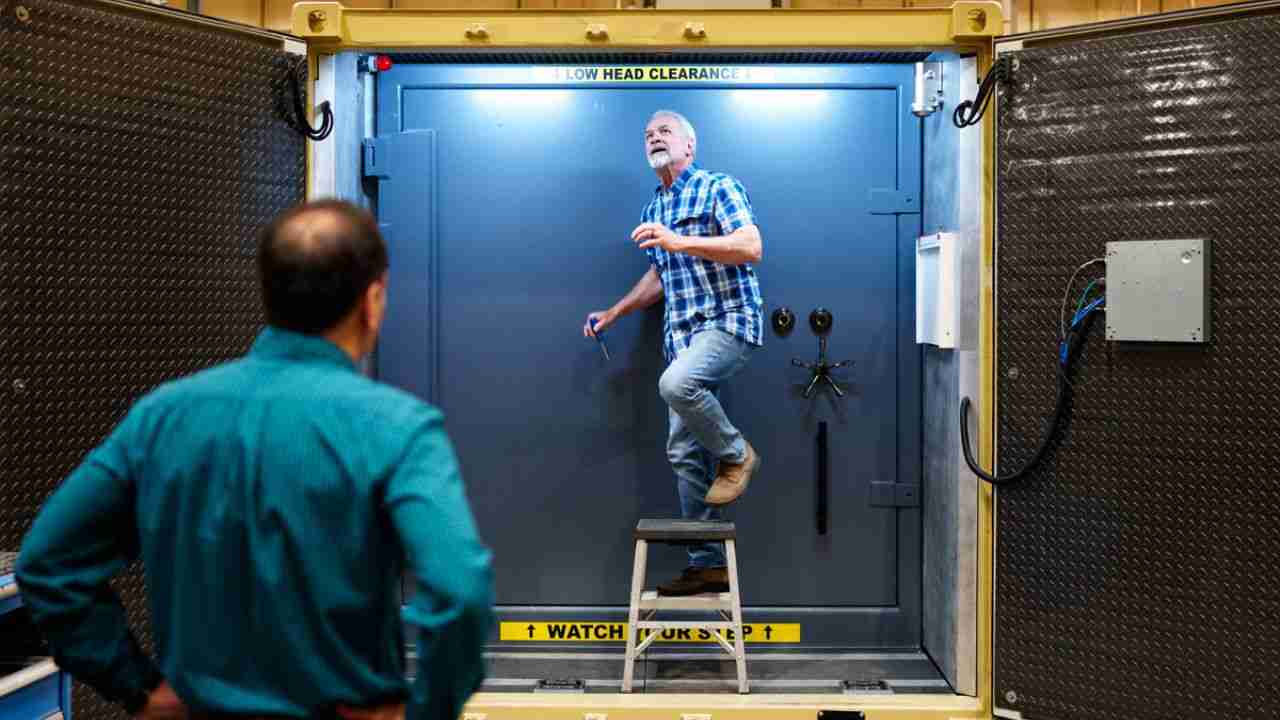
The United States is developing a new mobile storage system for nuclear weapons, aiming to increase strategic flexibility in advanced operations.
These are high-security vaults camouflaged in standard shipping containers, allowing warheads and other sensitive materials to be stored far from traditional bunkers. The project, led by the Sandia National Laboratories, will be tested in the Gray Flag 2025 military exercises, with prototypes built in record time using technologies such as 3D printing and modular components.
The initiative comes at a time when the U.S. military is seeking to decentralize its operations, aligning with the Agile Combat Employment (ACE) doctrine, which prioritizes mobility to reduce vulnerabilities. The new Mobile Vaults could house bombs such as the B61-12 and its more powerful variant, the recently produced B61-13. Although less protected than fixed bunkers, these mobile vaults would be harder for adversaries to track and would enable rapid deployments in remote areas, including temporary bases with limited infrastructure.
Beyond nuclear use, the armored containers could also store high-value conventional munitions, such as the AIM-174B missile. The Pentagon has emphasized the integration of nuclear and conventional capabilities, as demonstrated in new guidelines released last year.
With operational tests scheduled for 2025, the Mobile Vaults could become a key element in the United States’ advanced deterrence strategy, while the technology is prepared for large-scale production by private industry.
Source: The War Zone | Photo: X @SandiaLabs | This content was created with the help of AI and reviewed by the editorial team
Secure storage wherever you need it 🔒 A Sandia team developed a mobile, high-security vault to protect the nation’s most sensitive assets. Now, it’s off for readiness testing.
➡️ https://t.co/JqzyYN3g1r pic.twitter.com/BH573U90cr
— Sandia National Labs (@SandiaLabs) July 15, 2025
