
The United Kingdom will join Norway’s program to develop offshore support ships designed to deploy unmanned minehunting and undersea warfare systems, the Ministry of Defence said.
According to the UK Defence Journal, the collaboration is a central element of the new Lunna House Agreement, announced during Prime Minister Keir Starmer‘s visit to Norwegian Prime Minister Jonas Støre at the RAF Lossiemouth airbase.
According to the UK Ministry of Defence, the agreement aims to strengthen the protection of critical infrastructure in the North Atlantic, amid what it describes as a 30% increase in the number of Russian vessels detected near UK waters over the past two years.
Both governments stated that the pact deepens long-standing cooperation and aligns with NATO priorities, providing for “the integration of the United Kingdom into the Norwegian program for the development of mother ships for unmanned minehunting and undersea warfare systems.”
The agreement also includes the “mother ship” element, which is expected to expand the work both navies are already developing.
Currently, the UK is replacing traditional minehunters with autonomous mine countermeasure systems operated from larger support ships, as part of its Minehunting Capability program.
The broader plan outlined will require multiple hulls to act as mother ships. The agreement coordinates these efforts, creating development pathways and common operational concepts.
This builds on broader industrial and operational cooperation in Type 26 frigates, naval strike missiles, torpedo stocks, and Arctic training.
“At this time of deep global instability, with more Russian ships detected in our waters, we must work with international partners to protect our national security,” Prime Minister Starmer emphasized.
He said the agreement strengthens the UK’s defensive posture. “This historic agreement with Norway enhances our ability to protect our borders and the critical infrastructure our nations rely on.”
Meanwhile, UK Defence Secretary John Healey addressed activity against Russian submarines. “In this new era of threats and with increased Russian activity in the North Atlantic, our strength lies in military power and strong alliances,” he stated.
“Through this Lunna House Agreement, we will patrol the North Atlantic as one team, train together in the Arctic, and develop advanced equipment that will keep our citizens safe now and in the future.”
The bilateral agreement also connects directly to existing industrial cooperation between UK-based BAE Systems and Norwegian Kongsberg Defence and Aerospace, which are exploring potential support vessel options.
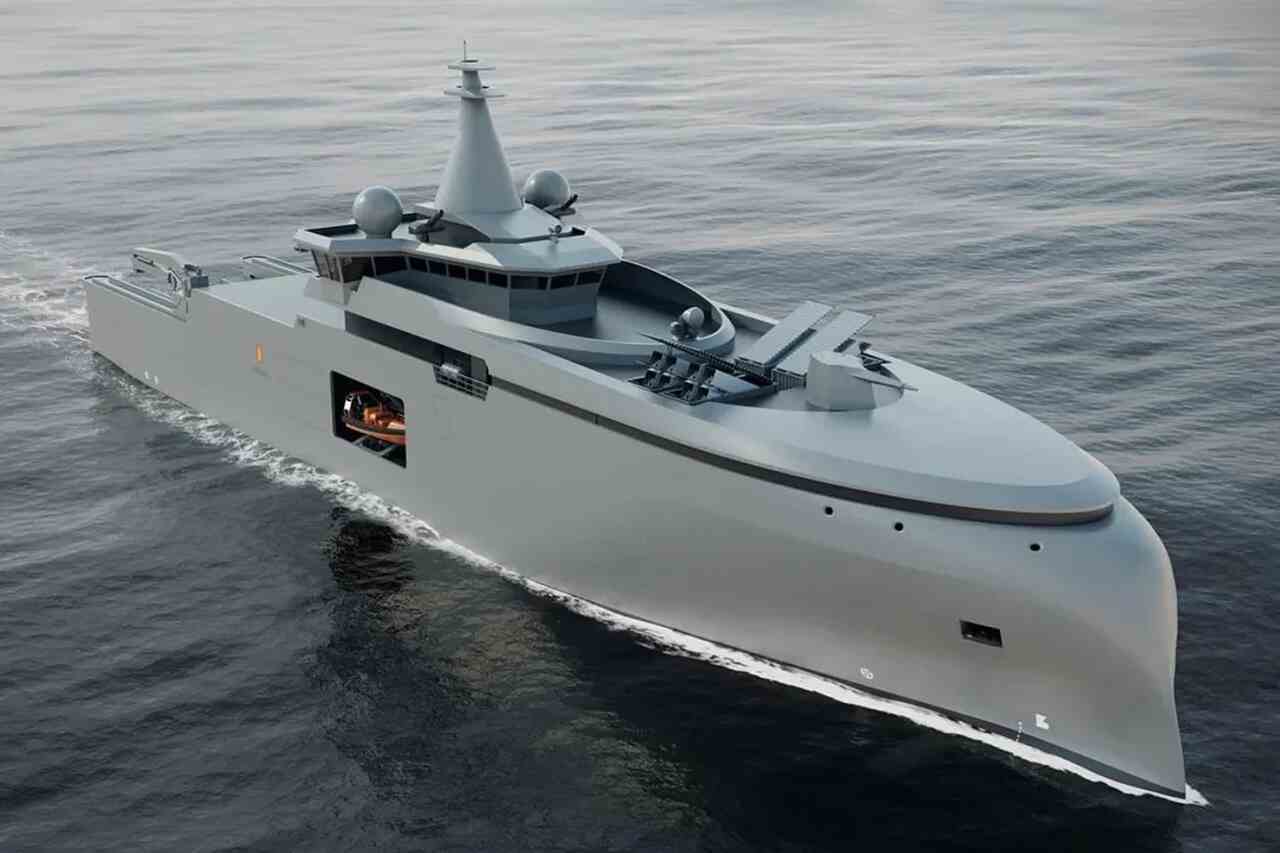
One candidate is the Kongsberg Vanguard concept, offering modular compartments and launch facilities suitable for unmanned underwater systems.
Photo: Kongsberg. This content was created with the help of AI and reviewed by the editorial team.
