
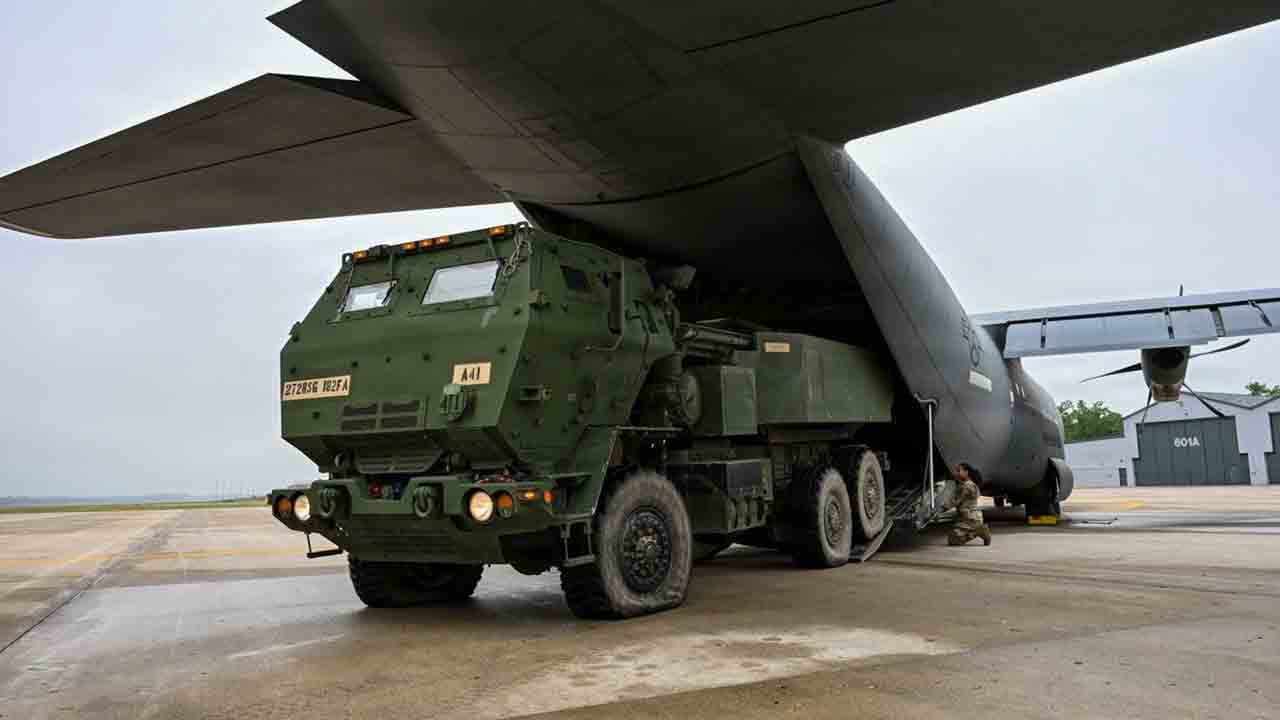
The United States conducted an unprecedented exercise involving the HIMARS rocket system, transported more than 3,200 kilometers between the states of Michigan and California to carry out simulated precision-strike missions.
The activity took place from June 6 to 13 at the National Training Center (NTC) in Fort Irwin as part of the first Minuteman Rotation conducted at the facility.
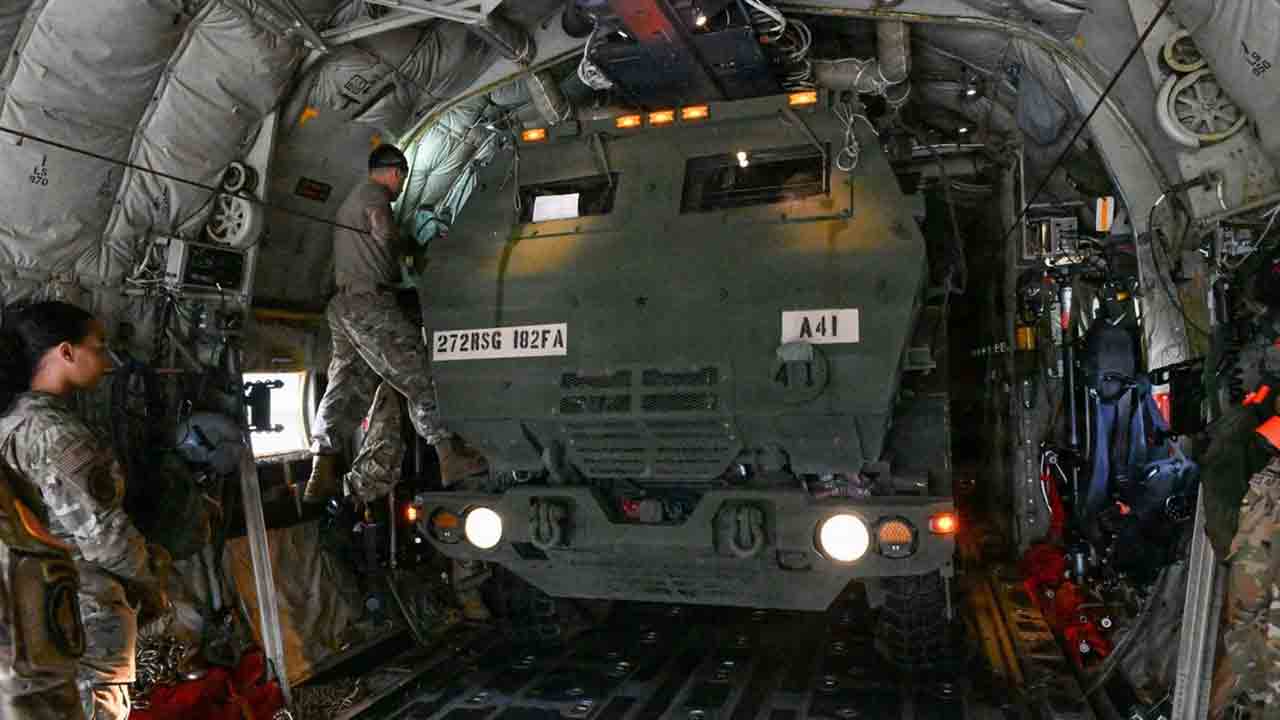
During the operation, soldiers from the Michigan National Guard loaded a HIMARS launcher onto a C-130J Super Hercules aircraft operated by the Rhode Island Air National Guard. After landing in the California desert, the system was rapidly unloaded, employed in simulated strikes, and withdrawn from the area in a short period of time, demonstrating the mobility and rapid-response capabilities required in modern combat scenarios.
The exercise put the HIRAIN (HIMARS Rapid Infiltration) concept into practice. The concept involves airlifting the launcher to forward positions, enabling precision fires followed by immediate withdrawal before enemy forces can locate the unit. The strategy aims to increase the survivability of artillery systems on battlefields that are increasingly monitored by sensors, radars, and long-range weapons.
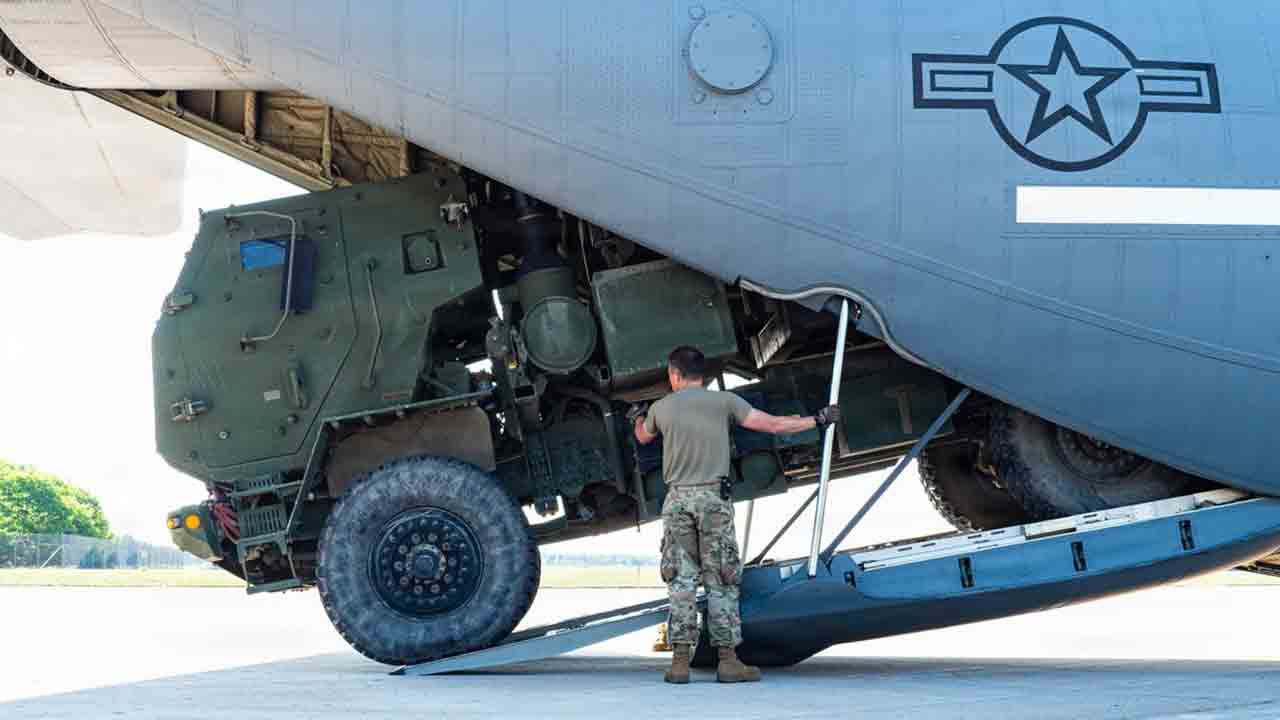
In addition to testing HIMARS operational capabilities, the exercise also strengthened integration between the National Guard and active-duty U.S. Army forces. The new Minuteman Rotation model was created to ensure that National Guard units receive training at the same level as regular troops, preparing them for high-intensity combat scenarios and large-scale operations.
+ Hornet Expands GARMR Firepower Against Modern Air Threats
Source and images: army.mil | This content was created with the assistance of AI and reviewed by the editorial team.
