
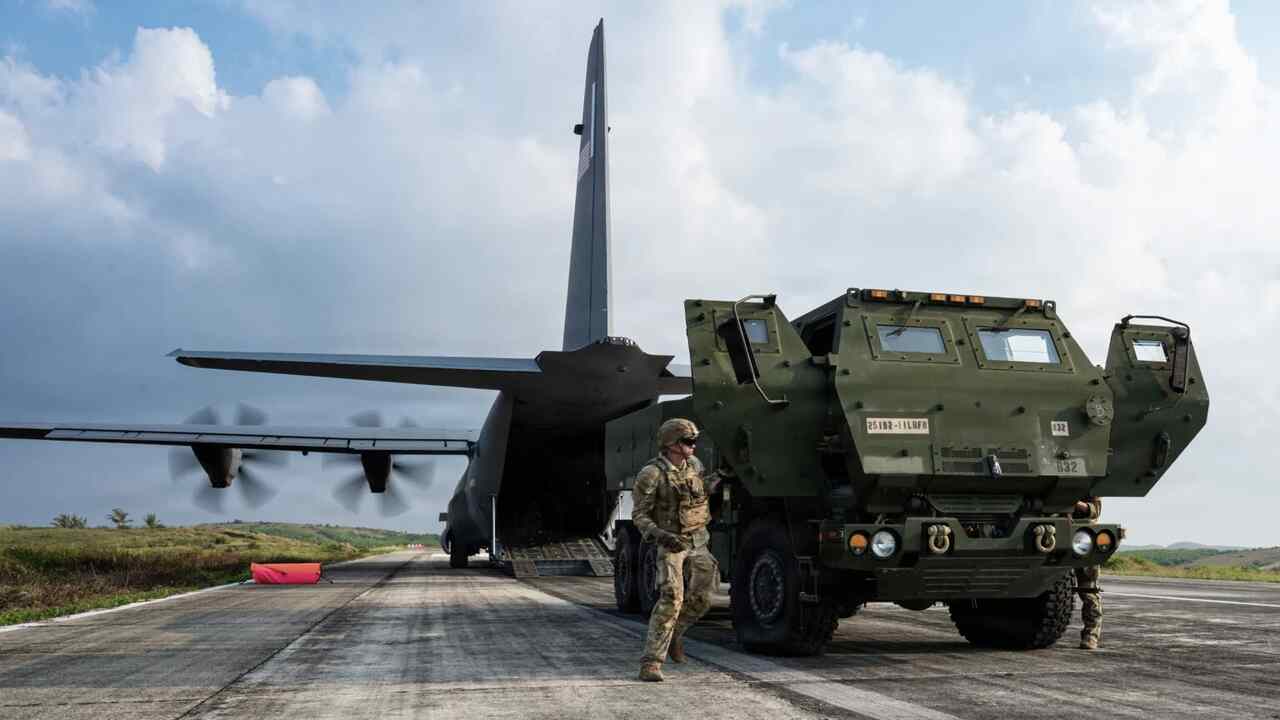
U.S., Philippine, and Japanese forces spent four days demonstrating they can shoot down the same drone together as part of the Balikatan 2026 military exercise.
The tests were conducted between April 26 and 29, 2026, at Naval Station Leovogildo Gantioqui in the Philippines. The exercise included participation from the U.S. Marine Corps, the U.S. Army, the Japan Self-Defense Forces, and Philippine military elements.
Together, they formed a single networked air defense system designed to detect and engage complex aerial threats across the coastal environment as part of Integrated Air and Missile Defense training events.
The training integrated kinetic and non-kinetic capabilities against simulated enemy aerial targets — a multilateral defensive exercise that brought real hardware from four military organizations into a shared tactical picture and tested whether they could truly operate together under the pressure of a compressed, high-tempo air defense scenario.
“The synchronization of our joint and combined air defense assets ensures we can maintain a persistent defensive umbrella, even in the most remote littoral environments,” said Colonel Gabriel L. Diana, commanding officer of the 3rd Marine Littoral Regiment.
“By connecting systems from the Navy, the Army, the Philippines, and Japan into a single cohesive defensive network, we are proving that our allied and partner forces can rapidly deploy and protect vital terrain against any complex aerial threat.”
For the tests, the military introduced various defense systems into the training area, including the U.S. Army’s VAMPIRE air defense system.
“By bringing rapid, palletized capabilities like VAMPIRE to coastal areas, we provide a decisive and precision-strike capability against small UAS threats, filling a vital role in the air defense network,” said Colonel Kenneth Collins, commander of the 1st Battalion, 51st Air Defense Artillery Regiment.
Photo: U.S. Air Force. This content was created with the help of AI and reviewed by the editorial team.
