
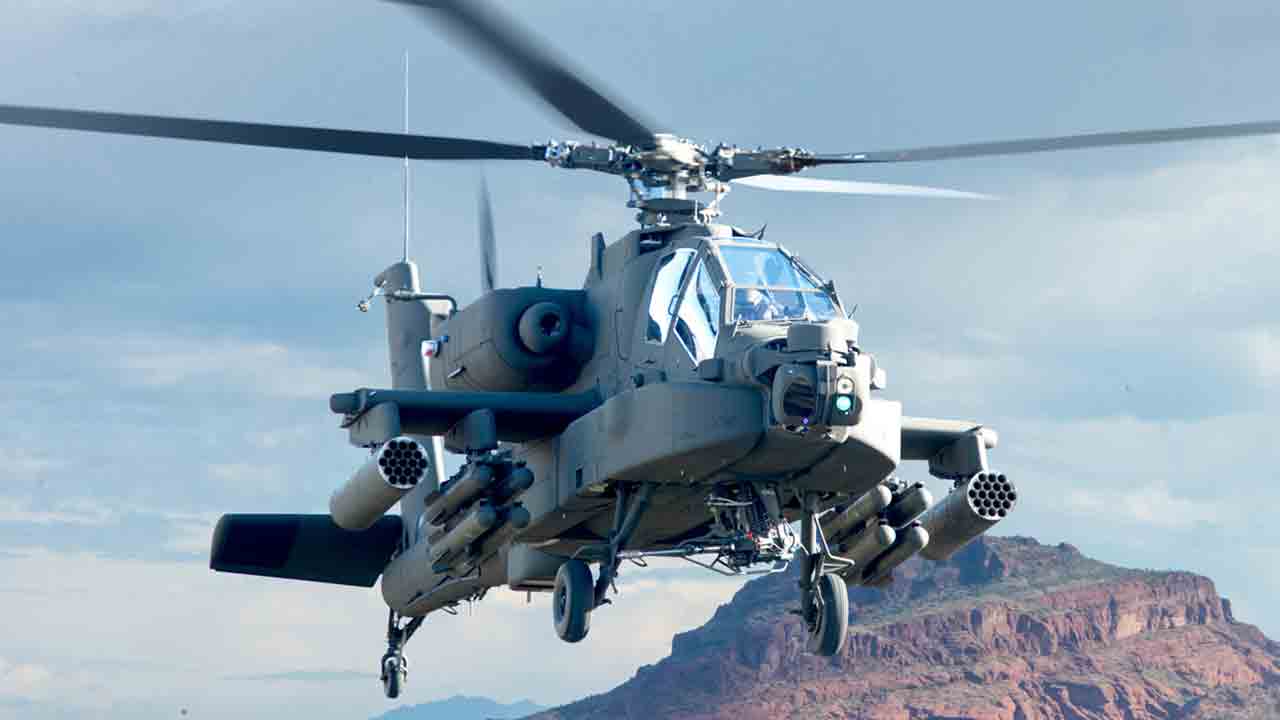
The United States launched strikes against Iranian military targets on Tuesday, June 9, after President Donald Trump accused Iran of shooting down a U.S. Army AH-64 Apache attack helicopter during a patrol in the Strait of Hormuz region.
According to Trump, the aircraft was hit while operating along one of the world’s most strategic maritime routes. The president said the two pilots on board survived, were not injured and are safe. He also stated that Washington was “forced to respond” to the incident.
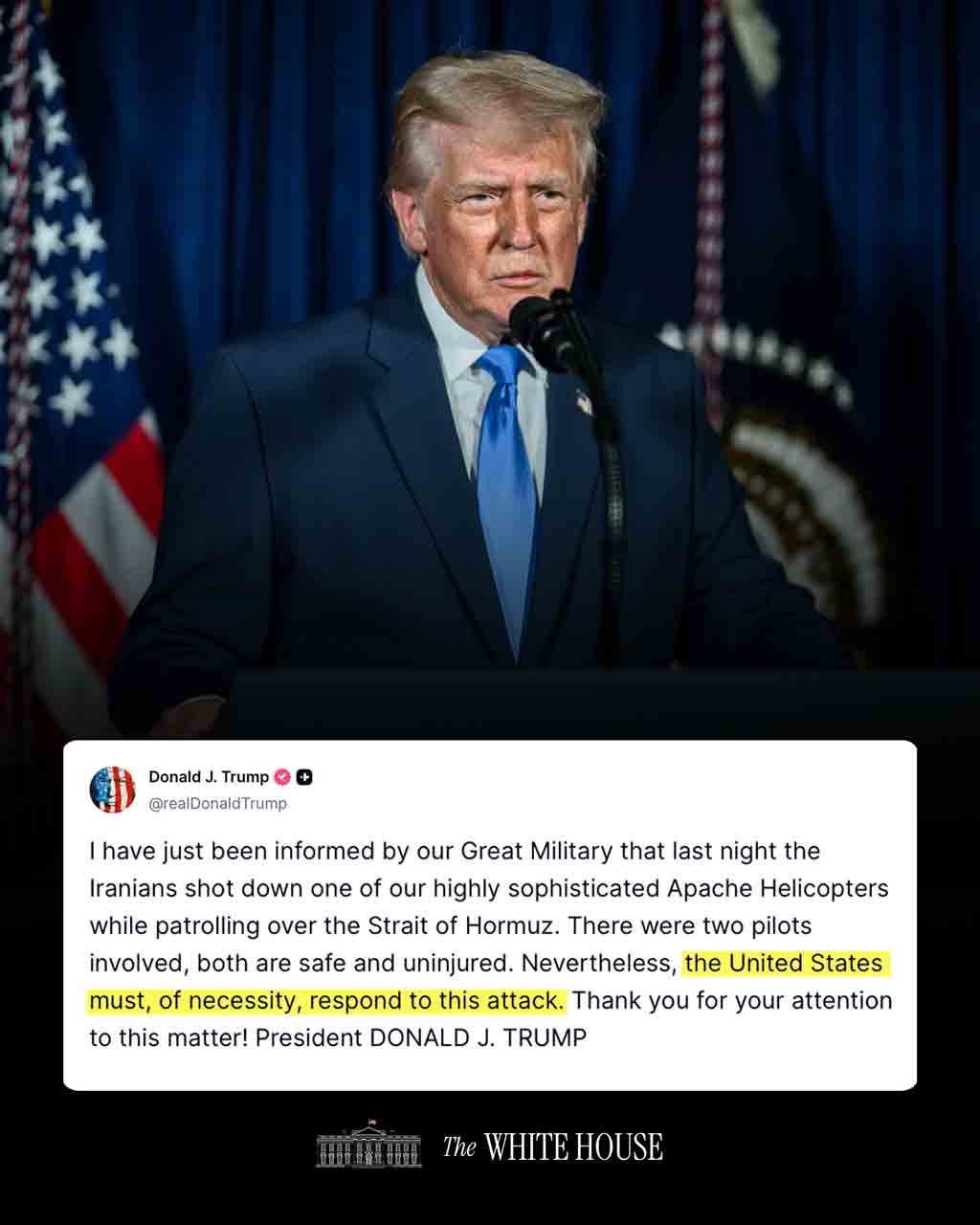
U.S. Central Command (CENTCOM) confirmed that an Apache helicopter went down at around 3 a.m. local time on June 9, equivalent to 11 p.m. GMT on June 8. According to the U.S. version, the crew members were rescued alive after the crash. The command, however, did not initially detail which system or means may have been responsible for striking the aircraft.
Later, CENTCOM said U.S. forces began launching “self-defense” strikes against Iran at 5 p.m. Eastern Time, by order of the commander in chief. The operation was described as a proportional response to what Washington classified as unjustified Iranian aggression.
The episode raises tensions in a region already marked by strong instability. The Strait of Hormuz is considered a critical passage for global energy trade, and any military escalation in the area could have immediate impacts on maritime security and international markets.
U.S. Central Command (CENTCOM) forces began launching self-defense strikes against Iran at 5 p.m. ET today at the Commander in Chief’s direction, in response to yesterday’s downing of a U.S. Army Apache helicopter. The mission is a proportional response to unjustified Iranian…
— U.S. Central Command (@CENTCOM) June 9, 2026
Trump’s statement also increases uncertainty over the maintenance of the truce announced on April 8, after a series of direct clashes between Israel and Iran. Both sides had previously signaled a willingness to halt mutual attacks following calls from the United States for restraint.
Tehran, however, had already warned that it could resume military action if Israel continued attacking Hezbollah in Lebanon, a group backed by Iran. With the Apache crash and the U.S. military response, the risk is growing of a new phase of escalation involving Washington, Tehran and their regional allies.
Iranian authorities denied direct responsibility for the incident and said the presence of foreign forces close to Iranian territory increases the risk of accidents, human error or crossfire episodes. Even so, the Iranian government warned that it would respond if new attacks are carried out against its territory.
The case remains under development, and new information is expected to be released by military authorities.
Source and images: U.S. Central Command – @CENTCOM | The White House – @WhiteHouse | Boeing. This content was created with the help of AI and reviewed by the editorial team.
