
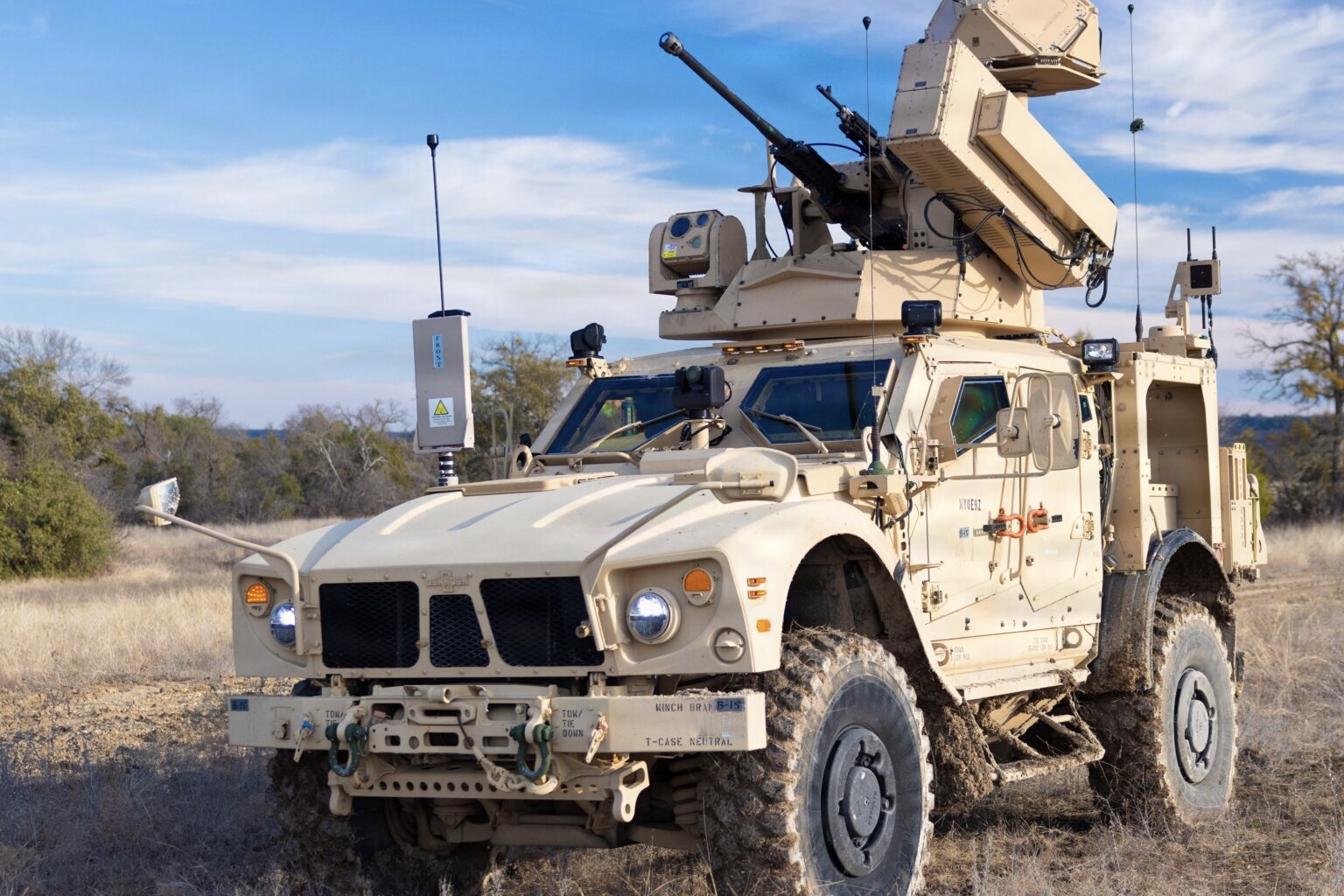
 US Army tests anti-drone systems during demonstration in Texas (Photo: Russell Shirley-Jones)
The US Army tested radar, kinetic, and electronic warfare anti-drone systems against unmanned aerial vehicle flights during a demonstration at Fort Hood, Texas, on January 29, 2026.
The tests were conducted by soldiers from the 6th Battalion, 56th Air Defense Artillery Regiment, 1st Cavalry Division Artillery in front of senior leaders from the III Armored Corps and the 1st Cavalry Division, according to Defence Blog.
The event combined air defense teams with civilian personnel and focused on detecting and defeating unmanned aerial vehicle (UAV) flights in real-time using the battalion’s full anti-drone capability set.
During the demonstration, soldiers from 6-56 ADA operated Mobile-Low, Slow unmanned aerial systems, the Integrated Defeat System or M-LIDS, AN/MPQ-64 Sentinel radar, Coyote kinetic interceptors, direct fire weapons, and electronic warfare systems, including the LOTUS electronic warfare jammer against various drone profiles.
According to the US Army, the training allowed teams to engage live UAVs using the equipment mentioned. The goal was to observe how the systems detect, classify, and respond to evolving drone threats in realistic conditions.
“Drones are at the center of the current fight,” said 1st Lieutenant Martin Ocampo, platoon leader assigned to Delta Battery, 6th Battalion, 56th Air Defense Artillery Regiment.
“Bringing our kinetic and electronic warfare vehicles here allows our teams to see how the radar performs against real UAV profiles and improves the speed with which they classify and engage. This is the type of training that helps us set the pace for drone fighting across the Army.”
According to Ocampo, the cooperation with civilian partners enhanced training repetitions and operational realism. “Every live range helps our soldiers get faster and more lethal. It ensures that we can protect any maneuver force we are attached to.”
Photo: Russell Shirley-Jones. This content was created with the help of AI and reviewed by the editorial team.
